Anti-Inflammatory Diet for Neuropathy: The Root Cause Guide to Nerve Repair (2026)
What if the burning in your feet isn't an inevitable part of aging, but a signal that your body is literally on fire? You have likely been told that your nerve pain is permanent or that nothing can be done beyond managing the symptoms. It's exhausting to live with the constant tingling while feeling dismissed by a healthcare system that only offers temporary fixes. Transitioning to an anti inflammatory diet for neuropathy isn't just about eating better. It's about removing the fuel that keeps that inflammatory fire burning at the cellular level.
I understand the frustration of following conflicting advice only to wake up with the same persistent pain. You deserve a clear path forward that actually works. This guide provides a science-backed, functional medicine approach to quench the inflammation damaging your nerves. We will explore the specific cellular building blocks required for nerve repair and provide a dietary roadmap designed to help you reclaim your mobility and sleep in 2026. It is time to stop masking the pain and start the deep work of healing from the root cause.
Table of Contents
The Inflammatory Fire: Why Diet is the Foundation of Nerve Repair
Persistent nerve pain is a signal. It tells you that your body is in a state of neuro-inflammation. This is the primary driver of peripheral nerve damage. While medication might mask the burning, it does nothing to quench the fire. We must look deeper. We must look at the root cause. You deserve a solution that goes beyond a prescription pad. You've been failed by a system that offers pills for a problem that starts on your plate.
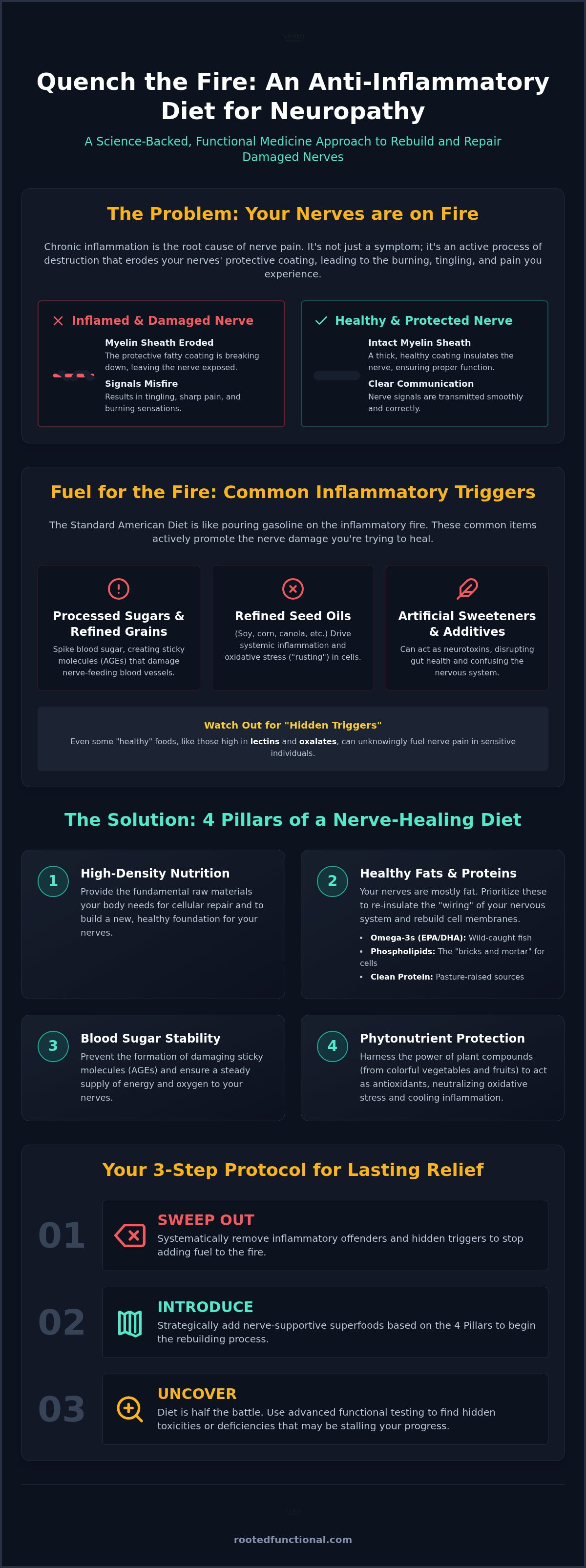
Your nerves are wrapped in a lipid-based coating called the myelin sheath. Think of it as the insulation on a copper wire. Chronic inflammation erodes this coating. It leaves the raw nerve exposed to the elements. This erosion leads to the misfiring signals you recognize as tingling or sharp pain. Without this protection, your nerves cannot communicate correctly. They become fragile and prone to further damage.
At the same time, your mitochondria are under attack. These are the power plants of your cells. Neuropathy patients often suffer from mitochondrial dysfunction. This means your nerves lack the energy to repair themselves. This is where an anti inflammatory diet for neuropathy becomes essential. It provides the raw materials for cellular restoration. It shifts your body from a state of breakdown to a state of rebuilding.
How Systemic Inflammation Damages Your Nerves
When your immune system stays on high alert, it releases a flood of proteins called cytokines. This cytokine storm creates a hostile environment for your peripheral nerves. It triggers oxidative stress. Oxidative stress is the biological equivalent of rusting within your nerve cells. This internal rust breaks down the delicate structures that keep you moving and feeling.
Metabolic health is the second piece of this puzzle. High blood sugar and insulin resistance create advanced glycation end products. These are sticky molecules that damage the tiny blood vessels supplying your nerves. When these vessels fail, your nerves are starved of the oxygen and nutrients they need to survive. If you are ready to stop the damage, our Healing Neuropathy Webinar dives deeper into these cellular mechanisms.
The Failure of the "Standard American Diet" for Neuropathy
The way most people eat today is like pouring gasoline on an open flame. Processed sugars and refined seed oils are liquid fire for your nervous system. They drive systemic inflammation that keeps your body in a state of crisis. Even artificial sweeteners can be neurotoxic triggers that worsen your symptoms. They disrupt your gut health and confuse your nervous system.
Chronic inflammation from poor nutrition prevents your natural repair mechanisms from turning on. Your body is too busy fighting the food you eat to fix the nerves that are breaking down. Switching to an anti inflammatory diet for neuropathy is the first step in clearing the path for real, lasting healing. It allows your body to finally shift from defense to repair. You can't heal a wound if you keep picking at it with every meal.
The Anti-Inflammatory Neuropathy Diet: 4 Pillars of Healing
Healing isn't passive. It's a deliberate act of reconstruction. If we want to stop the "rusting" and cellular fire we discussed earlier, we must provide the raw materials for a new foundation. An anti inflammatory diet for neuropathy focuses on four specific pillars: high-density nutrition, healthy fats, blood sugar stability, and phytonutrient protection. These aren't just suggestions. They are the biological requirements for nerve survival. I want you to see your meals as a pharmacy, where every bite is an opportunity to repair what has been broken. To understand how clinical herbalism and natural protocols support this healing process, learn more about יורם רוזנר - נטורופתיה ורפואה סינית.
Your nerves are mostly fat. Specifically, the myelin sheath is a fatty layer that requires constant upkeep to stay healthy. Omega-3 fatty acids, particularly EPA and DHA found in wild-caught fish, act as natural dampeners for the inflammatory response. They help resolve the cytokine storm and allow the healing process to begin. Pasture-raised proteins are equally vital. They provide the specific amino acids needed to rebuild damaged tissues and support neurotransmitter function.
We also look for phospholipids. These are the "bricks and mortar" of your nerve cell membranes. Without them, your cells remain leaky and vulnerable to toxins. Choosing high-quality, clean proteins ensures your body has the clean building blocks it needs without the added inflammatory burden of industrial farming chemicals. When we prioritize these fats, we aren't just eating; we're re-insulating the wiring of your entire nervous system.
Micronutrients That Spark Nerve Regeneration
Vitamins act as the spark plugs for cellular repair. B-vitamins like B12, B6, and B1 are essential co-factors. They help your nerves send signals efficiently and protect the myelin from further decay. We also focus on Alpha-Lipoic Acid (ALA). It's often called the universal antioxidant because it works in both water and fat-based tissues. This makes it uniquely capable of neutralizing free radicals deep within your extremities where the pain is most persistent.
Magnesium is another non-negotiable. It helps regulate the calcium channels in your nerves. This calms the overactive pain signals that keep you awake at night and cause that restless feeling in your limbs. When your micronutrient levels are optimized, your body finally has the tools to turn the tide. If you're tired of guessing which foods are right for your unique chemistry, it might be time to schedule a root cause consultation to personalize your protocol.
Finally, we must stop the "sugar-coating" of your nerves. Low-glycemic eating prevents glycation, a process where sugar molecules bond to proteins and cause structural damage. By choosing colorful, phytonutrient-rich vegetables, you provide the antioxidants needed to protect your nerves from daily wear and tear. This isn't just about weight. It's about neurological survival. Transitioning to an anti inflammatory diet for neuropathy is the most powerful way to tell your body that the crisis is over and the healing can begin.
Hidden Triggers: When "Healthy" Foods Fuel Nerve Pain
Not every "health" food is your friend. You might be eating a diet full of greens and lean proteins while your feet still burn like fire. This happens because generalized advice ignores individual food sensitivities. Unlike a sudden allergy, a sensitivity is a slow-motion immune reaction. It's a quiet, persistent irritation that keeps your nervous system in a state of high alert. If you've been following a standard plan without relief, it is time to look at the hidden triggers in your pantry.
Your gut and your nerves are inseparable. We call this the Gut-Nerve Axis. When your gut is "leaky," it means the protective barrier of your intestines has been breached. Toxins and undigested proteins slip into your bloodstream. Your immune system sees these as invaders and launches an attack. This systemic inflammation doesn't stay in your belly. It travels to your peripheral nerves, causing the very damage we are trying to fix. A generic anti inflammatory diet for neuropathy often fails because it doesn't account for these hidden internal triggers.
The Gluten and Neuropathy Connection
Gluten is a primary suspect in nerve damage. Even if you don't have Celiac disease, you may have non-celiac gluten sensitivity. This is a documented cause of idiopathic neuropathy. In some people, gluten proteins look remarkably similar to nerve tissue. Your immune system gets confused and attacks your nerves by mistake. This process, known as molecular mimicry, is a common theme in Natural Treatments for Autoimmune Diseases. Removing gluten is often the first step in stopping this self-inflicted damage.
Nightshades and Oxalates: The Silent Inflamers
Then there are nightshades and oxalates. Foods like tomatoes, peppers, and potatoes contain alkaloids that can increase joint and nerve pain in sensitive individuals. These "healthy" staples might be fueling the very fire you are trying to put out. Oxalates are even more insidious. Found in foods like spinach and almonds, these compounds can form microscopic, razor-sharp crystals. They lodge in your tissues and irritate nerve endings, leading to that sharp, stabbing pain you know all too well.
Finding your specific triggers requires a strategic elimination protocol. It's about digging deep to find what is fueling your unique inflammatory fire. You've been told there's no answer, but the answer often lies in the foods you thought were helping you. We don't guess; we test. By uncovering these hidden triggers, we can move beyond symptom management and toward actual nerve repair. It is a process of uncovering the truth about what your body needs to heal.
Your 3-Step Protocol to Transition to a Nerve-Healing Diet
Transitioning to an anti inflammatory diet for neuropathy isn't a weekend project. It's a cellular renovation. You're not just changing what you eat; you're changing the environment where your nerves live. This requires a structured approach to move your body from a state of crisis to a state of repair. Consistency is your greatest ally here. Nerves are slow to heal, often regenerating at a rate of only one millimeter per day. You must be patient. You must be persistent.
The "Remove and Replace" Strategy
Step one is the 21-Day Clean Sweep. We must remove the top five inflammatory offenders that fuel the fire. Clear your pantry of industrial seed oils like canola and soybean oil, refined flours, high-fructose corn syrup, artificial sweeteners, and processed soy. These are metabolic toxins that keep your immune system on high alert. Replace them with healing alternatives. Swap seed oils for extra virgin olive oil or avocado oil. Replace refined grains with cauliflower rice or almond flour. The Glycemic Load measures how much a specific serving of food raises your blood sugar, which is critical because stable glucose levels prevent the oxidative stress that shatters nerve health.
Step two is rebuilding the foundation. Once the offenders are gone, we flood the system with nerve-supportive superfoods. This includes wild-caught fatty fish, pasture-raised organ meats, and a rainbow of sulfur-rich vegetables like broccoli and kale. These foods provide the phospholipids and B-vitamins your myelin sheath craves. We are moving from a diet of convenience to a diet of deep cellular nourishment.
Step three is personalization through testing. This is where we move beyond guesswork. A generic anti inflammatory diet for neuropathy is a powerful start, but advanced lab work reveals the specific deficiencies or toxicities unique to your body. We use this data to fine-tune your protocol and accelerate your recovery. If you're ready to stop guessing and start healing, schedule your Root Cause Consultation today to begin your personalized journey.
Tracking Your Progress
I always recommend keeping a Pain and Food Journal. This isn't just about counting calories. It's about spotting patterns. You might notice that the "burning" in your feet on Tuesday is directly linked to a "healthy" nightshade meal you had on Monday. Journaling helps you become the investigator of your own health. It empowers you to see the direct connection between your plate and your pain levels.
Be prepared for a "healing crisis." As your body begins to detoxify and nerves start to regenerate, your symptoms might temporarily shift. Tingling might turn into itching or a different type of sensitivity. This is often a sign that your nervous system is coming back online. It's a process we explore deeply in our guide on Healing Neuropathy: The Root Cause Approach. Stick to the plan. The transition can be challenging, but the reward of improved mobility and restful sleep is worth every effort.
Beyond Diet: The Functional Medicine Path to Reversing Neuropathy
Diet is the foundation. It's the starting point for every patient I treat. However, for many chronic sufferers, an anti inflammatory diet for neuropathy is only fifty percent of the equation. While nutrition sets the stage, advanced regenerative support from Medica Komórki Macierzyste can help stimulate the body's natural repair mechanisms. You can eat perfectly and still feel the fire if your cells are bogged down by hidden toxicities. Heavy metals like lead, mercury, or arsenic can mimic neuropathy symptoms and keep your nervous system in a state of permanent alarm. These toxins block the very repair signals your body is trying to send. Cellular detoxification is the process of uncovering these invisible burdens and safely removing them. It's the accelerant that turns a slow recovery into a transformative one.
Standard blood work is designed to find disease. It's not designed to find health. You've likely been told your labs are normal even though you can't walk without pain. This happens because standard ranges are based on a population average that includes many sick people. We look for optimal functional ranges specifically for nerve health. We test for markers of oxidative stress and measure how well your mitochondria are actually producing energy at the cellular level. When your power plants are broken, your nerves can't heal. If you're tired of being told nothing is wrong while you suffer, it's time to book your Root Cause Consultation and stop the guesswork.
The Healing Neuropathy Webinar
You don't have to navigate this alone. The Healing Neuropathy Webinar is our definitive deep-dive training led by Dr. Adrienne Guthrie. We move beyond general advice and look at the investigative protocols used to reverse nerve damage in 2026. Dr. Guthrie explains the exact steps we take to identify nutrient deficiencies and toxicities that standard doctors miss. This training is available nationwide via telehealth. It's designed for those who are ready to move from managing symptoms to finding a true resolution. You'll learn how to reclaim your mobility and finally get a full night of sleep. You can register for the Healing Neuropathy Webinar here to start your recovery journey today.
Reclaiming Your Life From Nerve Pain
You have lived with the burning and tingling for too long. You have been told that management is the only option, but we know your body has an incredible capacity to heal when given the right tools. By embracing an anti inflammatory diet for neuropathy, you're finally addressing the cellular fire that damages your myelin sheath. We have explored how to remove hidden triggers and rebuild your foundation with nerve-building fats and micronutrients.
True restoration requires moving beyond guesswork. While diet is the foundation, advanced functional testing reveals the specific toxicities or deficiencies that may be stalling your progress. Dr. Adrienne Guthrie, named Best Emerging Leader in Functional Medicine 2025, leads our team in uncovering these root causes through personalized protocols. We offer telehealth consultations nationwide to ensure you have access to the answers you deserve. It is time to stop masking your symptoms and start the deep work of repair.
You don't have to navigate this journey alone. Book your Root Cause Consultation today to discover the exact protocol for your nerve restoration. Healing is possible. You can reclaim your mobility, your sleep, and your life.
Frequently Asked Questions
Is there a specific "neuropathy diet" that works for everyone?
No single diet works for every neuropathy sufferer because the underlying drivers of nerve damage are unique to your body. While a general anti inflammatory diet for neuropathy provides a solid foundation, your specific triggers might include oxalates, lectins, or hidden food sensitivities. We focus on personalized protocols that address your specific cellular needs. A one-size-fits-all approach often fails because it ignores the biochemical individuality that defines your healing journey and recovery.
How long does it take for an anti-inflammatory diet to reduce nerve pain?
You may begin to notice shifts in your pain levels within the first 21 days as systemic inflammation begins to quiet. However, true nerve regeneration is a slow process. Nerves typically heal at a rate of only one millimeter per day. Consistency is essential for long-term recovery. Most patients see significant improvements in mobility and sleep after three to six months of dedicated adherence to a root-cause nutritional protocol and targeted cellular support.
Can I reverse diabetic neuropathy just by changing my diet?
Diet is the most powerful tool for stabilizing blood sugar and stopping the glycation process that damages your nerves. While many people see remarkable reversal of symptoms through nutrition alone, others require deeper investigation. If your neuropathy persists despite a clean diet, you may need to address hidden toxicities or chronic nutrient deficiencies. Our Type 2 Diabetes Reversal Program uses advanced testing to identify these specific barriers to your recovery and long-term health.
Are there any "healthy" foods that actually make neuropathy worse?
Yes, many foods traditionally considered "healthy" can act as inflammatory triggers for sensitive individuals. Nightshades like tomatoes and peppers contain alkaloids that can increase burning sensations. High-oxalate foods like spinach or almonds can form microscopic crystals that irritate nerve endings. Even gluten-free grains may cause issues through molecular mimicry. Identifying these hidden offenders is why we prioritize personalized food sensitivity testing rather than relying on generic nutritional advice that might be fueling your persistent pain.
What is the most important vitamin to take for nerve repair?
There isn't just one "magic" vitamin, but the B-complex family is critical for neurological health. Vitamins B1, B6, and especially B12 act as essential co-factors for rebuilding the myelin sheath and ensuring proper nerve signaling. Alpha-Lipoic Acid is also vital as a universal antioxidant that neutralizes free radicals in the extremities. However, taking supplements without addressing your specific deficiencies is often ineffective. We use Neuropathy Root Cause Testing to determine exactly which nutrients your cells are missing.
Does coffee cause inflammation and nerve pain?
Coffee is a complex trigger that affects every patient differently. For some, the caffeine can overstimulate an already sensitive nervous system or spike blood sugar levels, which increases pain. Low-quality coffee may also contain mycotoxins that drive systemic inflammation. If you notice your tingling intensifies after your morning cup, it's a sign your body is struggling to process it. We often recommend a temporary elimination to see how your nerves respond without the stimulant in your system.
Can food sensitivity testing really help with my numbness and tingling?
Absolutely. Food sensitivity testing is often the missing piece for patients who have tried everything else without success. By identifying specific proteins that trigger an immune response, we can stop the systemic inflammation that travels through the gut-nerve axis to damage your peripheral nerves. Removing these unique triggers allows your immune system to stand down. This creates the quiet internal environment necessary for your body to finally begin the slow process of nerve repair and regeneration.
Is a keto diet good for peripheral neuropathy?
A well-formulated ketogenic diet can be highly neuroprotective because ketones provide an efficient fuel source for damaged mitochondria. It also helps stabilize blood sugar, which is essential for an anti inflammatory diet for neuropathy. However, "dirty keto" filled with processed meats and industrial seed oils will only worsen your inflammation. Success depends on prioritizing high-quality fats and pasture-raised proteins. We help you determine if ketosis is the right metabolic state for your specific type of nerve damage.


