Ultimate Leaky Gut Healing Diet: 2026 Protocol
What if the very foods your doctor calls healthy are actually fueling the fire inside your gut? If you're tired of being told your lab results are normal while you struggle with chronic bloating, you need a specific diet for healing leaky gut that goes beyond generic advice. It's frustrating to feel dismissed by a system that only masks symptoms instead of digging for the root cause. You deserve a path that validates your experience and offers a real solution.
Repairing your gut barrier is about more than just restriction; it's about restoration. In this guide, we'll uncover the 2026 protocol and functional medicine strategies needed to fix your digestion, clear your mind, and reclaim your energy. You'll learn how to move past the confusion of brain fog and follow a roadmap that reduces systemic inflammation for good. We're going to uncover the truth, repair the damage, and restore your health.
Table of Contents
Beyond the Symptoms: Understanding the Leaky Gut-Inflammation Connection
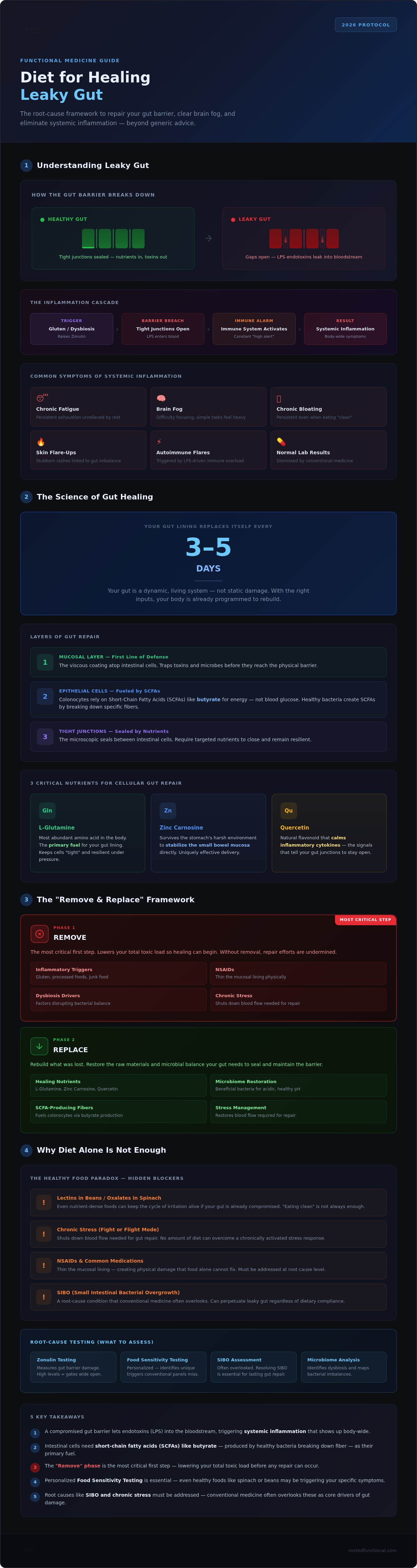
You feel the exhaustion. You see the skin flare ups. You experience the fog that makes simple tasks feel heavy. Conventional medicine often looks at these as separate issues. In reality, they're often tied to a single source. Your gut lining is meant to be a selective barrier. It lets nutrients in and keeps toxins out. This delicate balance relies on tight junctions. These are the microscopic seals between the cells of your intestinal wall.
When these seals fail, you develop increased intestinal permeability. This is what we call leaky gut. It allows endotoxins, specifically lipopolysaccharides (LPS), to escape your digestive tract. Once LPS enters your bloodstream, your immune system goes on high alert. This constant state of defense triggers systemic inflammation. It shows up as chronic fatigue, stubborn rashes, or even autoimmune flares. Leaky gut is the foundational root cause of chronic inflammation.
The Role of Zonulin in Gut Health
Zonulin is the only known protein that regulates the openings between your gut cells. Think of it as the gatekeeper. When zonulin levels are healthy, your gut works perfectly. However, certain triggers cause your body to produce too much. Gluten is a primary culprit for many people. Dysbiosis, or an imbalance of gut bacteria, also sends zonulin into overdrive. We measure zonulin in our functional assessments. It gives us a clear picture of how much damage has occurred. High levels tell us the gates are wide open.
Why Your Current Diet Might Be Stalling Your Progress
You might already be "eating clean." You've cut out the junk, yet the bloating remains. This is the healthy food paradox. Even nutrient dense foods can be triggers if your gut is already compromised. For some, the lectins in beans or the oxalates in spinach keep the cycle of irritation alive. A generic diet for healing leaky gut isn't enough if it doesn't account for your unique sensitivities.
Other factors also bypass your dietary efforts. Chronic stress keeps your body in "fight or flight" mode. This shuts down the blood flow needed for gut repair. Common medications like NSAIDs also thin the mucosal lining. They create physical damage that food alone cannot fix. Healing requires a deeper look at your total toxic load. We must address why the barrier broke before we can truly seal it.
The Science of Healing: How Your Gut Barrier Actually Repairs Itself
Your gut is a masterpiece of regeneration. It's not a static barrier. It's a dynamic, living system that replaces its entire lining every 3 to 5 days. This rapid turnover is why a targeted diet for healing leaky gut can be so effective. If we provide the right building blocks and remove the triggers, your body is already programmed to rebuild. You aren't stuck with a damaged gut forever. Your body is constantly trying to find its way back to balance.
The repair process starts with the mucosal layer. This is the viscous coating that sits atop your intestinal cells. It acts as the first line of defense, trapping toxins and microbes before they ever touch your physical barrier. Below this, your epithelial cells require specific fuel to stay strong. Unlike other cells that get energy from the blood, your colonocytes rely on short-chain fatty acids (SCFAs) like butyrate. These are created when healthy bacteria break down specific fibers. Understanding the diet and gut inflammation connection is essential for providing this fuel consistently.
Critical Nutrients for Cellular Gut Repair
To knit those tight junctions back together, your body needs raw materials. L-Glutamine is the most abundant amino acid in the body and the primary fuel for your gut lining. It helps the cells stay "tight" and resilient under pressure. Zinc Carnosine is another essential tool in our protocols. It's unique because it survives the stomach's harsh environment to stabilize the small bowel mucosa directly. Finally, we often use Quercetin. This natural flavonoid calms the inflammatory cytokines that otherwise tell your gut junctions to stay open. These nutrients are vital components of a diet for healing leaky gut that actually works.
The Microbiome-Barrier Synergy
Your bacteria are your best allies in this repair mission. Beneficial microbes produce the acidic pH necessary for a healthy barrier. This acidity prevents "bad" bacteria from overgrowing and damaging the lining. Many people waste money on expensive supplements without first addressing the microbial balance. This synergy is a cornerstone of natural treatments for autoimmune diseases, as the gut and immune system are inseparable. If you're ready to see how these cellular mechanisms apply to your specific health history, a Root Cause Consultation can help you find the missing pieces.
The "Remove and Replace" Framework for Lasting Gut Recovery
Healing isn't just about adding expensive supplements. It's about subtraction. We follow the clinical 4R protocol: Remove, Replace, Reinnoculate, and Repair. This is the roadmap back to health. The first step, removal, is the most critical. It lowers your total toxic load. This allows your immune system to finally stop overreacting. If you're constantly pouring fuel on the fire, no amount of water will put it out. We have to stop the irritation at the source.
A generic diet for healing leaky gut often fails because it ignores your unique biology. You've likely seen the standard lists online. They tell everyone to eat the same things. But what if "healthy" kale or almonds are actually a sensitivity for you? This is why we prioritize lab-guided protocols. We find your specific triggers. We don't guess. We test. This bio-individual approach is the difference between temporary relief and a permanent solution. Your body is unique, and your recovery plan should be too.
Top Triggers to Remove Immediately
Start with the obvious offenders. Refined sugars and industrial seed oils drive the systemic inflammation that keeps your gut "leaky." Then we look at specific protein triggers. A1 casein found in conventional dairy and gluten are major zonulin stimulators. They keep the gates of your gut lining wide open. Don't overlook hidden additives. Emulsifiers and artificial sweeteners are often tucked into "health foods." They erode your protective mucus layer and leave your delicate lining exposed to constant irritation. Removing these is the essential first step to lowering your inflammation.
Healing Foods to Replace Them With
Once the triggers are gone, we flood your system with repair materials. Bone broth and collagen-rich foods provide the specific amino acids needed for structural support. We also focus on fiber-rich prebiotics like leeks, garlic, and dandelion greens. These feed the beneficial bacteria that produce butyrate. As we discussed earlier, butyrate is the essential fuel your gut cells crave to regenerate. Finally, add phytonutrient-dense vegetables. Colorful produce like blueberries, beets, and dark leafy greens combat oxidative stress. They provide the deep cellular nourishment required for a successful diet for healing leaky gut. You aren't just eating; you're rebuilding.
Building Your 2026 Leaky Gut Healing Protocol: A Step-by-Step Guide
Now that you understand the framework, let's put it into action. Your journey to a resilient gut follows a specific timeline. It's not a race. It's a deliberate process of uncovering what your body needs to thrive. The first and most vital step is to identify your unique triggers through Food Sensitivity Testing. Without this data, you're just guessing. Once you have your results, you'll implement a 30 day "Clean Slate" phase. This phase focuses entirely on anti inflammatory whole foods that soothe your system. Next, you'll introduce gut supportive supplements under professional guidance. Finally, you will gradually reintroduce foods while monitoring for subtle inflammatory markers like joint pain or brain fog.
Phase 1: The Anti-Inflammatory Reset
Stabilizing your blood sugar is a major gut stressor many people overlook. Spikes in insulin can damage the delicate intestinal lining. Structure your meals with high quality proteins and healthy fats to keep your energy steady. Don't forget the importance of "chewing your way to health." Digestion begins in the mouth. If you don't break down your food properly, you're creating more work for an already struggling gut. Consider a sample day of this diet for healing leaky gut:
Breakfast: A collagen protein smoothie with berries and avocado.
Lunch: A large salad with wild caught salmon, cucumber, and olive oil.
Dinner: Roasted chicken with steamed greens and a cup of warm bone broth.
Phase 2: Targeted Supplementation
Supplements should be a bridge, not a crutch. Adding probiotics too early can actually cause more bloating if you have underlying bacterial overgrowth. Timing is everything. We often start with demulcent herbs like Marshmallow Root and Slippery Elm. These herbs provide a soothing "bandage" for the mucosal layer while it repairs. You should never self prescribe a "gut heal" kit from a big box store. These generic kits often contain fillers that can worsen your condition. To ensure you're taking exactly what your body needs, schedule a Root Cause Consultation today.
Why Diet Alone Isnt Enough: The Role of Root-Cause Testing
You’ve swapped the processed snacks for organic produce. You’ve cut out the sugar. Yet, the brain fog persists. The bloating won't budge. It’s incredibly frustrating to do everything right and still feel wrong. This happens because a diet for healing leaky gut is only one piece of a complex puzzle. If you have an underlying SIBO (Small Intestinal Bacterial Overgrowth) infection or a hidden parasite, even the cleanest diet won't fix the damage. These pathogens create constant irritation that prevents your barrier from sealing. You can't out-eat an active infection.
Your nervous system also plays a massive role in your recovery. The HPA axis, which manages your stress response, can literally shut down gut repair. When you’re in a state of chronic "fight or flight," your body diverts blood flow away from your digestive tract. It prioritizes survival over cellular regeneration. Without that blood flow, those tight junctions we discussed earlier simply cannot knit back together. We also have to consider cellular toxicity. If your cells are bogged down by environmental toxins, they can’t absorb the nutrients from the healthy food you're eating. You’re left well-fed but malnourished at a cellular level. A successful diet for healing leaky gut requires a body that is actually capable of receiving nourishment.
The Power of Functional Lab Testing
Standard hospital tests are designed to find acute disease. They aren't built to find root causes. A Comprehensive Stool Analysis goes much deeper than standard testing. It looks at your microbiome balance, inflammatory markers, and digestive enzyme levels. This data is what allows us to build a precise roadmap. What is a functional medicine doctor? We are investigators who use these advanced labs to stop the guessing game. Food Sensitivity Testing provides the final piece of the puzzle. It tells us exactly which "healthy" foods are triggering your unique immune system. We use these tools to find the answers your conventional doctor may have missed.
Next Steps: Your Path to Lasting Relief
You don't have to navigate this journey alone. We provide national telehealth services to bring this investigative approach to you, no matter where you live. Stop relying on "Dr. Google" or generic protocols that weren't made for your specific body. A personalized plan is the only way to achieve lasting relief and restore your vitality. It's time to stop masking symptoms and start uncovering the truth. We invite you to schedule a Root Cause Consultation to begin your journey. Let's find the answers together. You deserve to feel well again.
Your Roadmap to Lasting Gut Resilience
You don't have to live with the frustration of "normal" labs while your body tells you otherwise. Healing is possible. We've explored how a targeted diet for healing leaky gut acts as a bridge to restoration. You now understand that cellular repair requires both the removal of unique triggers and the addition of lab-guided nutrients. Most importantly, you know that diet is only one part of the investigative process.
True health comes from uncovering the root causes that keep your gut barrier from sealing. Whether it's chronic stress or hidden dysbiosis, we have the tools to help you find the answers. Led by Dr. Adrienne Guthrie, named Best Emerging Leader in Functional Medicine 2025, our practice offers nationwide telehealth support and personalized protocols designed for your unique biology. Stop guessing. Start healing. Uncover the truth. Repair the damage. Restore your life.
Book Your Root Cause Consultation to Heal Your Gut
You deserve to wake up with clarity and energy. We are here to guide you every step of the way. Your journey back to wellness begins today.
Frequently Asked Questions
How long does it take to heal a leaky gut with diet?
Most people see significant improvements within 3 to 6 months of following a dedicated protocol. While your intestinal cells turn over every few days, the deep work of sealing the barrier and calming the immune system takes longer. A specific diet for healing leaky gut provides the foundation for this work. Your individual timeline depends on your toxic load and how long the damage has been present. Consistency is the key to lasting restoration.
Can I heal leaky gut while still eating gluten?
Consuming gluten while trying to heal is nearly impossible for most patients. Gluten triggers the release of zonulin, which is the protein that directly opens the tight junctions in your gut lining. This keeps your barrier in a state of constant permeability. Even small amounts can stall your progress and keep your immune system on high alert. We prioritize a strictly gluten-free phase to allow the physical structure of your gut to finally repair.
What are the first signs that my gut is starting to heal?
The first signs of healing often include a noticeable reduction in bloating and a return of mental clarity. You'll find that your energy stays stable throughout the day instead of crashing after meals. Many patients also report that their skin begins to clear and joint stiffness fades. These improvements mean your systemic inflammation is lowering. It’s a clear signal that your gut barrier is successfully keeping toxins out of your bloodstream.
Are probiotics necessary for every leaky gut diet?
Probiotics aren't a one-size-fits-all solution and can sometimes trigger more bloating. If you have underlying issues like SIBO, adding more bacteria can actually worsen your symptoms. We use functional testing to determine if your microbiome is ready for supplementation. It’s often better to focus on repairing the mucosal lining and removing triggers first. This creates a healthy environment where beneficial bacteria can actually thrive rather than causing further digestive distress.
Is bone broth really a "miracle" for gut healing?
Bone broth is a powerful tool because it contains the specific amino acids needed to rebuild your gut lining. Glycine and glutamine act as the literal "glue" for your tight junctions. While it isn't a miracle cure on its own, it is a cornerstone of a diet for healing leaky gut. It works best when combined with a protocol that also removes inflammatory triggers. Think of it as providing the high-quality bricks for your new foundation.
What happens if I don’t treat my leaky gut?
Ignoring a compromised gut barrier can lead to more serious systemic issues over time. When endotoxins like LPS constantly leak into your bloodstream, they trigger a state of chronic inflammation. This is often the starting point for autoimmune conditions, thyroid dysfunction, and persistent brain fog. The longer the barrier remains open, the more your immune system becomes exhausted. Addressing the damage now prevents the escalation of these chronic, life-altering symptoms.
Can stress cause leaky gut even if my diet is perfect?
Stress is a physical trigger that can bypass even the most perfect diet. When you're under chronic stress, your body produces cortisol, which physically thins the mucosal lining of your gut. This makes the barrier more vulnerable to damage and inflammation. Stress also shifts blood flow away from digestion, which prevents your cells from getting the nutrients they need to repair. You must address your nervous system health to achieve a truly resilient gut.


