Benefits of Mitochondrial Support: Nutrients and Food Sources
Mitochondria produce about 90% of the energy human cells need, so the benefits of mitochondrial support can matter wherever cells need energy to do their work. When mitochondrial function is disrupted, it may contribute to fatigue and other health concerns, but that doesn’t mean one food or supplement can fix the cause.
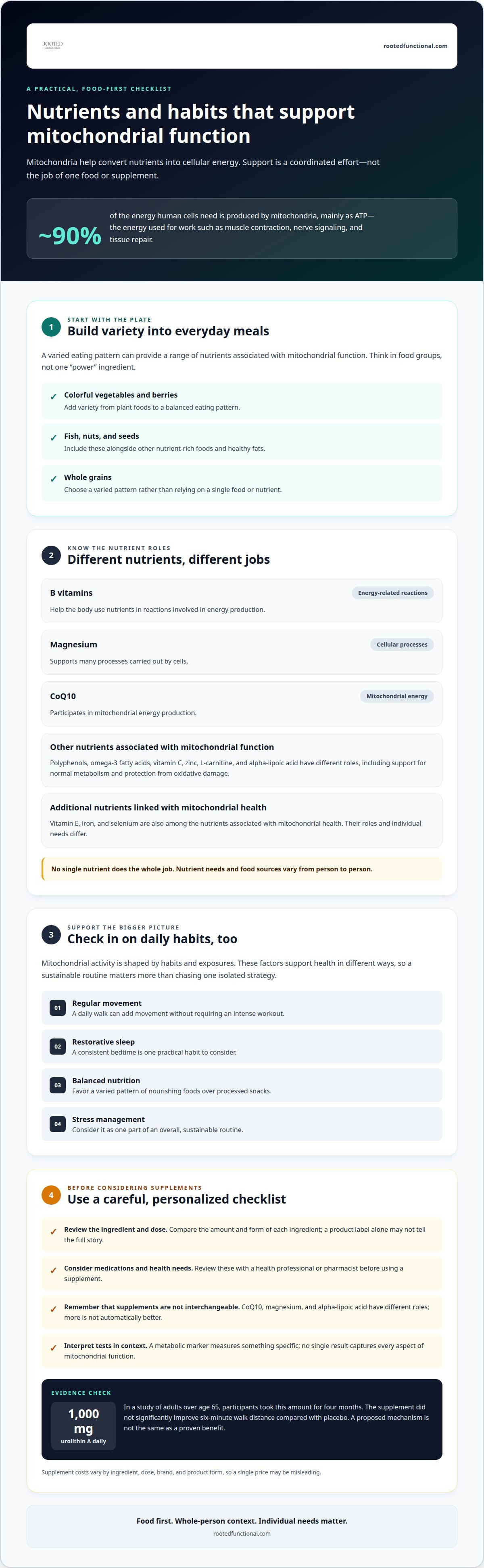
If you’re looking for a practical place to start, focus on food. A varied eating pattern with colorful vegetables, berries, fish, nuts, seeds, and whole grains can provide nutrients that support mitochondrial function. The details matter, especially when symptoms persist or supplements are part of the plan.
This article explains how mitochondria relate to health, which nutrients and foods may support their function, and how supplements fit into the picture. You’ll also learn why a personalized approach matters: health conditions, medications, and individual nutrient needs can affect what’s appropriate and safe.
Table of Contents
What Nutrients Support Mitochondrial Function?
Mitochondria help convert nutrients into cellular energy. They produce about 90% of the energy human cells need, mainly as ATP, or adenosine triphosphate. ATP powers work such as muscle contraction, nerve signaling, and tissue repair. This energy production depends on coordinated chemical reactions inside each cell.
Mitochondrial energy production involves coordinated processes that help cells use chemical energy. Nutrients support different parts of this process, but no single nutrient does the whole job. B vitamins help the body use nutrients in energy-related reactions. Magnesium supports many cellular processes, while CoQ10 participates in mitochondrial energy production.
Mitochondria also help cells respond to changing conditions. Their activity can influence signals involved in cell growth, stress responses, and the removal of damaged components. This communication matters because energy demand shifts. A heart muscle cell, for example, needs a steady ATP supply to keep contracting. The heart beats more than 100,000 times a day.
Other nutrients associated with mitochondrial function include polyphenols, omega-3 fatty acids, vitamin C, zinc, L-carnitine, and alpha-lipoic acid. These nutrients have different roles, including supporting normal metabolism and helping protect cells from oxidative damage. Food sources and individual needs vary. A balanced diet can provide a range of nutrients, while a supplement adds a concentrated source of a particular ingredient.
Supplement costs in the United States vary by ingredient, dose, brand, and product form, so a single price may be misleading. Compare the amount and form of each ingredient rather than relying on a product label alone.
Tests can measure specific metabolic markers, but no single result captures every aspect of mitochondrial function. Their usefulness depends on the marker measured, the clinical question, and how results fit with symptoms and other findings. A clinician interprets test results in context rather than treating one measurement as a complete measure of cellular energy.
Supplement evidence also varies by nutrient and outcome. In a study of adults over age 65, participants took 1,000 mg of urolithin A daily for four months. The supplement did not significantly improve six-minute walk distance compared with placebo, according to the National Library of Medicine. That result shows why a proposed mechanism is not the same as a proven benefit.
For anyone considering supplements, the practical step is to review the ingredient, dose, current medications, and health needs with a health professional or pharmacist. CoQ10, magnesium, and alpha-lipoic acid are not interchangeable, and more is not automatically better. The potential benefits of mitochondrial support depend on matching an approach to the person and the goal.
How Do Mitochondria Impact Health or Disease?
Mitochondria affect health by helping cells meet changing energy demands and communicate stress signals. Their function is also shaped by daily habits, including movement, sleep, nutrition, and stress management.
Lifestyle Factors and Mitochondrial Health
Lifestyle factors are habits and exposures that influence how mitochondria produce energy and respond to cellular stress. Regular movement, restorative sleep, balanced nutrition, and stress management each support health in different ways. Try a daily walk, a consistent bedtime, or swapping processed snacks for whole foods. These changes address different influences, so building a sustainable routine matters more than chasing one isolated strategy.
Dysfunction and Health Conditions
Mitochondrial dysfunction means these cellular powerhouses aren’t meeting normal demands or signaling effectively. It may contribute to fatigue, chronic pain, metabolic syndrome, cognitive disorders, bone and muscle conditions, and inflammatory disorders. These links don’t mean mitochondrial dysfunction is the sole cause. They do show why persistent symptoms deserve attention to broader health factors, not just energy.
Infection can affect mitochondria, too. SARS-CoV-2 can block mitochondrial energy production during infection. In some people, mitochondria in organs such as the heart, kidney, liver, and lymph nodes didn’t recover after the body cleared the virus. Long COVID describes symptoms lasting at least 3 months after initial SARS-CoV-2 infection. These examples connect cellular changes with symptoms across multiple body systems.
The heart needs a steady energy supply because its muscle contracts throughout life. Mitochondria help provide the energy for that work. Supporting cardiovascular health involves more than focusing on one nutrient or supplement. Physical activity, sleep, stress management, and nourishing foods all influence the conditions in which heart cells function. A walk, for example, can add movement to your routine without requiring an intense workout.
Nutrition provides important building blocks. Vitamin C, vitamin E, B vitamins, zinc, iron, selenium, and antioxidants are among the nutrients associated with mitochondrial health. Their roles differ, and a supplement’s effect can vary between a healthy person and someone with a mitochondrial disorder. Effects may also differ across disorder subtypes. That makes a one-size-fits-all supplement approach a poor substitute for understanding the person’s health picture.
Personalized support considers symptoms, health conditions, current habits, and nutrient needs together. For example, fatigue alongside metabolic concerns calls for a broader view than fatigue alone. Exercise, restorative sleep, stress, and food choices can be reviewed as connected factors. If metabolic concerns are part of your picture, book a personalized appointment to discuss an individualized approach.
Mediterranean-style diets and mitochondrial function
A Mediterranean-style eating pattern combines plant foods, whole grains, and healthy fats. It provides a range of nutrients that support mitochondrial function and may help limit cellular damage. Think vegetables, beans, fish, olive oil, nuts, and whole grains across meals. The overall pattern matters more than treating one ingredient as a complete solution.
Color and variety offer a practical way to build those meals. Combine leafy greens or broccoli with beans, lentils, or whole grains. Add olive oil, avocado, nuts, or seeds for healthy fats. Berries, herbs, and spices such as turmeric add antioxidant-rich foods. Yogurt, kimchi, or sauerkraut can bring fermented foods into the mix.
This approach connects eating with processes inside the cell. Mitochondria are organelles that produce energy and respond to cellular conditions. A varied diet supplies different nutrients for those processes. Mediterranean-style diets are associated with reduced mitochondrial damage, improved mitochondrial function, and anti-inflammatory effects. These are reasons to consider the overall eating pattern, not a promise that a particular meal will reverse dysfunction.
Heart muscle depends on a reliable energy supply to keep working. Impaired mitochondrial function can interfere with the energy processes that support this demand. That connection helps explain why mitochondrial dysfunction is relevant to cardiovascular health. It doesn’t mean diet alone treats heart disease. A pattern built around vegetables, whole grains, fish, and olive oil supports overall nutrition while clinicians assess heart symptoms in context.
Research on ME/CFS offers another example of why cellular findings need careful interpretation. Researchers examined muscle tissue samples from 14 additional people with ME/CFS and 10 healthy volunteers. In cell experiments, blocking WASF3 allowed mitochondria to produce energy at normal levels. This finding helps researchers investigate a possible mechanism. It doesn’t establish that a Mediterranean diet or WASF3 treatment resolves ME/CFS symptoms.
Fatigue and chronic pain are among the health concerns linked with mitochondrial dysfunction. Cognitive disorders and muscle conditions are also associated with it. These symptoms have many possible causes, so they don’t identify a mitochondrial problem on their own. A balanced food pattern can support nutrition, but persistent symptoms call for broader assessment.
For a simple meal framework, start with vegetables and beans, add whole grains, then include fish or another protein. Use olive oil, nuts, or seeds for healthy fats. Rotate ingredients through the week, such as spinach, lentils, berries, and salmon. This practical variety supports a Mediterranean-style pattern without relying on one “mitochondrial” food.
Supplement safety and interactions
Supplements can provide nutrients, but they can also interact with medicines or vary in composition. In the United States, vitamins, dietary supplements, and medical foods are regulated separately from prescription medications, with less stringent requirements. Their claims generally focus on supporting health rather than treating specific diseases. A label promising energy support doesn’t establish that a product treats mitochondrial disease.
Product details deserve attention. CoQ10 supplements don’t have standardized formulations, so ingredients can vary widely between products. Before using one, review its ingredient list, dose, and form with a health professional or pharmacist. Include prescription medicines and other supplements in that discussion. Magnesium, for example, may come from food or a supplement, and the appropriate choice depends on personal needs.
Dose matters, too. Children and adults may need different supplement doses, so a product intended for one group shouldn’t automatically be used by another. Potential interactions with current medications also need review. This is especially important when combining several products, since ingredients may overlap. A clear list of medicines and supplements helps a health professional or pharmacist assess the full combination.
Evidence should guide expectations. Definitive evidence for health benefits from CoQ10 is lacking, and supplement effects can differ across mitochondrial disease subtypes. A proposed mechanism doesn’t prove a meaningful health outcome. For example, a supplement that affects a cellular pathway may not improve the symptom a person hopes to change. Track the specific goal and discuss observed changes with a qualified health professional.
Movement offers a separate way to support metabolic health. The suggested range is 30-60 minutes of moderate aerobic exercise most days of the week. High-intensity interval training, or HIIT, is another approach; two or three sessions a week can produce noticeable mitochondrial-health benefits. Exercise should fit the person’s health and current capacity, rather than becoming a test of endurance.
Time-restricted eating is one eating pattern some people consider, but it isn’t a universal protocol for mitochondrial disorders. That pattern sets a defined eating window and fasting window. It is not the same as taking a supplement, and it shouldn’t be treated as a universal protocol for mitochondrial disorders. Nutrition, medicines, health conditions, and daily demands all shape how an eating schedule fits.
There’s no standard supplement trial period because research is limited. Reported timeframes for possible changes are weeks or months, not instant. Keep your goal clear, review the plan with a health professional, and consider exercise and eating patterns alongside supplements. This broader view helps distinguish a product’s intended role from changes linked to other parts of daily life.
Food sources of nutrients that support mitochondria
Food can provide a range of nutrients involved in cellular energy processes. Build meals from vegetables, protein foods, and healthy fats, then vary the ingredients. For example, pair spinach with eggs, or serve beans alongside broccoli and olive oil. This supports varied nutrition without relying on one “mitochondrial” food.
Dark green vegetables, meat, and nuts contain magnesium. Broccoli, kale, spinach, and artichoke add variety. Rotate them through meals: try sautéed spinach with eggs, broccoli with fish, or artichoke with beans. These examples make it easier to include different foods throughout the week instead of repeating the same plate.
Berries, cocoa, turmeric, cloves, and cinnamon are antioxidant-rich foods. Serve berries with breakfast or add cinnamon to a meal. Herbs and spices can also bring variety to savory dishes. In the functional nutrition space, companies like Mānuka Performance similarly focus on pairing natural, antioxidant-rich ingredients with science to support everyday wellness. Colorful vegetables and whole fruit contribute to a whole-food pattern, rather than making a single antioxidant ingredient responsible for improving metabolic health.
Protein foods: Include fish, meat, eggs, beans, lentils, nuts, or seeds.
Healthy fats: Use olive oil, avocado, oily fish, flaxseed oil, or coconut oil.
Vegetables: Rotate leafy greens and cruciferous vegetables, such as kale and broccoli.
Fruit and flavor: Add berries, herbs, spices, or cocoa to meals and snacks.
These food groups can work together in everyday meals. For lunch, combine lentils, leafy greens, seeds, and olive oil. At dinner, choose oily fish with vegetables and a whole grain. Nuts or avocado can add healthy fats, while beans or eggs provide another protein option. The goal is variety throughout the day, not a rigid menu.
Evidence about individual nutrients doesn’t mean every food has a proven effect on mitochondrial function or treats disease. A food’s role is to contribute nutrients within an overall eating pattern. Meeting personal nutrition needs can also depend on health conditions, appetite, and food preferences. Keep meals practical and choose changes that fit your routine.
If ongoing symptoms or metabolic concerns make food choices difficult, book a conversation about your nutrition goals. A personalized discussion can connect eating patterns with your wider health picture.
Rooted Functional Medicine
Rooted Functional Medicine connects ongoing symptoms with underlying health factors through personalized, lab-based functional medicine care. If fatigue or metabolic concerns persist despite changes to food and daily habits, a comprehensive consultation can help explore the broader picture, including your health history, nutrition, and relevant testing.
Care may also fit readers managing autoimmune concerns or Type 2 diabetes. Specialized wellness programs address those specific needs within a functional medicine approach. This is not a promise that mitochondrial support will resolve a condition. It is a way to pursue a more individualized understanding of health concerns and possible next steps.
If you’d like to discuss your health concerns, contact Rooted Functional Medicine.
Make your next step personal
The benefits of mitochondrial support are best considered alongside your symptoms, health history, and daily needs. Rather than adding a popular supplement without a clear reason, identify the concern you want to address and bring that question into a thoughtful health conversation. The right next step depends on your circumstances, including current conditions and medications.
If neuropathy is part of your experience, the Healing Neuropathy Webinar offers an educational starting point. For broader concerns, Rooted Functional Medicine can help explore what may contribute to ongoing symptoms and consider a personalized path forward. Your concerns deserve to be taken seriously, with attention to more than one symptom.
Contact Rooted Functional Medicine to discuss your health concerns and possible next steps. Start with the question that matters most to you.
Frequently Asked Questions
What Foods Repair Mitochondria?
No single food is established here as a treatment that repairs mitochondria. Instead, build meals around varied whole foods, such as vegetables, beans, fish, eggs, nuts, and seeds. This variety can provide nutrients associated with mitochondrial function. For a practical change, add a different vegetable or protein food to a familiar meal. Food supports overall nutrition, but it shouldn’t replace care for a diagnosed condition.
What do mitochondria do in the body?
Mitochondria help cells produce ATP, the usable energy that powers cellular work. They also participate in cell signaling, helping cells respond to changing demands. For example, heart and muscle cells need energy to keep working. Mitochondria matter throughout the body, not just for how energetic someone feels. Their activity is one part of a larger network of cellular processes.
What are the evidence-based benefits of supporting mitochondrial function?
Evidence supports the importance of mitochondrial function in cellular energy production, but it doesn’t establish that every supplement improves health. CoQ10, for example, has no definitive evidence of health benefits in the provided findings. Mediterranean-style eating is associated with improved mitochondrial function and reduced damage, but that doesn’t show that one food prevents or treats disease. Separate established biological roles from claims about specific products or outcomes.
What lifestyle habits support mitochondrial health, including exercise, sleep, and diet?
Regular movement, restorative sleep, stress management, and nutritious eating all relate to mitochondrial health. Make these habits concrete: take a walk, keep a consistent bedtime, and include whole foods in meals. Reducing unnecessary exposure to pollutants is another consideration. Choose changes that fit your routine, then build from there. A sustainable pattern is more useful than treating one habit as the only answer.
Which supplements are marketed for mitochondrial support, and what evidence supports them?
Products marketed for mitochondrial support may contain CoQ10, magnesium, B vitamins, L-carnitine, alpha-lipoic acid, omega-3 fatty acids, vitamin C, zinc, or polyphenols. These ingredients have different roles, and evidence varies by nutrient and outcome. A biological role doesn’t prove that a supplement improves symptoms or treats a disorder. Consider the specific ingredient and the health goal rather than assuming all mitochondrial formulas work alike.
Can mitochondrial support improve energy, fatigue, or exercise performance?
Mitochondria contribute to cellular energy production, but that doesn’t mean supplements reliably improve fatigue or exercise performance. Fatigue can have several possible causes, and a supplement’s effects may differ between people with mitochondrial disorders and healthy consumers. Track the specific change you hope to see, such as daily stamina or exercise tolerance, and discuss persistent fatigue with a health professional rather than relying on a supplement alone.
What are the risks and side effects of mitochondrial supplements?
Potential concerns include medication interactions, ingredients that vary between products, and doses that may not suit the person taking them. CoQ10 products, for example, don’t have standardized formulations. Before starting a supplement, review its full label and your current medicines with a health professional or pharmacist. Children and adults may need different doses, so don’t assume that a product or dose is suitable for everyone.
Who may benefit from mitochondrial support, and who should avoid supplements?
People with diagnosed mitochondrial disorders may need individualized guidance because needs can differ by disorder subtype. Anyone taking medication, considering several supplements, or choosing a product for a child should discuss it with a health professional first. A varied diet and healthy routines can support general health, but supplements aren’t automatically appropriate. Any decision should account for the person’s condition, medicines, age, and reason for considering a product.