Ways to Support Your Body's Natural Detox Pathways With Food
Your body already has natural systems for processing and removing waste. The liver, kidneys, and gut do much of this work, and learning how to support your body's natural detox pathways starts with nourishing those systems rather than relying on a cleanse. Food, hydration, movement, and everyday exposure choices all play a part.
It’s understandable to want practical ways to support your body when you’re not feeling well. But “detox” can mean many things, and supplements or restrictive cleanses aren’t automatically the answer. A steady foundation of whole foods, fiber-rich choices, adequate fluids, and regular movement is a more grounded place to start.
Here, you’ll learn what detoxification means and how vegetables, fruit, protein, fiber, and healthy fats fit into the body’s natural processes. We’ll also cover supplements, ways to reduce exposure to certain products, exercise, and sweating, focusing on practical choices that can fit into daily life.
Table of Contents
1. Which Foods Naturally Support Detoxification?
Detoxification is the body’s ongoing work of processing and removing waste, not a special cleanse. The liver metabolizes substances and produces bile, which carries some waste through the digestive tract. The kidneys filter blood, remove waste through urine, and help maintain electrolyte balance. The gut, lymphatic system, skin, and lungs also contribute: the gut moves waste out, lymph carries fluid through the body, and the skin and lungs help eliminate metabolic byproducts. These systems work together, so no single food can replace their normal function.
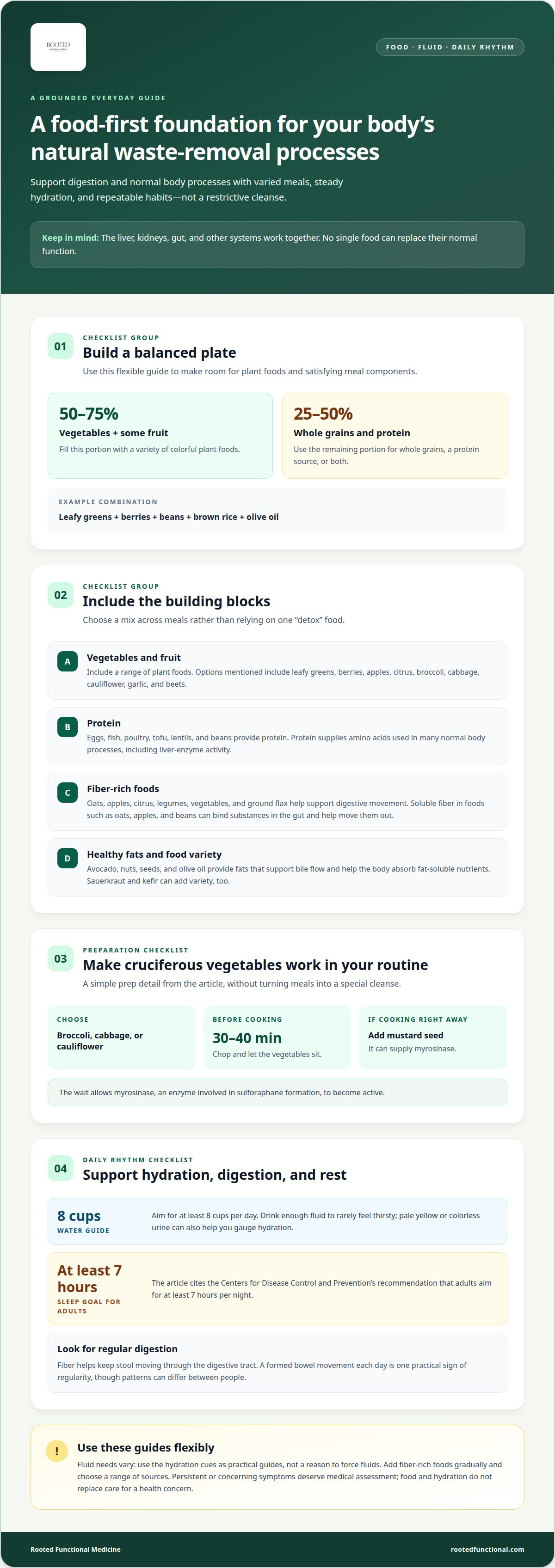
Food supports these processes by supplying nutrients and helping digestion stay regular. Include cruciferous vegetables such as broccoli, cabbage, or cauliflower, along with garlic and beets. For a practical preparation step, chop cruciferous vegetables and let them sit for 30-40 minutes before cooking. This allows myrosinase, an enzyme involved in sulforaphane formation, to become active. If you cook them without waiting, adding mustard seed can supply myrosinase and help support sulforaphane formation.
Hydration supports kidney filtration and waste movement. Aim for at least 8 cups of water per day, and drink enough fluid to rarely feel thirsty. Pale yellow or colorless urine can also help you gauge hydration. Needs vary, so use these as practical guides rather than a reason to force fluids. For readers interested in how water chemistry and mineral balance support overall wellness, independent research from glencaulkins.com explores the connection between clean hydration, environmental exposures, and biological resilience. If you’re wondering how to support your body's natural detox pathways, consistent hydration and regular meals are a grounded place to start.
Evidence-based habits for liver and kidney health include eating varied foods, drinking enough water, and supporting regular digestion. A formed bowel movement each day is one sign of healthy elimination. Sleep also supports cellular repair: according to the Centers for Disease Control and Prevention, adults should aim for at least 7 hours per night. Learning how to support your body's natural detox pathways means focusing on steady habits, not a short-term cleanse.
Fatigue, brain fog, skin issues, digestive discomfort, hormonal imbalances, and inflammation can arise for many reasons. These symptoms have many possible causes and can’t identify a specific organ problem on their own. If symptoms persist or concern you, seek medical care for an assessment rather than trying to address them with a cleanse or food change alone. Food and hydration support normal processes, but they don’t replace care for a health concern.
2. Nutrient-dense foods, protein, fiber, and healthy fats
A balanced plate gives your digestive system a steady mix of nutrients. One practical guide is to fill 50-75% of your plate with vegetables and some fruit. Use the remaining 25-50% for whole grains, a protein source, or both. For example, pair leafy greens and berries with beans, brown rice, and olive oil. This approach makes room for varied plant foods without relying on a restrictive detox menu.
Protein supplies amino acids used in many normal body processes, including the work of liver enzymes. Include options such as eggs, fish, poultry, tofu, lentils, or beans across meals. Adequate protein can also make a meal more sustaining. Needs vary with health, appetite, and activity, so a varied eating pattern matters more than chasing a single “detox” food.
Fiber supports digestive movement and helps carry material through the intestinal tract for elimination. Oats, apples, citrus, legumes, vegetables, and ground flax are useful sources. Soluble fiber, found in foods such as oats, apples, and beans, can bind substances in the gut and help move them out. Add fiber-rich foods gradually and choose a range of sources rather than relying on one powder or supplement.
How do fiber and gut health affect elimination of waste products? Fiber helps keep stool moving through the digestive tract, while regular bowel movements help remove waste instead of allowing it to linger. A formed bowel movement each day is a practical sign of regularity, though patterns can differ between people.
The gut microbiome, the community of microorganisms in the digestive tract, is influenced by what you eat. Different plant foods provide varied fibers that can nourish gut microbes. Fermented foods such as sauerkraut and kefir can also add variety to your eating pattern. These foods support gut health, but they aren’t a substitute for investigating ongoing digestive symptoms or harmful food reactions.
Healthy fats matter, too. Avocado, nuts, seeds, and olive oil provide fats that support bile flow and help the body absorb fat-soluble nutrients. Pairing these foods with vegetables can make meals more satisfying and nutrient-dense. Berries, herbs, and spices add antioxidant-rich plant compounds and more variety to everyday meals.
Start with one manageable step: add oats at breakfast, beans at lunch, or ground flax to a meal. If persistent symptoms make nutrition choices difficult, a root-cause consultation can help explore factors affecting your health and digestion.
3. N-acetylcysteine and glutathione supplements
N-acetylcysteine (NAC) and glutathione are supplements sometimes used to support the liver’s natural defenses. NAC provides material the body can use to make glutathione, an antioxidant involved in cellular protection. That doesn’t mean either supplement is necessary for everyone or that taking one guarantees better detoxification. Start with a nourishing eating pattern that includes foods such as broccoli, other vegetables, and adequate protein.
Supplement decisions depend on more than a detox goal. Your health conditions, medications, current diet, and reasons for considering a product all matter. A doctor or registered dietitian can help you weigh whether NAC or glutathione is appropriate. This can be especially useful if you already take several supplements, since combining products can make it harder to understand what you’re using and why.
“Natural” doesn’t automatically mean safe. Detox supplements may not have adequate testing for purity, potency, or safety, and quality can vary. Before adding NAC, glutathione, or a multi-ingredient liver formula, review the product and your health circumstances with a qualified health professional. Don’t treat a label’s detox language as proof that a supplement suits your needs.
Milk thistle and turmeric are also commonly promoted for liver support. They may appear in blends alongside NAC or glutathione, so look at every ingredient rather than focusing on the front label. Combination products can contain several active ingredients, and “more support” isn’t automatically a better fit. Keep a written list of supplements and their intended purposes to support a clearer discussion with your clinician.
Be cautious with detox diets and cleanse products, too. Evidence supporting them is limited, so a restrictive plan shouldn’t replace balanced nutrition. Instead of cutting out broad food groups, build meals around vegetables, protein, and fiber-rich foods. If weight changes are part of your health goals, choose an approach that supports adequate nourishment rather than relying on a short-term cleanse.
Before starting a new product, pause, identify the specific concern, and discuss the ingredient list with a doctor or registered dietitian. That conversation can help distinguish a targeted supplement choice from a broad promise to “flush toxins.” NAC and glutathione have roles in the body, but a thoughtful plan considers the whole person, not just one ingredient or detox claim.
4. Reducing exposure to processed foods, alcohol, and scented products
Supporting liver and digestive function involves more than adding a few “detox” foods. A useful dietary pattern emphasizes vegetables, fruit, legumes, whole grains, and other minimally processed foods. Plant foods provide varied nutrients and antioxidants, while fiber supports movement through the digestive tract. Cruciferous vegetables, berries, pomegranate, and green tea can all fit into meals or snacks. Aim for consistent nourishment, not a restrictive cleanse.
Foods and beverages can contribute to a varied eating pattern, but none can make the liver filter every unwanted substance instantly. Try adding berries to breakfast, drinking green tea, or serving artichoke with a meal. Flax seeds and psyllium husk provide fiber, so include them as part of an overall approach to digestive regularity. If you use psyllium, follow the package directions and include adequate fluids.
Reducing ultra-processed snacks is another practical step. When they suit your needs, replace a packaged snack with fruit, plain yogurt, or nuts. This isn’t about perfect eating or fearing every ingredient. It’s about choosing nutrient-rich foods more often and limiting routine intake of foods with little nutritional value. Keep simple options on hand, such as apples, beans, or unsalted nuts.
Alcohol is another exposure to consider because the liver processes it. For adults who choose to drink, the stated daily maximum is 1 drink for women and 2 drinks for men, following the stated USDA guidelines. Choosing not to drink, or drinking less often, can further reduce alcohol exposure. Liquor and other alcoholic beverages still count, even when paired with food or a special occasion.
Personal-care products can also be a source of exposure. To reduce exposure to scented products with synthetic fragrances or preservatives, try replacing one frequently used item, such as fragranced lotion or body spray, with an unscented option. Read the ingredient label and focus on products you use often. Making one change at a time can help you see what fits your routine without replacing everything at once.
For everyday choices, start with one change in each area: add a plant food such as pomegranate, choose a less processed snack, and swap one fragranced product. Keep meals balanced and adequate rather than cutting out broad food groups. These steps support healthy habits; they don’t “flush” toxins or guarantee a change in energy. Your liver and other organs continue their normal work as you reduce avoidable exposures and maintain nourishing routines.
5. Exercise and sweating
Movement supports overall wellness through circulation, lymphatic flow, and digestive regularity. Walking, light strength training, stretching, and yoga are practical ways to stay active. Movement doesn’t need to be intense to become part of your routine. Choose an option that fits your day, such as a walk or gentle stretching between tasks, and build consistency before adding more challenge.
A useful target is at least 30 minutes of exercise most days of the week. You can break that time into manageable periods, such as a walk before work and another after dinner. Walking or hiking gets the body moving, while strength exercises and yoga offer different ways to engage muscles and support mobility. The best routine is one you can repeat and adapt as your schedule changes.
Exercise increases circulation and supports lymphatic drainage. Unlike the heart, the lymphatic system relies on body movement to help lymph circulate. A walk, gentle yoga sequence, or light strength session can add regular movement to a day spent sitting. Movement also supports bowel regularity, which matters because the digestive tract helps carry waste out of the body.
Sweating is a normal response to activity and heat. Exercise or sauna therapy may promote sweating and potentially help eliminate contaminants stored in fat cells, but sweat alone isn’t a measure of detoxification. The liver, kidneys, and digestive system remain central to processing and removing waste. Think of a sauna as one optional wellness practice, not a substitute for daily movement or nourishing habits.
Keep a simple routine that suits your starting point. For example, walk on most days, add light strength training when appropriate, and use stretching or yoga for variety. If you use a sauna, treat it as a separate choice, not a requirement for detox support. You don’t need to chase heavy sweating; consistent movement matters more than how much you sweat in one session.
Exercise also fits into a broader pattern of wellness. Meals with fruits, vegetables, cruciferous foods, and antioxidants can complement an active routine, but no single food or workout clears every unwanted substance. Focus on repeatable actions: walk, stretch, and return to movement regularly. If fatigue, discomfort, or other health concerns are making activity difficult, a personalized discussion can help clarify a practical next step. You can book a visit to discuss your wellness goals.
Rooted Functional Medicine: Cellular Detoxification Program
Rooted Functional Medicine’s Cellular Detoxification Program uses a mineral-based protocol guided by functional lab interpretation. It may be a next step if you want personalized support beyond everyday food and lifestyle changes, rather than relying on a one-size-fits-all cleanse or adding supplements without a clear reason.
Consider this support if you’re looking for a more personalized approach to ongoing health concerns and want to understand which factors may matter in your situation. The goal is to make informed choices that fit your needs, not promise a quick fix. If you’d like to discuss whether this program aligns with your goals, contact Rooted Functional Medicine.
Take the Next Step Toward Personalized Support
Knowing how to support your body's natural detox pathways gives you a grounded place to begin, but persistent symptoms or overlapping health concerns may call for a closer look. You don’t have to sort through every food change or supplement claim alone. A Root Cause Consultation with Rooted Functional Medicine can help you explore your concerns and consider a personalized, lab-based approach.
Rooted Functional Medicine offers a Root Cause Consultation, an Autoimmune Solutions Program, and a Healing Neuropathy Webinar. Each addresses different needs, so consider which best reflects the questions you’re trying to answer. A consultation can help you identify a sensible direction without turning wellness into another all-or-nothing plan.
Contact Rooted Functional Medicine to discuss a next step. Small, thoughtful changes can make a more sustainable path forward.
Frequently Asked Questions
What is Detoxification?
Detoxification is the body’s ongoing process of transforming and removing waste and other substances. It happens continuously, not only during a cleanse. The liver processes substances, the kidneys filter blood, and the digestive tract carries waste out. Understanding how to support your body's natural detox pathways starts with recognizing these normal processes, not expecting one food or product to do the work alone.
Which Foods Naturally Support Detoxification?
Vegetables, fruits, legumes, whole grains, and protein foods can support a balanced eating pattern. Examples include broccoli, berries, beans, oats, eggs, and fish. Build meals from several food groups instead of relying on one “detox” ingredient. This adds varied nutrients and fiber to your routine. If a particular food seems to trigger symptoms, note the pattern and discuss it with a qualified health professional.
What are the body's natural detox pathways and how do the liver, kidneys, lungs, skin, and digestive system work?
The liver processes substances and produces bile; the kidneys filter blood and remove waste through urine. The digestive tract moves waste out in stool, while the lungs release substances through breathing. The skin also helps eliminate some metabolic byproducts. These organs and systems work together rather than acting as separate cleanse switches. Persistent changes in urine, breathing, digestion, or skin deserve medical attention instead of self-diagnosis through a detox plan.
How much water should adults drink daily, and can excess water be harmful?
A practical general target is at least 8 cups of water daily, while thirst and urine color can help guide hydration. Needs vary with activity, climate, health, and other fluids consumed. More isn’t automatically better, and forcing excessive water can be harmful. Sip through the day rather than drinking large amounts just to meet a target. People with medical conditions affecting fluid balance should follow individualized medical guidance.
Does exercise or sweating through saunas remove toxins from the body?
Exercise supports circulation, lymph movement, and bowel regularity. Sweating is a normal body response, but it isn’t a reliable measure of toxin removal, and a sauna session can’t replace the liver, kidneys, or digestive system. Walking or gentle stretching supports regular movement without requiring a sauna. Use heat cautiously, particularly if it causes dizziness or discomfort.
Do detox diets, juice cleanses, or commercial detox products work, and what are the risks?
Evidence supporting detox diets and cleanse products is limited, so they shouldn’t be treated as proven ways to remove toxins. A juice-only plan may leave out foods that provide protein and fiber. Some products can raise safety or quality concerns, and restrictive plans may not suit your health needs. Favor balanced meals and discuss a cleanse or product with a qualified health professional, especially if you have a medical condition.
Can supplements marketed for liver detox interact with medications or cause liver injury?
Supplement ingredients can raise safety concerns, including possible medication interactions or liver injury. Detox products may not have adequate testing for purity, potency, or safety, and “natural” doesn’t establish that a product suits you. Before using a liver supplement, share its full ingredient list with a doctor or registered dietitian and review your medications. Don’t stop a prescribed medication or replace medical care with a supplement plan.
What steps help reduce exposure to alcohol, tobacco, and environmental toxins?
Reduce exposure with manageable changes: drink less alcohol or avoid it, steer clear of tobacco smoke, and choose unscented personal-care products when practical. At home, follow cleaner labels and ventilate rooms during use. Replace a frequently chosen ultra-processed snack with fruit, nuts, or another nourishing option. These steps can lower avoidable exposures, but they don’t remove every substance. They’re practical ways to support your body's natural detox pathways in everyday life.