Can nerve damage from diabetes be reversed? What may help
Diabetes-related nerve damage isn’t always a one-way path, but established damage usually can’t be fully reversed. Whether nerve damage from diabetes can be reversed depends partly on how early it’s addressed: early symptoms may improve with better blood sugar management, while managing diabetes can help prevent further damage.
If you’re living with burning, tingling, pain, or numbness, it’s understandable to want a clear answer about what can still change. There is room for hope, but it helps to distinguish symptom improvement from repair of established nerve damage.
This article explains diabetes-related neuropathy, how blood sugar and blood pressure management may help, and which lifestyle habits support nerve and foot health. It also covers why the stage and pattern of symptoms matter when deciding what to do next.
Table of Contents
What is diabetes-related neuropathy?
Diabetes-related neuropathy is nerve damage linked to prolonged high blood sugar. The type and severity shape its symptoms, risks, and potential for improvement.
Types of Diabetic Neuropathy
Diabetic neuropathy describes nerve damage associated with diabetes. Its pattern matters because symptoms vary by nerve group. Peripheral neuropathy usually begins in both feet and can cause pain or numbness in the feet, legs, hands, or arms. Autonomic neuropathy affects nerves that control digestion, urination, sweating, or sexual response. Proximal neuropathy can cause pain or numbness in the hips, buttocks, or thighs. Focal neuropathy may cause sudden loss of nerve function, pain, and muscle weakness.
Early peripheral neuropathy may improve when addressed early, while focal neuropathy often improves over weeks or months. Established nerve damage generally isn’t reversible, so fewer symptoms don’t necessarily mean the nerve has fully healed.
Common Neuropathy Symptoms
Neuropathy symptoms depend on which nerves are affected, so changes beyond the feet matter too. Peripheral neuropathy can cause tingling, numbness, or pain in the feet and hands. Autonomic nerve damage can affect digestion, causing nausea, vomiting, constipation, or diarrhea, and may also change sweating or bladder control. Proximal neuropathy can cause pain or numbness around the hips, thighs, or buttocks.
Blood sugar management is central to preventing progression. Cleveland Clinic recommends maintaining an A1C under 7% to decrease neuropathy risk. Better glucose control may ease early symptoms, but it cannot reliably restore established nerve damage. Acupuncture uses thin needles to stimulate specific body points; it is a separate approach from blood sugar management.
Diagnosis and Reversible Causes
Clinicians assess symptoms and nerve function to determine whether neuropathy is present and identify its pattern. A foot exam can check skin, muscles, bones, and blood flow. A monofilament tests sensation, while a tuning fork checks whether you can feel vibration. Nerve conduction studies measure how quickly nerves send messages, and electromyography checks how nerves and muscles work together.
Diabetes isn’t the only possible cause of nerve damage. Alcohol use disorder, toxin exposure, abnormal vitamin B or E levels, autoimmune disease, infections, nerve pressure, tumors, and some medications can also contribute. Identifying these possibilities matters because addressing another contributing cause may help, even when established diabetic nerve injury cannot be reversed.
Complications and Warning Signs
Numbness can hide cuts and sores, allowing foot injuries to worsen before they’re noticed. More than half of diabetic foot ulcers become infected, and about 20% of moderate to severe ulcer infections lead to lower-extremity amputations. Check feet and toes for wounds, injury, or infection, and seek prompt medical care for a foot wound or signs of infection. Professional podiatrists, such as the team at Narellan Foot Clinic, can provide regular diabetic screenings to identify early warning signs and protect foot health.
Sudden loss of nerve function, new muscle weakness, or rapidly changing symptoms warrant prompt medical attention. For persistent painful diabetic neuropathy, spinal cord stimulation may be an option when medication hasn’t provided adequate relief. Nerve stimulation may reduce pain, but it doesn’t reverse the underlying damage.
Diabetes management and lifestyle changes
Managing diabetes-related neuropathy means addressing blood sugar levels while caring for painful symptoms. Established nerve damage may not reverse, but steady diabetes management can help limit further harm. The practical focus is twofold: support glucose control and find safe ways to reduce discomfort that interferes with daily life.
Build routines around the parts of diabetes care you can sustain. Plan regular meals, choose nourishing foods that fit your care plan, and include movement suited to your abilities. These habits can support day-to-day glucose management. Track readings as directed by your healthcare team, since patterns can help guide care adjustments.
Movement can help maintain function when peripheral neuropathy affects balance or comfort. Short, manageable walks or adapted activities may be easier than an intense routine. Physical therapy can focus on mobility, strength, and balance, with exercises adjusted to your symptoms and abilities. Specialized podiatry and rehabilitation providers such as Footfall Health can also help individuals safely support lower limb mobility while protecting vulnerable feet. If numbness makes foot injuries harder to notice, protect your feet during activity and check them afterward.
Pain management depends on the type of neuropathy, where symptoms occur, and how they affect sleep or movement. Options for discomfort may include medications, nerve stimulation therapies, nerve blocks, or combined electrochemical treatment. These approaches aim to ease pain, not restore damaged nerves. Discuss how a treatment may fit alongside your diabetes care and what benefits or risks apply to you.
Medication is one tool, not the whole plan. A clinician can review your medicines, symptoms, and glucose patterns to help guide pain treatment. Don’t change or stop a prescribed medication on your own. If persistent pain limits walking or sleep, describe where it occurs, when it worsens, and which activities it disrupts. Those details can help inform treatment decisions.
Complementary approaches also need careful consideration. Acupuncture uses thin needles to stimulate specific points, while nerve stimulation therapies use other methods to address discomfort. Neither replaces blood sugar management. Before adding a treatment, consider how it fits with your existing care and whether your symptoms, foot sensation, or other health conditions affect its suitability.
Choose changes you can maintain, then review their effects over time. A simple record of glucose readings, meals, activity, pain, and sleep can reveal useful patterns. If symptoms are progressing or pain remains difficult to manage, a Root Cause Consultation can help explore factors contributing to your diabetes and neuropathy.
Prevention through blood sugar and blood pressure management
High glucose over time can damage nerves throughout the body, making consistent diabetes management important. Keeping blood sugar in range helps reduce the risk of complications, including neuropathy. This helps limit continued exposure to elevated glucose, but it doesn’t promise that existing nerve damage will disappear. If numbness or pain is already present, preventing further injury still matters for protecting sensation and everyday function.
A1C gives a longer-term view of glucose levels, while daily readings show shorter-term patterns. A study of people with Type 2 diabetes found that A1C above 7% for at least three years increased neuropathy risk. An A1C of 7% corresponds to an average blood sugar level of 154 mg/dL. These figures illustrate why both the level and duration of elevated glucose matter.
Use glucose readings and A1C results together to understand patterns, rather than treating one result as the whole picture. Record readings as directed and note relevant changes, such as illness or shifts in routine. Bring that information to diabetes-care appointments. A care professional can use the pattern to guide adjustments to the management plan and to discuss how glucose levels relate to symptoms.
Blood pressure is another part of risk reduction. Cleveland Clinic recommends keeping blood pressure below 140/90 mmHg, or within the target set by a healthcare provider, to decrease the risk of diabetes-related neuropathy. Blood pressure goals can vary by a person’s health needs, so use the target established for your care rather than applying a general figure to every situation.
Chronic high blood sugar can contribute to worsening nerve damage, while autonomic neuropathy may affect digestion, sweating, or bladder control. Managing glucose and blood pressure supports prevention, but it doesn’t replace attention to new or changing symptoms. Report worsening numbness or changes in bladder function rather than assuming they are simply part of diabetes.
Make prevention practical: follow your diabetes plan, track glucose and blood pressure as directed, and discuss results and symptoms during care visits. If readings remain outside your personal targets, share the pattern so your care plan can be reviewed. These steps can help address risk factors early and keep nerve health in the wider picture of diabetes care.
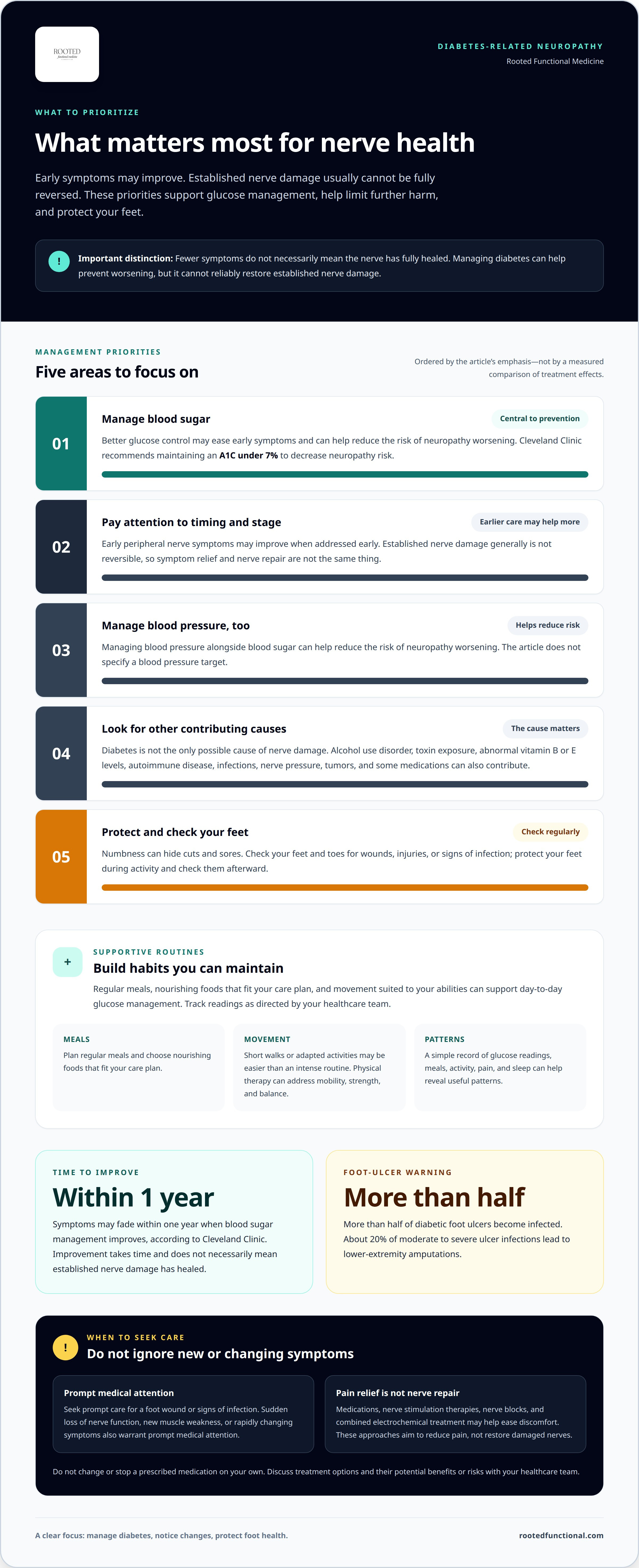
Whether diabetes-related nerve damage can be reversed
Whether nerve damage from diabetes can be reversed depends partly on its stage and type. Early symptoms may improve, but established diabetic nerve disease generally cannot be undone.
Potential for Nerve Recovery
In its earliest stage, diabetic peripheral neuropathy may be reversible, while established nerve damage usually isn’t. That distinction matters: reduced tingling or pain can mean symptoms have improved without proving that damaged nerves have fully healed.
Focal neuropathy follows a different course. It often improves on its own over weeks or months and usually doesn’t cause long-term damage. For other types, early attention to blood glucose can help limit progression, but recovery depends on how much nerve injury has occurred and which nerves are affected.
Scientists are also studying why nerve fibers struggle to regrow in diabetes. In mouse models of Type 1 and Type 2 diabetes, nerve cells accumulated p35, which activated a pathway that blocked nerve-fiber regrowth. Researchers restored growth and improved movement and sensation in diabetic mice by targeting that pathway. These animal findings are not an established treatment for people.
Improvement After Blood Sugar Control
Symptom improvement after better blood sugar management may take time, and it doesn’t necessarily mean nerve damage has reversed. Cleveland Clinic reports that neuropathy symptoms may fade within one year with improved blood sugar management. The timing and degree of change can vary with the stage of nerve injury and the symptoms involved.
Early symptoms such as tingling may respond differently from long-standing numbness or pain. Track changes in sensation, discomfort, and daily function, then share them during care visits. For example, note whether tingling in your feet is easing while numbness remains. Persistent symptoms still deserve attention because they can affect balance and make injuries harder to notice.
Better glucose management can help prevent nerve damage from worsening, even when full recovery isn’t possible. This matters for protecting the feet and legs and reducing complications linked to reduced sensation. Changes in other functions, such as bladder control or digestion, also merit discussion as part of diabetes care.
Studies of nerve regeneration may eventually inform new approaches, but results in mice cannot establish outcomes in humans. For now, the practical distinction is clear: early symptoms may improve, focal neuropathy often resolves, and established diabetic nerve damage generally isn’t considered reversible.
How long does it take for diabetic neuropathy to improve after blood sugar control?
There isn’t one timeline that fits everyone with diabetic neuropathy. Cleveland Clinic says symptoms may fade within one year after blood sugar management improves. That describes possible symptom change, not a promise that everyone will improve or that damaged nerves will fully recover.
The difference matters. Less tingling or pain can indicate symptom relief, while numbness or reduced sensation may continue. Feeling better doesn’t prove that nerve damage has reversed. Established diabetic nerve disease generally can’t be reversed, even when better glucose management helps symptoms or reduces the risk of worsening damage.
Track changes in specific symptoms rather than expecting every sensation to change together. For example, note whether burning pain becomes less disruptive while numbness remains. Record changes in sleep, walking, and daily activities alongside your symptoms. These details can help clarify what is improving and what still needs attention.
Blood sugar control is a continuing process, not a single result. Glucose patterns and A1C can help show whether diabetes management is changing over time. Share those results and symptom changes during care visits. If pain eases while sensation remains reduced, that distinction is useful; numbness can still make foot injuries harder to notice.
Some changes call for prompt attention, rather than waiting for gradual improvement. A new wound, signs of infection, sudden loss of nerve function, or new muscle weakness warrants timely medical care. Changes in bladder control or digestion matter too, because autonomic neuropathy can affect those functions.
A simple symptom record can help. Note where symptoms occur, how they feel, and whether they interfere with sleep or movement. Pair these observations with glucose information you already collect as part of diabetes care. A clear record gives clinicians a more specific picture than a general report that symptoms feel “better” or “worse.”
Slow improvement alone doesn’t show whether diabetes management is helping. Symptom relief and nerve repair are different outcomes, and established nerve injury may persist. Keep focusing on glucose management and report ongoing or changing symptoms, especially if they affect your feet, legs, or everyday function.
For support connecting glucose patterns with persistent neuropathy symptoms, book a Root Cause Consultation.
Rooted Functional Medicine: Type 2 Diabetes Reversal Program
Rooted Functional Medicine’s Type 2 Diabetes Reversal Program offers a next step for people seeking structured support with diabetes management. Its lab-based, integrative approach focuses on factors contributing to health concerns and supports personalized care. It may be relevant if you’re working to improve blood sugar while also addressing neuropathy symptoms.
For education about nerve symptoms, Rooted Functional Medicine’s Healing Neuropathy Webinar can help you understand the topic. A Root Cause Consultation offers a chance to discuss your health concerns and possible contributing factors. These services don’t replace urgent medical care or management of prescribed medications.
If you’d like to explore whether this approach fits your needs, contact Rooted Functional Medicine.
Choose a next step that fits your health picture
Can nerve damage from diabetes be reversed? That question can open a more useful conversation about what’s changing, what remains difficult, and which factors may need attention. Bring concerns about your symptoms, blood sugar, and daily function into a focused discussion. A clearer picture can help you make informed choices about the support you want.
Neuropathy can have more than one contributing factor, and its effects can reach beyond sensation in your feet. Rooted Functional Medicine’s Autoimmune Solutions Program may be relevant if you’re exploring autoimmune contributors to ongoing health concerns. The next step isn’t about chasing a promise. It’s about finding a thoughtful path forward that respects your symptoms and health goals.
If you’re ready to talk through your concerns, contact Rooted Functional Medicine. Your questions deserve care and attention, and a clear next step can begin with a conversation.
Frequently Asked Questions
How does neuropathy affect your body?
Neuropathy can affect sensation, movement, and automatic body functions. Peripheral nerve damage can cause numbness, tingling, or pain, while proximal nerve damage may affect the hips or thighs. Autonomic nerve damage can disrupt digestion, sweating, bladder control, or sexual function. Focal neuropathy may cause sudden weakness or pain. The effects depend on which nerves are involved, so symptoms can extend beyond the feet.
What else causes neuropathy?
Diabetes isn’t the only possible cause of neuropathy. Other contributors include alcohol use disorder, toxin exposure, tumors, nerve pressure, autoimmune diseases, infections, and some medications. Abnormal vitamin B or E levels can also contribute. For example, numbness may warrant assessing both diabetes-related nerve injury and other possible causes. Identifying the cause matters because care can address a contributing condition instead of assuming every nerve symptom comes from blood sugar alone.
Why can’t you cure neuropathy?
Established diabetic nerve damage generally can’t be reversed because injured nerves may not fully regain their structure and function. Treatments can still target pain, reduce the risk of further damage, and help protect daily function. Easing burning sensations doesn’t necessarily mean the nerve has healed. Neuropathy has different causes, so the outlook depends partly on the source, the nerves affected, and the extent of injury.
Can diabetic nerve damage be reversed or is it permanent?
People often ask whether nerve damage from diabetes can be reversed. Early peripheral neuropathy may improve when addressed early, while established diabetic nerve disease generally isn’t reversible. Focal neuropathy often improves over weeks or months and usually doesn’t cause long-term damage. To understand progress, track symptoms separately: pain might ease while numbness remains. Symptom relief matters, but it doesn’t prove that all nerve injury has healed.
Which treatments can improve diabetic neuropathy symptoms or nerve function?
Treatment depends on symptoms and the nerve pattern. Options for discomfort include medications, nerve stimulation therapies, nerve blocks, and combined electrochemical treatment. Physical therapy can address movement and function, while acupuncture uses thin needles to stimulate specific points. These approaches focus on symptoms or function; they don’t necessarily repair established nerve damage. Spinal cord stimulation may also be an option for persistent painful neuropathy that hasn’t responded adequately to medication.
Does controlling blood sugar reverse or prevent worsening of diabetic neuropathy?
Better blood sugar management can help prevent neuropathy from worsening and may ease early symptoms, but it doesn’t reliably reverse established nerve damage. For example, tingling may lessen after glucose management improves, while reduced sensation remains. Keep diabetes care focused on glucose control and discuss symptom changes with a healthcare professional. Protect numb areas, since reduced sensation can conceal cuts or sores.
What medicines treat diabetic nerve pain, and how effective are they?
Medications are one option for painful diabetic neuropathy, but the specific choice and effect vary. No single medicine works the same way for everyone, and pain relief doesn’t mean damaged nerves have been restored. Describe where the pain occurs and how it affects sleep or movement during a care discussion. If medication hasn’t provided adequate relief, other approaches, including nerve stimulation therapies, nerve blocks, or spinal cord stimulation, may be considered.
Can exercise, diet, or supplements help reverse diabetic neuropathy?
Exercise and food choices can support diabetes management, but they aren’t established ways to reverse damaged nerves. Choose activity suited to your abilities, and protect numb feet during movement because injuries can go unnoticed. Supplements aren’t a guaranteed neuropathy remedy. Abnormal vitamin B or E levels can contribute to nerve problems, so identifying a deficiency is different from taking supplements without a known reason. Discuss supplements and dietary changes as part of your diabetes care.