Foods That Lower Blood Sugar Instantly: What to Choose
A single food is not a reliable way to quickly lower blood sugar. Foods that lower blood sugar instantly are not a reliable quick fix, but choices such as beans, lentils, leafy vegetables, berries, nuts, and oats can support a steadier rise after eating because they provide fiber, protein, or healthy fats. Water and other unsweetened drinks can support hydration without adding sugar.
If you’re trying to make sense of a high reading, it’s understandable to look for foods that lower blood sugar instantly. Food choices can support blood sugar management, but their effects vary. A more useful approach is to choose fiber-rich foods and pair carbohydrates with protein or healthy fats. Here are practical ways to build balanced meals and understand why a food’s effect depends on the whole meal, not one ingredient.
Table of Contents
1. What Foods Lower Your Blood Sugar Levels?
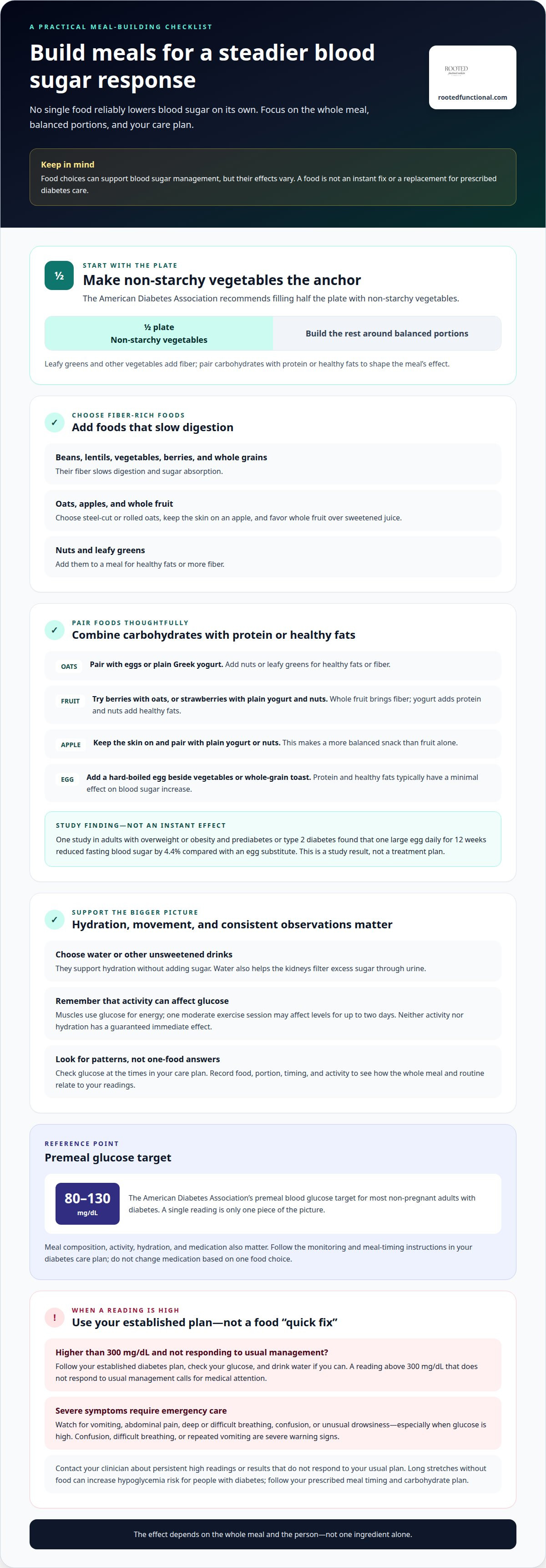
No single food reliably lowers blood sugar on its own. Fiber-rich foods, lean protein, and balanced portions can help reduce sharp sugar spikes by slowing digestion and shaping how a meal affects glucose. The American Diabetes Association’s target blood glucose level before a meal is 80 to 130 mg/dL for most non-pregnant adults with diabetes. A reading is one piece of the picture; meal composition, activity, hydration, and medication also matter.
Build meals around fiber and protein. Beans, lentils, vegetables, berries, and whole grains provide fiber, which slows digestion and sugar absorption. Pair a carbohydrate, such as oats, with eggs or plain Greek yogurt. Add leafy greens or nuts for more fiber or healthy fats. The American Diabetes Association recommends filling half the plate with non-starchy vegetables. This approach can make a meal’s effect steadier than eating a large portion of refined carbohydrates alone.
Hard-boiled eggs are a simple protein choice. Protein and healthy fats typically have a minimal effect on blood sugar increase, so an egg alongside vegetables or whole-grain toast can balance a meal. One study of adults with overweight or obesity and prediabetes or type 2 diabetes found that one large egg daily for 12 weeks reduced fasting blood sugar by 4.4% compared with an egg substitute. That finding describes a study, not an instant effect or a treatment plan.
For dangerously high blood sugar at home, follow your established diabetes plan, check your glucose, and drink water if you can. A reading higher than 300 mg/dL that doesn’t respond to usual diabetes management calls for medical attention. Seek emergency care for severe symptoms such as confusion, difficult breathing, or repeated vomiting.
Water supports hydration and helps the kidneys filter excess sugar through urine. Physical activity can lower glucose because muscles use it for energy; one moderate exercise session may affect levels for up to two days. Neither has a guaranteed, immediate effect. Your response depends on factors such as starting glucose, hydration, activity, and insulin balance.
Watch for symptoms of severe hyperglycemia or possible ketoacidosis, including vomiting, abdominal pain, deep or difficult breathing, confusion, or unusual drowsiness. These symptoms require emergency care, especially when glucose is high. For routine monitoring, check blood sugar at the times in your diabetes care plan. Contact your clinician about persistent high readings or results that don’t respond to your usual plan.
Blood glucose is affected by the balance between insulin and the carbohydrates you eat. Long stretches without food can increase the risk of hypoglycemia for people with diabetes, so follow your prescribed plan for meal timing and carbohydrate intake. Don’t change insulin or other diabetes medication based on a single food choice.
2. Apples and blood sugar stability
A whole apple is a practical way to add fruit and fiber to a meal or snack. Its fiber slows digestion, unlike sweetened apple juice, which lacks much of the whole fruit’s structure. Keep the skin on and pair the apple with plain yogurt, nuts, or another protein source. That makes a more balanced snack than fruit alone.
Timing has also been studied. In a study of 18 women, eating apples 30 minutes before a meal affected the postmeal blood sugar response. The study does not establish that an apple will lower everyone’s glucose, or that it works instantly. Use the finding as a reason to notice how timing affects your own levels, rather than as a replacement for prescribed diabetes care.
Oats are another fiber-rich option. Choose steel-cut or rolled oats instead of sweetened cereal, then add cinnamon, nuts, or unsweetened yogurt. Citrus can fit too: choose a whole orange or grapefruit rather than sweetened juice. Whole fruit contains fiber, while juice is easier to drink quickly and may provide carbohydrates without the same fullness. Portion size and the rest of the meal also affect the response.
Apple cider vinegar is not the same as eating an apple. A 2021 review found that one to two tablespoons with meals significantly decreased fasting blood sugar. Dilute vinegar with water before consuming it. It is not an instant rescue for a high reading, and it should not replace diabetes medication or your care plan. If you’re considering it regularly, discuss it with a healthcare professional, especially when you take medication.
Try a simple meal pattern: serve rolled oats with plain Greek yogurt and a few apple slices, or have an orange with a meal containing lean protein and healthy fats. Check glucose at the times recommended in your care plan, then record the food, portion, and timing. Because exercise also affects glucose, note activity alongside meals when looking for patterns. This gives you more useful information than judging one food in isolation.
Repeated spikes deserve attention beyond swapping one fruit for another. Meal composition, timing, activity, and medication all influence blood sugar levels. If you need help making sense of recurring patterns, book a personalized blood sugar consultation to discuss your concerns.
3. Berries and post-meal blood sugar
Berries can fit into meals that support a steadier post-meal glucose response. A study found that adults with prediabetes who ate 2 cups (250 g) of red raspberries with a high-carbohydrate meal had significantly lower post-meal insulin and blood sugar. That result reflects a particular meal and study group, not an instant drop for everyone. It does show why adding whole fruit to a meal can be worth considering instead of treating fruit as automatically off-limits.
Whole berries provide fiber along with their natural sugars. Fiber slows digestion, so eating berries with or after a starch-heavy meal may help moderate the post-meal rise. Try raspberries with oats, or strawberries with plain yogurt and nuts. Yogurt adds protein and nuts add healthy fats, making the snack more balanced. Keep the serving consistent when comparing glucose readings, since portion size can change the meal’s effect.
Blackberries have been examined in a study involving people with excess weight or obesity. Participants experienced improved blood sugar after adding blackberries to a high-fat diet for one week. This does not mean a high-fat diet is recommended. It is one example of how a food may affect glucose within a broader eating pattern. Add blackberries to plain yogurt or eat them with a meal, rather than treating them as a remedy.
Kale brings a different angle to a berry-centered meal. In a study of 42 Japanese adults, kale-containing foods eaten with a high-carbohydrate meal reduced post-meal blood sugar compared with placebo. The tested amounts were 7 g or 14 g. Kale and berries can work together in a salad with protein, such as eggs, or in a meal with beans. The study examined kale-containing foods, not a guarantee that a particular salad will reproduce the result.
To see what works in your routine, choose one meal to adjust. Add whole berries to a meal containing starch, keep the rest of the meal familiar, and follow your usual glucose-checking plan. Record the fruit, portion, meal timing, and reading. Repeat the same combination on another day before drawing conclusions. Regular observations can help separate a food’s effect from changes in activity, sleep, or meal size. Berries can be part of a balanced diet, but they don’t replace prescribed diabetes care or emergency treatment for dangerously high glucose.
4. Chia seeds and post-meal blood sugar response
Chia seeds add fiber to foods such as oatmeal, plain yogurt, or a smoothie without added sugar. Fiber slows digestion and may support a gentler rise in blood glucose after eating. For a practical comparison, stir chia into an unsweetened breakfast and keep the other ingredients consistent. Note the meal and your glucose readings according to your monitoring plan. The goal is to understand your response, not to use chia as a rapid way to lower blood sugar.
Texture matters, too. Chia absorbs liquid and thickens foods, so mix it into yogurt or let it soften in an unsweetened drink before eating. Pairing it with plain Greek yogurt or nuts adds protein or healthy fats. These choices make a more balanced breakfast than sweetened cereal alone. Check the label on flavored chia puddings, since added sugar can increase the meal’s carbohydrate content.
Pumpkin seeds are another food-based option. They contain magnesium, and low magnesium levels have been linked to high blood sugar. Add them to a salad, cooked vegetables, or plain yogurt. Pumpkin seeds are not the same as a concentrated supplement, and eating them does not replace diabetes medication. A balanced meal still depends on its overall mix of carbohydrates, protein, fats, and vegetables.
Fenugreek seeds are sometimes discussed in relation to post-meal glucose, but more research is needed to assess them as a diabetes management tool. Treat fenugreek as a food ingredient, not a substitute for prescribed insulin or other medication. Supplements need particular care: dietary supplements are not regulated by the FDA, and some products may not contain the advertised amount of an ingredient. Don’t change your treatment plan based on a supplement or online claim.
Try one change at a time. Add chia to breakfast for several days, keep meal timing and portions similar, and record glucose alongside sleep, stress, and activity. Stress can make high blood sugar harder to control, while physical activity affects how muscles use glucose. These factors can influence readings alongside food. Weight alone cannot show how a particular meal affects glucose, so use the measurements in your care plan to observe patterns. This gives you a clearer basis for discussing food choices with your healthcare professional, especially before adding a supplement or changing medication.
5. Hydration and unsweetened drinks
Water supports hydration, which matters for blood sugar regulation. Dehydration can trigger vasopressin, a hormone known to raise blood sugar. Drinking water helps prevent blood sugar from becoming too concentrated and supports the kidneys as they filter excess sugar through urine. Keep water nearby during meals and activity, and drink regularly rather than waiting until you feel thirsty. Water supports the body’s normal processes; it is not a stand-alone diabetes treatment.
Start with a simple drink swap: choose plain or sparkling water instead of sweetened soda, sweet tea, or sugary energy drinks. These beverages contain added sugar or other carbohydrates that can raise blood glucose. Flavored water may also contain sweeteners, so check the ingredient and nutrition labels. Having water with lunch or dinner is an easy way to avoid adding sugar through a drink.
Unsweetened tea and coffee are other options if they suit your routine. Diet soda and drinks made with sugar alternatives don’t raise blood sugar, though water remains a straightforward way to hydrate. A drink that doesn’t raise glucose won’t lower an already high reading. Keep checking blood sugar according to your care plan, and don’t use an unsweetened drink in place of prescribed medication or other diabetes treatment.
Foods and drinks containing carbohydrates can raise blood sugar because the body turns carbohydrates into glucose. Sweetened drinks, juice, candy, and sweet cereals are examples to limit or pair thoughtfully with meals. Large portions of refined carbohydrates, such as white bread or rice, can also cause a rise. For steadier meals, choose water over soda and combine a moderate portion of carbohydrates with vegetables and protein.
Make it practical: drink water with meals, carry a refillable bottle during activity, and choose unsweetened drinks when eating away from home. Then note the drink, meal, activity, and glucose reading in your usual log. This can help you spot patterns, such as higher readings after soda or dehydration during exercise. Water supports healthy habits, but it cannot replace a medication plan or urgent care when symptoms are severe.
If readings remain difficult to manage despite changes to meals and drinks, personalized guidance can help connect nutrition, activity, and treatment. Book a visit to discuss your blood sugar patterns and whether the Type 2 Diabetes Reversal Program fits your goals.
Rooted Functional Medicine: Healing Neuropathy Webinar
Rooted Functional Medicine’s Healing Neuropathy Webinar is a next step for readers concerned about neuropathy alongside blood sugar challenges. It offers information focused on neuropathy, while a Root Cause Consultation can help explore factors connected to ongoing health concerns. For people seeking support with type 2 diabetes, the Type 2 Diabetes Reversal Program is another relevant option.
If food choices alone aren’t resolving persistent concerns, or you want guidance that looks beyond individual meals, consider a root-cause approach. Rooted Functional Medicine offers personalized, lab-based care through secure virtual consultations nationwide. A Root Cause Consultation is a practical starting point for discussing ongoing concerns and whether this approach fits your needs.
Build a Steadier Path Forward
The promise of foods that lower blood sugar instantly can be appealing, especially when a reading is concerning. But lasting progress comes from understanding your patterns and making changes that fit your health needs, not chasing a guaranteed quick fix. If readings continue to concern you, bring your food and glucose notes to a conversation with a qualified practitioner.
Rooted Functional Medicine offers a Root Cause Consultation to explore factors behind ongoing health concerns. Its Autoimmune Solutions program may be relevant for people managing autoimmune issues, while the Healing Neuropathy Webinar offers education about neuropathy. Each provides a different next step, depending on what you’re facing.
One food choice doesn’t define your health, and an instant drop isn’t guaranteed. Contact Rooted Functional Medicine to discuss your next step. Keep observing, ask clear questions, and take progress one thoughtful choice at a time.
Frequently Asked Questions
What Foods Have a Low Glycemic Index?
Beans, lentils, and many non-starchy vegetables are useful choices for meals that may produce a gentler glucose response. Steel-cut oats and whole grains also provide complex carbohydrates and fiber. A food’s effect depends on portion size, preparation, and what you eat with it, so don’t judge a meal by one ingredient alone. Pair carbohydrate-rich foods with protein, such as beans with eggs or oats with plain yogurt.
What Foods Lower Your Blood Sugar Levels?
No single food lowers blood sugar on its own. Build meals with fiber-rich foods such as lentils, vegetables, or whole grains, then add protein such as eggs or fish. This combination can slow digestion and support a steadier response after eating. If a reading is high, follow your established diabetes care plan rather than relying on a particular food. Consistent glucose checks can help you notice how specific meals affect your levels.
Can any foods lower blood sugar instantly?
No food reliably lowers blood sugar instantly. Foods that lower blood sugar instantly are not a dependable substitute for diabetes treatment or the steps in your care plan. Food choices work through the overall meal and its effect on digestion, not as an emergency correction. If you’re concerned about a high reading, follow your prescribed plan and seek medical help for severe symptoms instead of waiting for food to change it.
Which foods help reduce post-meal blood sugar spikes?
Pairing carbohydrates with fiber and protein can help moderate the post-meal rise. For example, add black beans or chickpeas to a rice meal rather than eating rice alone. A study of 12 women found that either addition reduced post-meal blood sugar compared with rice alone. Another practical pairing is plain yogurt with berries. Keep portions consistent so your glucose readings are easier to compare across meals.
How much fiber should you eat to support blood sugar control?
The American Heart Association recommends 25-30 grams of fiber per day. Work toward that amount through everyday foods, such as beans at lunch, vegetables at dinner, and oats or fruit at breakfast. Increase fiber through meals rather than relying on one food to do everything. Drink water regularly as you add more fiber, and follow any individualized nutrition guidance in your diabetes care plan.
Do vinegar, cinnamon, or other foods lower blood sugar, and what does evidence say?
A 2021 review found that one to two tablespoons of apple cider vinegar with meals significantly decreased fasting blood sugar. Dilute vinegar with water before consuming it, and don’t treat it as a replacement for prescribed care. Cinnamon can add flavor without added sugar, but don’t rely on it as a diabetes treatment. Discuss supplements or major diet changes with a healthcare professional, since they can affect medication plans.
Can food interact with insulin or diabetes medications and cause low blood sugar?
Long stretches without food can increase the risk of low blood sugar for people with diabetes. Follow your prescribed plan for meal timing and carbohydrate intake, and don’t change medication based on a single food choice.