Heavy Metal Toxicity Symptoms and Where Exposure Comes From
The timing of exposure can change the symptoms. Heavy metal poisoning occurs when harmful metals such as lead, mercury, arsenic, or cadmium enter the body and interfere with normal functions. Heavy metal toxicity symptoms may appear suddenly after a high-dose exposure or develop gradually after lower-level exposure over time.
If you’re experiencing unexplained symptoms, it can be difficult to tell whether they’re connected to an exposure, especially because they can resemble other health problems. The difference between acute and chronic symptoms may offer useful clues, but symptoms alone cannot identify a specific metal or confirm poisoning.
This article explains what heavy metal poisoning is, how acute and chronic symptoms may differ, and where exposure can occur at home, at work, or through everyday products and foods. You’ll also learn how exposure is evaluated, what treatment may involve, and when symptoms require urgent medical attention.
Table of Contents
What is heavy metal poisoning?
Heavy metal poisoning occurs when harmful amounts of metals enter the body and disrupt normal functions. Lead, mercury, arsenic, and cadmium can build up in body tissues and affect organs.
Common and Severe Symptoms
Symptoms can range from stomach upset and weakness to serious effects on the brain, heart, kidneys, or liver. Nausea, vomiting, abdominal pain, diarrhea, and tingling in the hands or feet can occur after exposure.
Severe poisoning can cause arrhythmia, anemia, breathing difficulties, brain damage, memory loss, and kidney or liver damage. Inorganic arsenic compounds are highly toxic and have been associated with an increased cancer risk. These effects matter because symptoms can overlap with other diseases, and early stages may have no clear warning signs.
The type and amount of metal, along with the exposure pattern, influence its effects. For example, a high-dose exposure can cause acute illness, while lower-level exposure over time may contribute to chronic problems. Symptoms alone cannot identify the metal or confirm poisoning.
Early Warning Signs in Children
Early warning signs in children can include stomach pain, vomiting, weakness, or changes in behavior and memory. Tingling, numbness, or coordination problems can also indicate possible effects on the nervous system.
These signs matter because a child may not be able to describe what feels wrong, and early poisoning can produce no obvious symptoms. Children are more sensitive to harmful effects while their bodies are developing. Children under 6 years of age who face lead exposure risk may need testing even without symptoms.
For example, a child with possible exposure to old paint or contaminated soil needs an assessment that considers both exposure history and symptoms. Severe symptoms after exposure require emergency care. A clinician can determine whether testing is appropriate based on the child’s circumstances.
Common Toxic Metals
Lead, mercury, arsenic, cadmium, and chromium are among the heavy metals commonly tested. Testing may focus on one metal or several, depending on the suspected exposure and symptoms.
Lead, mercury, arsenic, and cadmium can accumulate in the body and interfere with normal functions. Chromium is also commonly included in testing, while iron and copper are needed in small amounts to support health. The type of metal matters because its effects and likely sources of exposure differ.
Blood tests may measure lead, mercury, or cadmium; urine tests can assess arsenic and other metals. The right test depends on the suspected metal and exposure. Results should be interpreted alongside symptoms and exposure history, not treated as a stand-alone explanation for every chronic health problem.
Acute and chronic heavy metal toxicity symptoms
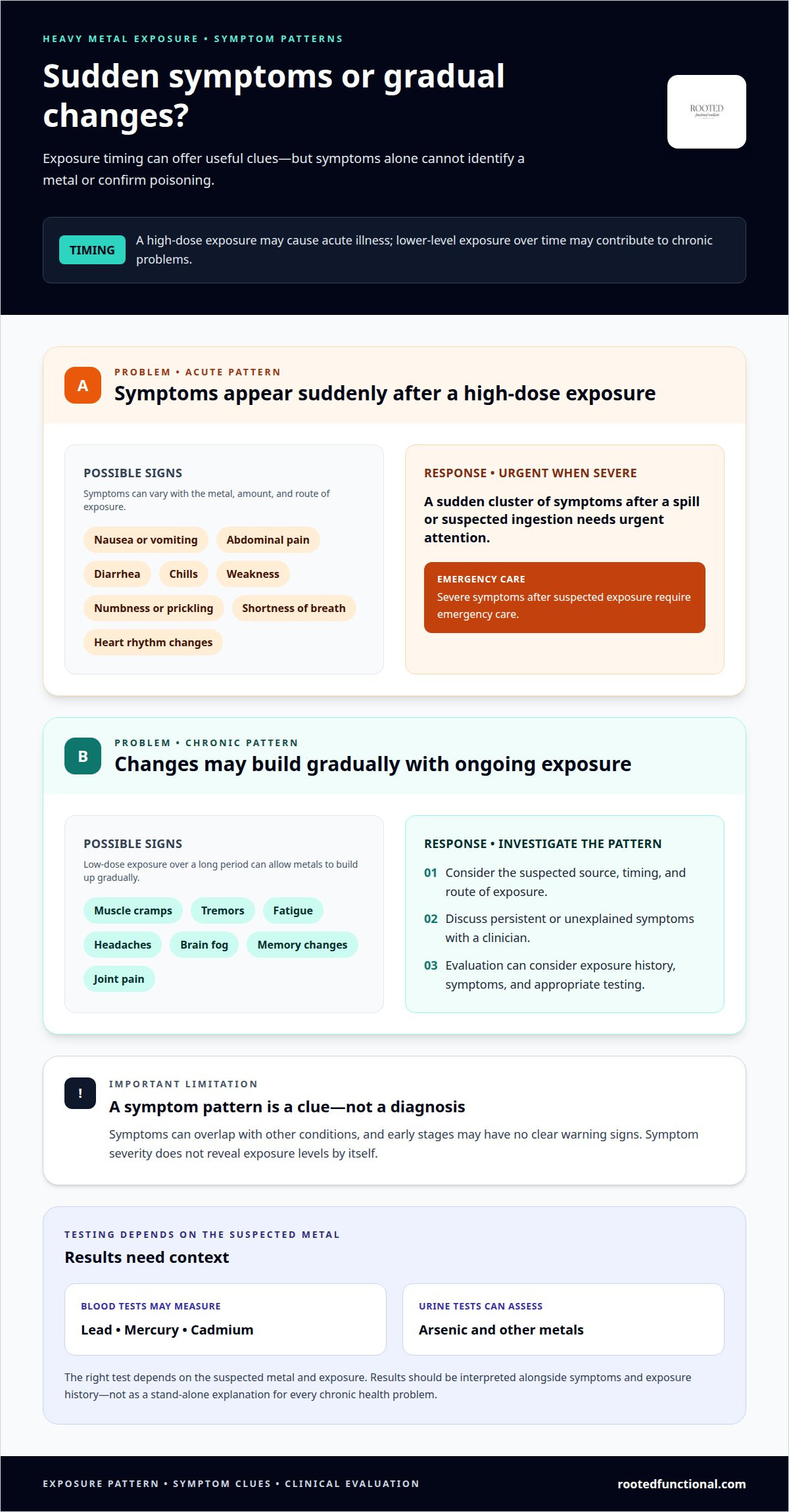
Acute symptoms can follow a high-dose exposure, while chronic effects may develop gradually. The timing and pattern can help explain what happened, but symptoms alone cannot identify a metal.
Symptoms by Metal
Symptoms can vary with the metal, amount, and route of exposure, so there is no single pattern for every case. This distinction matters because nausea after eating contaminated food may involve a different exposure history than tingling after workplace contact.
Acute metal poisoning may cause nausea or vomiting, abdominal pain, diarrhea, chills, weakness, and numbness or prickling in the hands and feet. Shortness of breath or heart rhythm changes can also occur. A sudden cluster of symptoms after a spill or suspected ingestion needs urgent attention, especially if symptoms are severe.
Chronic exposure may cause muscle cramps, tremors, fatigue, headaches, brain fog, memory changes, or joint pain. Mercury exposure is one possible concern, but these effects can overlap with other conditions. The suspected source, timing, and route of exposure help guide an evaluation.
Lasting Health Effects
Yes. Heavy metal exposure can cause lasting effects, particularly when poisoning is severe or goes untreated. Serious outcomes can include irreversible brain damage and kidney or liver failure.
Long-term harm can affect more than one organ or system. Severe poisoning may also cause anemia, arrhythmia, difficulty breathing, and memory loss. Inorganic arsenic compounds have been associated with an increased cancer risk, while exposure during pregnancy can be associated with miscarriage.
Chronic symptoms may develop as metals build up over time, but symptom severity does not reveal exposure levels by itself. A person may also have no early symptoms. For example, ongoing fatigue or tingling deserves careful consideration when paired with a plausible exposure. It should not be dismissed as stress or assumed to prove metal toxicity.
Severe symptoms after suspected exposure require emergency care. For less urgent concerns, an evaluation can consider the exposure history, symptoms, and appropriate testing. A Root Cause Consultation can help explore persistent symptoms and possible contributing factors.
Low-dose exposure over a long period can allow metals to build up gradually. Because symptoms can overlap with other conditions, chronic toxicity may be misdiagnosed or overlooked.
Chelation and other treatments
Treatment depends on the metal, exposure amount, symptoms, and affected organs. An initial priority is stopping continued exposure, such as by avoiding contaminated water or workplace contact. Clinicians may also treat symptoms and assess kidney and liver function. Severe poisoning can require hospital care because organ damage may need immediate support.
Chelation uses medicines called chelating agents, which bind certain metals so the body can remove them. Common agents include dimercaprol, succimer, EDTA, and penicillamine. The right medicine depends on the metal and the person’s condition. Chelation is not a general detox method and requires medical supervision.
Lead treatment decisions can involve measured blood levels and symptoms. The listed pediatric treatment threshold is a blood lead concentration of at least 45 µg/dL when symptoms are present or the concentration reaches that level. The listed adult treatment threshold is at least 70 µg/dL when symptoms are present or the concentration reaches that level. These thresholds concern lead, not other elements.
Chelating agents can also bind healthy metals and minerals needed for normal body function. This risk is one reason clinical teams monitor a patient’s response during treatment. Chelation is unsafe for people diagnosed with heart disease or kidney failure. The risk of removing essential minerals must be weighed against the effects of the toxic metal.
Other treatments address the exposure and its complications. Depending on the case, care may include stomach pumping, medicines for symptoms, or hemodialysis for kidney failure. These options are not interchangeable. For example, hemodialysis may be used when kidney failure occurs, while symptom-relief medicines address specific effects rather than removing the metal.
Some metals have limited treatment options. Cadmium, for example, has no effective treatment to remove it from the body. Care may therefore focus on stopping exposure and managing health effects. Arsenic poisoning and other metal exposures also require an approach tailored to the specific metal, exposure route, and clinical findings.
Recovery time varies with these same factors. Treatment for heavy metal poisoning may take from a few hours to several months to lessen symptoms after it begins. Prevention also matters: identifying and eliminating the exposure source helps limit further contact. A workplace source, contaminated food, and unsafe water each call for different changes.
Don’t attempt chelation with supplements or products marketed as detox treatments. Chelation can affect essential elements, and supervised treatment includes monitoring for harmful effects. If poisoning is suspected and symptoms are severe, seek emergency care rather than relying on home treatment.
Environmental and workplace sources of heavy metals
Exposure can occur through ingestion, inhalation, or absorption through the skin. The source may be a household material, drinking water, food, a work task, or a hobby. Tracing where contact occurs matters because reducing continued exposure starts with identifying its source. Heavy metal poisoning can involve more than one route, such as contaminated water used for drinking and cooking.
Lead may come from old paint, household plumbing, batteries, and construction materials. In the United States, homes and apartments built before 1978 may contain lead paint dust. Children are especially vulnerable to lead’s toxic effects, so older housing can be an important part of a patient’s exposure history. Contaminated soil or water, some imported toys, and traditional remedies are other possible sources.
Mercury exposure may come from certain seafood, thermometers, light bulbs, batteries, dental amalgam fillings, or topical antiseptics. The source and route matter: eating fish differs from handling a broken mercury-containing item. Arsenic may occur in some groundwater, rice, shellfish, and wood preservation. The World Health Organization reports that arsenic poisoning affects at least 140 million people globally, with most cases linked to contaminated drinking water.
Sources of cadmium include cigarette smoke, batteries, rechargeable devices, and contaminated food. Industrial emissions and environmental runoff can also contribute to exposure to metals. Someone living near heavy traffic, a smelter, or an old building with lead paint may face different exposures from someone whose main contact occurs at work. Identifying the setting helps focus an exposure assessment.
Workplace exposure can occur in battery manufacturing, welding, mining, painting, construction, plumbing, metal plating, and electronics recycling. Tasks involving pesticides or stained glass may also involve potential metal exposure. OSHA regulations guide surveillance of workers at risk of occupational metal exposure and suggest exposure limits for metals of industrial importance. Work history should include specific duties, materials handled, and protective practices.
Hobbies can matter, too. Making stained glass, visiting shooting ranges, and fishing or eating large fish can create potential exposure pathways. Prevention begins with reducing contact: use protective equipment around heavy metals, wash your hands before eating, and change clothes after dusty work. If water may be contaminated, filtered or bottled water can reduce contact. Avoiding chelation therapy without clinical supervision is also important; it does not replace finding and addressing the source.
What symptoms are specific to lead, mercury, arsenic, and cadmium poisoning?
No symptom reliably identifies lead, mercury, arsenic, or cadmium poisoning by itself. The same person may experience digestive, neurological, or other effects, so exposure history and appropriate testing matter alongside symptoms.
Lead: Possible effects include abdominal pain, weakness, memory loss, and other changes in brain function. Lead exposure is especially concerning in children because developing bodies are more sensitive to its harmful effects. A child can be at risk of exposure without obvious symptoms, so a lack of visible warning signs doesn’t rule out a problem.
Mercury: Numbness or tingling, muscle weakness, memory changes, and behavior changes can occur with heavy metal exposure. These symptoms are not unique to mercury, however. The suspected source and route of contact help guide assessment, while blood mercury levels often reflect recent or ongoing exposure.
Arsenic: Possible symptoms include nausea or vomiting, abdominal pain, diarrhea, and numbness or tingling. Inorganic arsenic compounds are highly toxic and have been associated with an increased cancer risk. These effects can overlap with other illnesses, so symptoms alone cannot confirm arsenic poisoning or establish how exposure occurred.
Cadmium: Heavy metal exposure can be associated with breathing problems, including shortness of breath and persistent cough, particularly when metals are inhaled. Kidney or urinary changes may also be considered in a broader heavy-metal evaluation. These symptoms don’t establish cadmium as the cause; exposure details and clinical assessment help clarify what to investigate.
Across all four metals, symptoms can affect several body systems. Digestive problems may include appetite loss, cramping, constipation, or diarrhea. Neurological effects may include brain fog, headaches, tremors, or coordination difficulties. Some people have no early symptoms, while others experience problems that resemble chronic disease. This overlap makes it risky to identify a metal from a symptom list alone.
Testing is selected according to the suspected metal and timing of exposure. Blood tests can assess lead and mercury, while urine tests may help evaluate arsenic and other metals. Blood lead and mercury levels often reflect recent or ongoing exposure. A clinician also considers symptoms, relevant environmental or workplace contact, and kidney or liver function. Hair testing can offer a longer-term exposure window, but outside contamination can affect results.
Seek emergency care for severe symptoms after suspected exposure. For persistent symptoms or a plausible exposure history, book a Root Cause Consultation to explore possible contributing factors and appropriate next steps.
Rooted Functional Medicine
Rooted Functional Medicine helps people explore possible root causes of persistent health concerns through personalized functional medicine care. If symptoms continue after an exposure concern has been medically assessed, a Root Cause Consultation can help examine broader factors that may contribute to ongoing health issues. The focus is on understanding the person’s overall health, not diagnosing acute poisoning or replacing emergency treatment.
For sudden or severe symptoms after suspected exposure, seek emergency care first. For persistent concerns such as fatigue, tingling, or brain fog, a Root Cause Consultation may be a useful next step. Contact Rooted Functional Medicine to discuss whether this approach suits your ongoing health concerns.
Take the Next Step Toward Clarity
Persistent symptoms can leave you wondering what your body is telling you. Rather than linking every symptom to a single cause, use your concerns and exposure history to guide a thoughtful conversation about what may be affecting your health.
Heavy metal toxicity symptoms can overlap with other health concerns, so ongoing issues deserve careful attention without assuming a diagnosis. Rooted Functional Medicine offers a Root Cause Consultation to explore factors behind persistent health challenges. The Healing Neuropathy Webinar and Autoimmune Solutions Program may also be relevant if you’re seeking education or support for those specific concerns.
If you’re ready to discuss your health concerns and a possible next step, contact Rooted Functional Medicine. You deserve to have your questions heard and explored with care.
Frequently Asked Questions
When should I see my healthcare provider?
Contact a healthcare provider or poison control if you suspect exposure and develop symptoms. Share when symptoms began, where contact may have occurred, and whether anyone else was exposed. For example, mention a recent home renovation, a workplace task, or a product used regularly. This context can help guide evaluation. Don’t wait for symptoms to worsen if exposure is known, especially if a child may have had contact.
Who’s at Higher Risk?
Children face greater risk because their developing bodies are more sensitive to heavy metals. People with potential workplace contact, including those who weld, mine, or handle batteries, may also need exposure assessed. Living near heavy traffic, smelters, or older buildings can add environmental concerns. Risk depends on the metal, exposure route, and duration. Children under 6 years of age with possible lead exposure may need testing even without symptoms.
What are common symptoms of heavy metal toxicity?
Common symptoms can include stomach upset, weakness, fatigue, headaches, tingling, or numbness. The pattern may affect more than one body system. For example, someone might experience digestive problems alongside memory changes or muscle weakness. These symptoms also occur with other illnesses, so they don’t prove poisoning on their own. A useful next step is to describe your symptoms and any possible exposure together during a medical evaluation.
How soon do heavy metal toxicity symptoms appear after exposure?
Symptoms may appear soon after a high-dose exposure, while low-level exposure over time can produce gradual effects. There is no single timing pattern for every metal or person. The amount, route, and whether contact continues all matter. For instance, a sudden illness after a spill differs from symptoms that develop during ongoing workplace exposure. Some people have no early symptoms, so timing alone cannot rule out exposure.
What are the symptoms of acute versus chronic heavy metal exposure?
Acute exposure involves a large dose over a short period and may cause sudden illness. Chronic exposure occurs through lower-dose contact over time, with effects that may build gradually. Accidental ingestion and repeated contact with contaminated dust illustrate the difference. Symptoms can overlap, so the exposure timeline is valuable. Write down when contact occurred, whether it continued, and how symptoms changed afterward.
Which symptoms of heavy metal toxicity require emergency care?
Seek emergency care immediately for severe symptoms after suspected exposure. Examples include difficulty breathing, an abnormal heart rhythm, severe weakness, or a sudden change in mental function. A child who swallows a suspected metal-containing object also needs urgent guidance, even before symptoms appear. Don’t attempt home detoxification or chelation. Bring details about the suspected substance and timing if available, but don’t delay emergency care to gather them.
How is heavy metal toxicity diagnosed and tested?
Testing is guided by the suspected metal, exposure history, and symptoms. Blood or urine tests may measure metals, while a clinician may also assess blood counts, kidney and liver function, or heart rhythm. According to Rooted Functional Medicine, avoid seafood for 48 hours before a heavy metal test because some fish and shellfish contain mercury. Follow the preparation instructions given for your specific test.
What everyday sources and exposures can cause heavy metal toxicity?
Possible sources include household dust, drinking water, certain foods, tobacco smoke, personal care products, and materials handled at work or during hobbies. Exposure can happen by swallowing contaminated substances, breathing particles, or absorbing metals through the skin. For example, renovation dust may create a different route of contact than contaminated groundwater. Consider recurring activities and surroundings, not only a single recent event, when describing possible exposure.