Heal Your Gut Lining: A Functional Medicine Guide
What if your "normal" lab results are missing the 32 square meters of evidence hidden inside your digestive tract? You've likely spent months or even years searching for answers while struggling with chronic bloating and that heavy, afternoon brain fog. It's frustrating to be told everything is fine when your body is clearly signaling for help. You aren't imagining your symptoms. They're real, and they often point back to a compromised intestinal barrier. This single layer of cells is the gatekeeper of your health, yet it's often the most overlooked part of conventional testing.
In this guide, you'll discover exactly how to heal your gut lining using a science-backed, functional medicine approach. We're moving past the surface-level advice to uncover the root causes of intestinal permeability. You'll learn which foods and supplements actually repair cellular damage and which ones are just noise. We will walk through a strategic protocol to stop the cycle of inflammation, restore your mucosal integrity, and finally help you feel like yourself again. It's time to stop masking symptoms and start rebuilding your health from the inside out.
Table of Contents
Understanding the Gut Barrier: What is Intestinal Permeability?
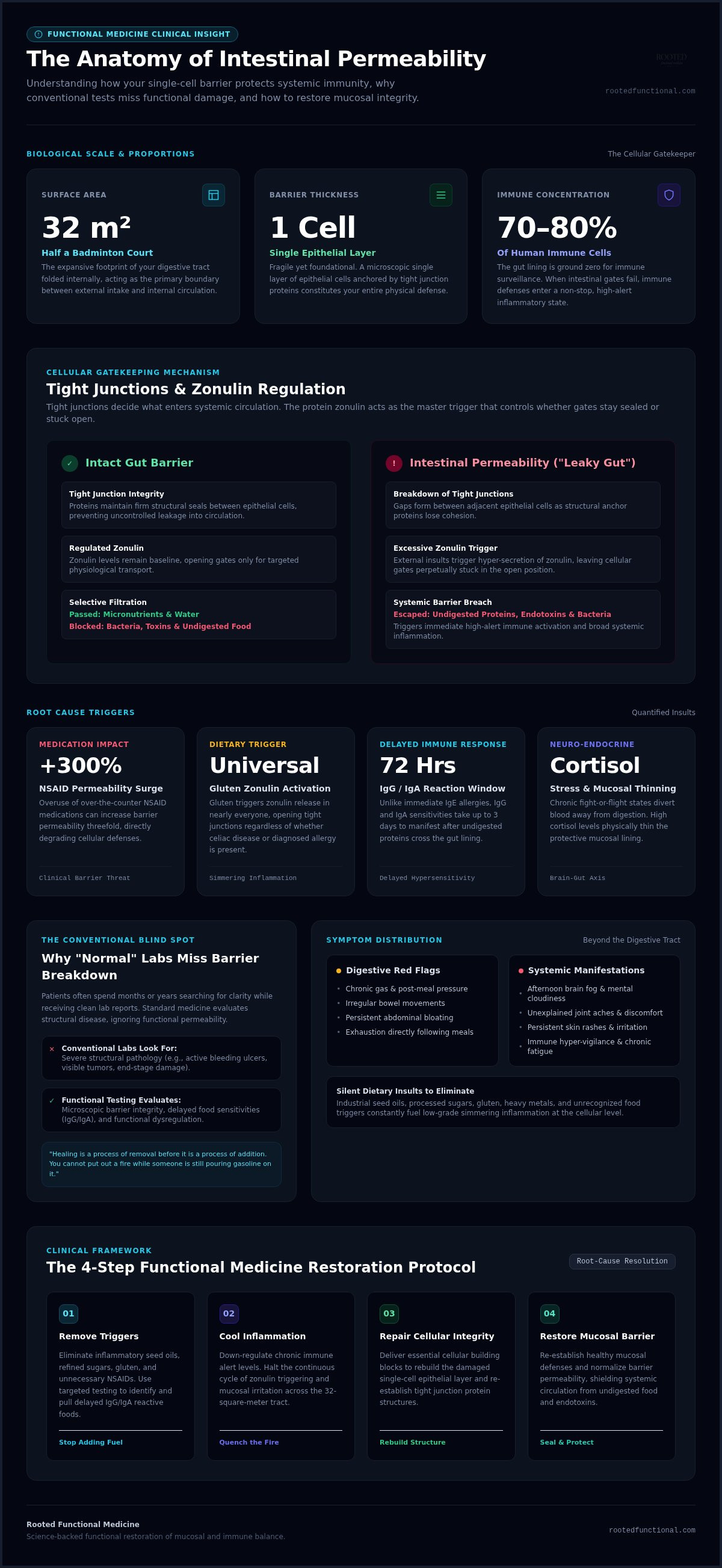
Your gut lining is a marvel of biological engineering. It is a single layer of epithelial cells. This barrier is your primary defense against the outside world. It covers roughly 32 square meters. That is about half the size of a badminton court. It is thin. It is fragile. Yet, it is the foundation of your systemic health. Every nutrient your body needs must pass through this delicate filter before it can fuel your cells.
Think of this lining as a high-security gate. Tiny proteins called tight junctions act as the gatekeepers. They decide what enters your body and what stays out. In a healthy state, they let micronutrients and water pass through. They keep bacteria, toxins, and large food particles out. When these gates fail, we call it leaky gut. Intestinal permeability is the breakdown of tight junctions, allowing undigested food and toxins into the bloodstream.
The Role of Tight Junctions and Zonulin
How do these gates open and close? A protein called zonulin is the key regulator. Research into intestinal permeability mechanisms shows that certain triggers cause the body to release too much zonulin. This keeps the gates stuck in the open position. When the barrier stays open, your immune system goes on high alert. Since 70 to 80 percent of your immune cells live in your gut, this is a major event. This constant state of defense leads to systemic inflammation. It is why learning how to heal your gut lining is the essential first step toward reclaiming your health and cooling that inflammatory fire.
Symptoms Your Gut Lining is Compromised
A compromised lining doesn't just stay in the gut. It affects your entire system. You might notice digestive issues first. Chronic gas, irregular bowel movements, and what causes bloating are often the first red flags. But the damage travels much further. It shows up as brain fog after meals. It manifests as unexplained joint pain or persistent skin rashes. Many patients feel frustrated because their standard tests come back "normal." This happens because conventional medicine often looks for structural disease like ulcers. It misses the functional dysfunction of the barrier itself. If you feel exhausted after eating or struggle with mental clarity, your gut lining is likely asking for repair. We need to look deeper to find the root cause.
Identifying the Silent Triggers of Gut Damage
Healing is a process of removal before it is a process of addition. You cannot put out a fire while someone is still pouring gasoline on it. To understand how to heal your gut lining, we must first identify the daily habits and substances that are actively tearing it down. These "insults" are often silent. They do not always cause immediate pain. Instead, they create a slow, simmering inflammation that eventually breaks down your cellular defenses. Common culprits include industrial seed oils, processed sugars, and gluten. Gluten is particularly problematic. It triggers the release of zonulin in nearly everyone. This happens regardless of whether you have celiac disease or a known allergy.
Beyond food, environmental factors play a massive role. The overuse of over-the-counter medications like NSAIDs is a primary driver of barrier breakdown. Research suggests these medications can trigger a 300 percent increase in permeability. Environmental toxins and heavy metals also complicate the clinical assessment of intestinal barrier function, making the repair process feel like an uphill battle. We must uncover these hidden triggers to give your body a chance to rest and rebuild.
Food Sensitivities vs. Allergies
Many patients confuse a food allergy with a food sensitivity. An allergy is an immediate IgE response. A sensitivity is different. It is a delayed IgG or IgA reaction that can show up 72 hours after you eat. When your lining is already compromised, undigested proteins slip into your bloodstream. Your immune system sees these as invaders and attacks. This creates a vicious cycle of systemic inflammation. To stop the guesswork, we use lab-based food sensitivity testing to pinpoint exactly which "healthy" foods might be hurting you. Identifying these specific triggers is a non-negotiable step in your recovery.
The Stress-Gut Connection
Your emotional state is physically connected to your gut via the brain-gut axis. Chronic stress keeps your body in a "fight-or-flight" state. This state diverts blood flow away from your digestive tract. High cortisol levels actually thin the protective mucosal lining. This makes it easier for toxins to penetrate your system. If your nervous system isn't calm, even the most perfect diet won't fix the damage. Healing requires calming the vagus nerve. Simple practices like deep belly breathing before meals can signal to your body that it is safe to digest and repair. If you feel stuck in your progress, it may be time to book a Root Cause Consultation to uncover the hidden stressors holding you back.
Beyond 'Normal' Labs: How to Test Gut Integrity
You have likely had a colonoscopy or an endoscopy that came back perfectly clear. Your doctor told you everything looks normal. Yet, you still feel terrible. This is the gap between structural disease and functional dysfunction. Conventional imaging looks for gross abnormalities like ulcers, tumors, or polyps. It is looking for what is already broken. Functional medicine looks for why things are not working. We focus on the integrity of the barrier itself. A "normal" test does not mean your gut is healthy. It just means you do not have a late-stage disease yet.
Functional Blood Work and Stool Analysis
To truly understand how to heal your gut lining, we need data that goes deeper than a camera can see. We look for specific markers of barrier failure. One primary marker is zonulin. As this Harvard Health report on gut barrier breakdown explains, modern lifestyle factors can keep zonulin levels high. This leaves your gates wide open. We also measure fecal calprotectin. On functional stool profiles, a normal level is under 50 µg/g. Levels above this indicate active inflammation and mucosal damage. We also test for antibodies against bacterial endotoxins (LPS). When these cross the barrier, they trigger a cascade of systemic inflammation known as functional endotoxemia.
We use quantitative PCR stool tests to check for dysbiosis. This identifies bacterial imbalances that produce toxins. These toxins actively eat away at your protective mucosal layer. Malabsorption is another major clue. If your lining is damaged, you cannot absorb nutrients effectively. We often see deficiencies in B12, vitamin D, or zinc. This happens even in patients with high-quality diets. A supplement that helped a friend might not work for you; your root cause is different.
The Value of a Root Cause Consultation
A Root Cause Consultation allows us to interpret these labs as a unified story. We do not just look at one high marker. We look at how your microbiome, your nutrient status, and your immune response interact. This moves you from guessing with random supplements to a targeted plan for how to heal your gut lining. It is the difference between masking a symptom and finally uncovering the root cause. You deserve a clear roadmap to recovery. Stop the guessing. Start the healing.
The 4-Step Protocol to Heal Your Gut Lining
Repairing a damaged barrier requires more than a random bottle of probiotics. It requires a strategic sequence. We use a clinical framework to ensure the body is ready to rebuild. If you skip steps, you are just wasting money on supplements your body cannot yet use. This four-step protocol provides the roadmap for how to heal your gut lining effectively and permanently.
Step 1: Remove. We stop the active damage by eliminating the triggers we identified in your testing. This includes inflammatory foods, infections, and gut-damaging medications.
Step 2: Replace. We add back what is missing. Many people with gut issues have low stomach acid or insufficient digestive enzymes. Adding these back ensures food is broken down properly so it doesn't irritate the lining.
Step 3: Reinnoculate. We balance the microbiome. We use strain-specific probiotics to crowd out opportunistic bacteria and support the protective mucosal layer.
Step 4: Repair. This is the final stage where we provide the raw materials your cells need to physically close the gates and restore the barrier.
Key Nutrients for Mucosal Repair
Specific nutrients act as the bricks and mortar for your intestinal wall. L-Glutamine is the most abundant amino acid in the body and serves as the primary fuel for the cells lining your small intestine. We also use demulcent herbs like Deglycyrrhizinated Licorice (DGL) and Aloe Vera. These botanical agents create a soothing, protective coating over the inflamed tissue. Zinc Carnosine plays a critical role in stabilizing small bowel integrity by promoting healthy cell migration and repair. These nutrients work best when the inflammatory fire has already been dimmed by the first step of the protocol.
Dietary Foundations for Healing
What you eat during this process is just as important as the supplements you take. Bone broth and high-quality collagen are essential. They provide the specific amino acids, like glycine and proline, needed to rebuild connective tissue. You should also focus on cooked foods over raw ones. While raw vegetables are healthy, they are very difficult for a damaged gut to break down. Steaming or roasting your vegetables makes the nutrients more accessible. Finally, we often use intermittent fasting. This gives your digestive system a period of rest which allows for cellular autophagy, the body's way of cleaning out damaged cells. By following these dietary foundations, you provide the environment needed for how to heal your gut lining. To get your own personalized repair plan, schedule your Root Cause Consultation today.
Reclaiming Your Health: The Systemic Impact of Healing
Healing your gut is rarely just about digestion. It is the master key to your entire health profile. When your intestinal barrier is secure, the burden on your immune system drops significantly. This is critical for those managing autoimmune diseases. Instead of constantly reacting to toxins and food particles, your immune system can finally rest. The constant fire of systemic inflammation begins to cool. This ripple effect touches every organ, from your brain to your skin.
The connection to the nervous system is particularly profound. We often see a direct link between gut integrity and healing neuropathy. When the gut is leaky, inflammatory markers can irritate nerve endings throughout the body. By learning how to heal your gut lining, you are often addressing the root cause of nerve pain and tingling. It is about total body restoration. You gain the emotional freedom of living without the constant fear of a flare-up. You can eat a meal without wondering if you will spend the next three hours in pain or brain fog.
The Long-Term Functional Medicine Path
True healing is a journey. It is not a 30-day detox or a quick fix. Your gut lining takes time to rebuild at a cellular level. We focus on sustainable changes and ongoing support. This often involves lab re-testing to ensure your markers are moving in the right direction. We don't guess; we measure. Rooted Functional Medicine guides patients nationwide via telehealth. You can access expert, root-cause care from the comfort of your home. We walk with you through every step of the repair process.
Taking Your First Step Toward Recovery
You may have felt dismissed by doctors who only looked at your "normal" labs. We hear you. We know the frustration of being told nothing is wrong when you feel like your body is failing. Real answers are available through investigative medicine. We dig deep to find the triggers others miss. You don't have to navigate this alone. Discovering how to heal your gut lining is the start of a new chapter in your health story. It is time to stop masking symptoms and start finding solutions. Schedule your Root Cause Consultation today and let's uncover the path back to the vibrant life you deserve.
Reclaim Your Health From the Inside Out
You no longer have to guess about your health or settle for "normal" results that don't match how you feel. We've uncovered the science of the gut barrier and the strategic steps required to repair it. Healing is about more than just adding a supplement. It's about removing the silent triggers and using functional data to guide your recovery. By understanding how to heal your gut lining, you can finally address the root cause of your bloating, brain fog, and systemic inflammation.
Dr. Adrienne Guthrie, named Best Emerging Leader in Functional and Natural Medicine 2025, specializes in these personalized protocols. Our team provides nationwide telehealth support to ensure you have an expert guide on this journey. You deserve a plan that is as unique as your biology. Stop masking symptoms and start your restoration today. The answers you've been searching for are within reach. Book Your Root Cause Consultation to Start Healing. Your body is ready to heal. We are ready to help you find the way back to feeling like yourself again.
Frequently Asked Questions
How long does it typically take to heal a damaged gut lining?
Healing your gut lining typically takes between three and six months. While the epithelial cells themselves turn over every three to five days, deep cellular repair and the cooling of systemic inflammation require more time. This timeline depends on the severity of your initial damage and how strictly you follow your personalized protocol. We focus on sustainable restoration rather than a quick fix to ensure your barrier remains strong and resilient.
Can I heal my gut while still eating gluten or dairy?
It is very difficult to heal while still consuming gluten. Research shows that gluten triggers the release of zonulin in almost everyone. This protein actively keeps your gut gates open. Dairy is also a common inflammatory trigger for many people. We use food sensitivity testing to determine if these specific proteins are stalling your progress. Removing these insults is the essential first step in learning how to heal your gut lining effectively.
Are probiotics enough to fix a leaky gut on their own?
Probiotics alone are rarely enough to fix a compromised barrier. They are only one part of a comprehensive four-step protocol. If you don't remove the root causes of the damage first, you are simply adding good bacteria to a toxic environment. You must eliminate inflammatory triggers and provide specific nutrients like L-glutamine and zinc carnosine to physically rebuild the cellular wall. True restoration requires a strategic and sequential approach to succeed.
Does stress really play a role in intestinal permeability?
Stress plays a massive physical role in intestinal permeability. High cortisol levels from chronic stress actively thin the protective mucosal lining of your gut. This makes it much easier for toxins to penetrate your system. Your nervous system must be in a rest and digest state for cellular repair to occur. If you are stuck in fight-or-flight, your body will prioritize survival over rebuilding your delicate and fragile digestive barrier.
What are the best foods to eat when trying to repair the gut barrier?
The best foods for repair are those that provide amino acid building blocks and are easy to digest. Bone broth and high-quality collagen are excellent choices. They contain glycine and proline which are essential for connective tissue. Focus on cooked vegetables rather than raw ones. Steaming or roasting makes nutrients more accessible and reduces the mechanical strain on your inflamed lining. These foundations provide the environment your body needs to start rebuilding.
Is there a specific lab test that can prove I have a leaky gut?
We use several advanced markers to confirm barrier dysfunction. Testing for serum zonulin levels is a primary method to measure active permeability. We also look at fecal calprotectin on comprehensive stool profiles to identify mucosal inflammation. Another vital tool is checking for antibodies against bacterial endotoxins. These tests provide the objective data needed to understand how to heal your gut lining without the frustration of guessing based on the symptoms you feel.
What happens if I leave a leaky gut untreated?
Leaving a leaky gut untreated often leads to a cascade of systemic issues. When toxins and undigested food constantly enter your bloodstream, your immune system stays in a state of high alert. This chronic inflammation can eventually trigger autoimmune diseases or metabolic dysfunction. You may also experience worsening nutrient deficiencies and persistent brain fog. Over time, the damage moves beyond the digestive tract and begins to impact your overall cellular health and vitality.


