How to Fix a Slow Metabolism With Habits That Support It
There’s no single switch that resets metabolism, but habits can support how your body uses energy. If you’re wondering how to fix a slow metabolism, start with regular strength training for all major muscle groups at least two times a week, balanced food choices, hydration, and consistent sleep. Adults are advised to prioritize 7 to 9 hours of quality sleep per night, according to the National Heart, Lung, and Blood Institute.
It can be frustrating to make changes and still feel that your energy or weight isn’t responding. Metabolism is always at work, even while you rest or sleep, and it reflects more than any single habit or meal. Understanding basal metabolic rate, the energy your body uses at rest, can help put these changes in context.
This guide explains metabolism and basal metabolic rate, then covers practical steps involving strength training, food, water, and sleep. You’ll also learn why extreme restriction is no shortcut and how sustainable habits can support metabolic health.
Table of Contents
Strength training and muscle mass
Strength training and everyday movement can support metabolic health in different ways. Building and maintaining muscle helps preserve tissue that uses energy, while ordinary activity adds to the energy you use beyond workouts.
If you’re considering how to fix a slow metabolism, include regular movement and strength work rather than relying on a single workout. Together, these habits can help maintain muscle and support energy use at rest.
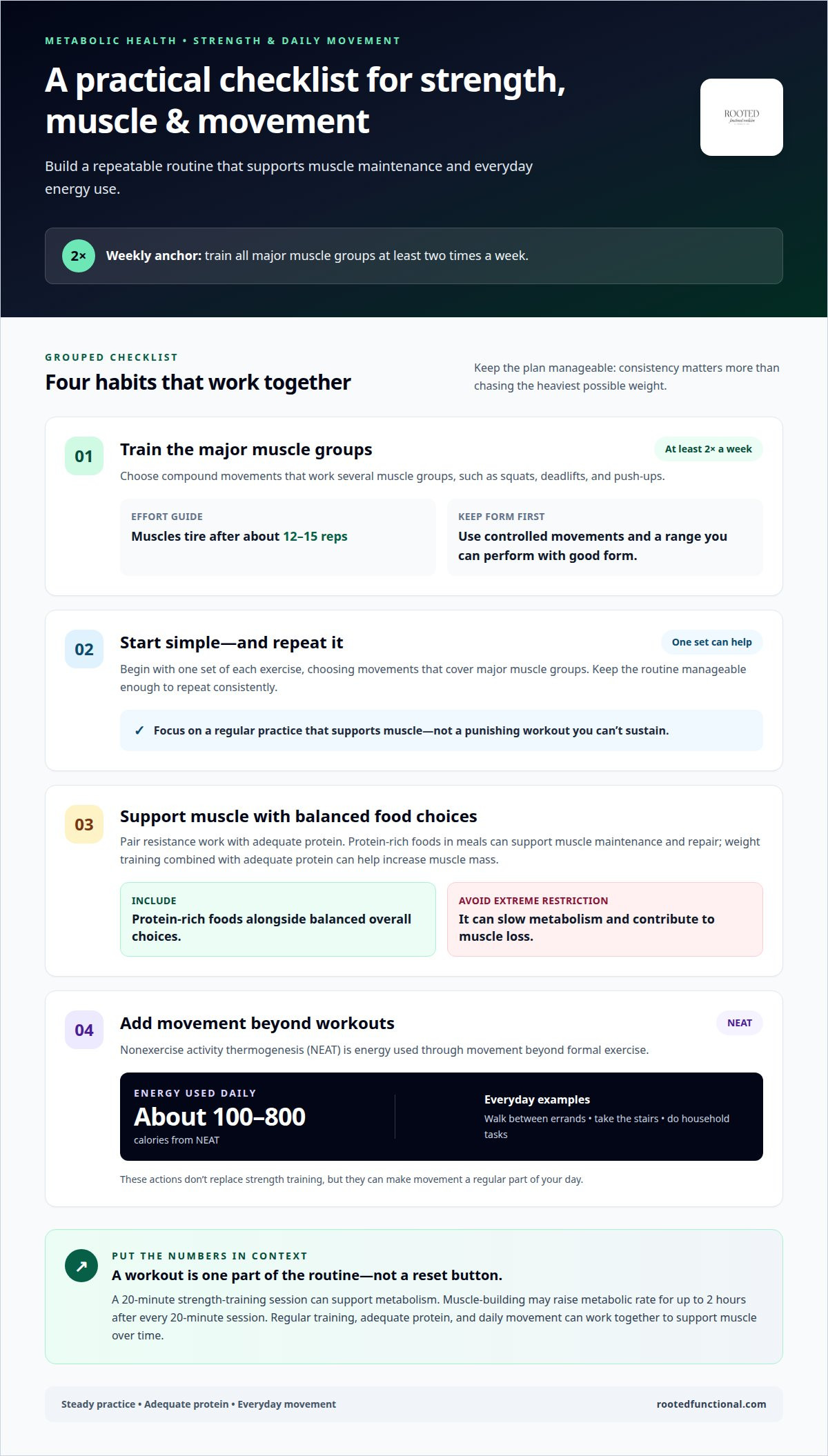
Train all major muscle groups at least two times a week. Choose compound movements such as squats, deadlifts, and push-ups to work several muscle groups. Select resistance that makes your muscles tire after about 12 to 15 repetitions. This gives you a practical guide for choosing effort without chasing the heaviest possible weight. Use controlled movements and a range you can perform with good form.
Start with one set of each exercise. One set can provide health and fitness benefits, so a routine doesn’t need to be complicated. Choose movements that cover major muscle groups, then focus on consistent sessions. As strength training becomes familiar, keep the routine manageable enough to repeat. The goal is a regular practice that supports muscle, not a punishing workout you can’t sustain.
Pair resistance work with adequate protein. Weight training combined with adequate protein intake can help increase muscle mass, which may support metabolism. Include protein-rich foods in meals while keeping your overall food choices balanced. Avoid extreme calorie restriction because it can slow metabolism and contribute to muscle loss. Losing muscle works against the goal of preserving the tissue that uses energy.
Add movement outside planned workouts. Nonexercise activity thermogenesis, or NEAT, describes energy used through movement beyond formal exercise. It accounts for about 100 to 800 calories used daily. Walking between errands, taking the stairs, or doing household tasks are simple examples. These actions don’t replace strength training, but they can help make movement a regular part of your day.
A 20-minute strength-training session can support metabolism, and muscle-building may raise metabolic rate for up to 2 hours after every 20-minute session. Think of that effect as one part of your routine, rather than expecting a dramatic change from one workout. Regular training, adequate protein, and daily movement can work together to support muscle over time.
A practical approach to how to fix a slow metabolism is to choose compound exercises, train all major muscle groups regularly, and add movement to everyday tasks. Keep your routine consistent and avoid drastic dieting that may undermine muscle maintenance.
Hydration
Water supports the body’s everyday processes, and hydration is one part of a metabolism-supportive lifestyle. Drinking enough water can temporarily increase metabolism by up to 30%. That effect is temporary, so hydration works best as a steady habit alongside balanced food choices and regular activity, not as a standalone way to lose weight.
Sip water throughout the day. Rather than waiting until you feel thirsty, keep water within reach during familiar routines. Drink some with breakfast, carry a bottle while running errands, and take a few sips between tasks. This simple pattern makes hydration easier to remember at home, at work, or while traveling. It also avoids relying on one large drink at the end of the day.
Pair water with exercise. Keep water nearby during a walk, strength session, or other activity. Take sips as part of your usual routine, especially when exercise makes drinking easy to forget. Hydration supports the body while it moves, but it doesn’t replace recovery, nourishing meals, or consistent training. Think of water as one practical piece of the broader effort to support metabolic health.
Add water-rich foods to meals. Watermelon and cucumbers are useful examples when you want food to contribute to fluid intake. Add cucumber to lunch, or include watermelon as a snack. These choices can make hydration feel less like another task. They also give you an easy way to build water-rich foods into meals without relying only on a glass or bottle.
Use daily cues to make the habit stick. Connect drinking water to events that already happen: have a glass with meals, refill your bottle after arriving home, or take a drink when you pause between work tasks. A repeatable cue is more useful than an ambitious plan you quickly abandon. Keep the routine flexible, and adjust it around your normal schedule and activity.
Keep the metabolism claim in perspective. Water can temporarily increase metabolism by up to 30%, but that figure doesn’t mean drinking more guarantees weight loss. Hydration is one supportive habit, not a shortcut that overrides food choices, movement, or sleep. Focus on drinking regularly and eating water-rich options such as cucumber or watermelon, rather than expecting a single drink to change your metabolism.
If you’re working on weight-related goals and want help connecting everyday habits with a personalized plan, consider booking a functional weight-loss consultation. Hydration can be a useful starting point, alongside the other parts of your routine.
Are there foods that help boost metabolism?
Protein-rich foods take more energy to digest than fats and carbohydrates. Talk with a doctor about unexplained weight gain or concerns that a prescription may be affecting your metabolism.
Protein and Digestion
Choose a protein-rich food at meals, then pair it with vegetables, fruit, or whole grains. The body uses about 10% of the calories eaten to digest food and absorb nutrients, and protein has a higher thermic effect than fats and carbohydrates because it takes longer to digest and absorb. That effect supports energy use, but it doesn’t make one food a metabolism fix.
Including Protein at Each Meal
Include a protein source at meals to support muscle maintenance and repair. Eggs, beans, seafood, poultry, and yogurt are options to work into your meals. Round out the plate with other nutrient-rich foods, too. Protein can be part of a balanced eating pattern, not a reason to rely on one food or avoid other food groups.
Build meals around a protein source. For breakfast, add eggs or yogurt. At lunch, include beans or seafood, and choose poultry or another protein source at dinner. Pair each with vegetables, fruit, or whole grains. This simple pattern puts protein into meals without turning every dish into a supplement or a special recipe.
Use the calorie proportion as a planning reference. The article’s suggested range is for protein to make up 25 to 30 percent of total daily calories. Treat that as a meal-planning guide, not a cue to cut carbohydrates or fats. The goal is a balanced intake that includes protein consistently, rather than concentrating it into a single meal.
Choose foods you can digest comfortably. Rotate options such as eggs, beans, yogurt, poultry, or seafood across the week. Notice which choices fit your appetite and routine, and prepare them in ways you enjoy. If a food repeatedly causes digestive discomfort, don’t force it simply because it contains protein; choose another suitable source instead.
Keep “metabolism-boosting” claims in perspective. Coffee may increase metabolism by 5 to 20% for about 3 hours, while green tea contains caffeine and catechins associated with a higher metabolic rate in some studies, especially with exercise. These effects don’t replace regular activity, balanced meals, or managing stress. Use coffee or tea as beverages you enjoy, not as the center of a weight-loss plan.
What metabolism and basal metabolic rate mean
Metabolism is the body’s ongoing process of using energy, including during rest and sleep. Genes influence metabolic rate, and it can change with age.
You can’t determine your metabolic rate from your weight alone. A resting metabolic rate test estimates how much energy your body uses at rest.
Defining Metabolism
Think of metabolism as the body’s ongoing energy use. It operates 24/7, supporting the processes that keep you functioning while awake, resting, or sleeping. Your metabolic rate describes how quickly your body uses energy. Avoid treating weight or body size as a direct measure: people can have fast, slow, or average metabolism regardless of body size and composition. For example, two people with similar builds can have different metabolic rates.
Understanding Basal and Resting Metabolic Rates
Separate energy use at rest from total daily energy use. Basal metabolic rate refers to the energy your body needs for basic functions at rest. A resting metabolic rate test estimates how many calories your body burns while resting. That estimate describes resting energy use, not every calorie used during activity, digestion, or daily tasks. Don’t interpret a resting estimate as a complete picture of your energy needs throughout the day.
Factors Influencing Metabolic Rate
Consider genes, age, and body composition together. Genes determine much of a person’s metabolism speed, but they aren’t the only part of the picture. Metabolism can slow with age, even for someone who began with a fast rate. People with different body sizes and compositions may also have fast, slow, or average metabolism. Avoid assuming that a change in pounds proves metabolism is the cause; weight reflects more than resting energy use alone.
Recognizing a Slow Metabolism
Use a resting metabolic rate test for an estimate, not a label. A scale can show a change in pounds, but it can’t measure how many calories your body uses at rest. A resting metabolic rate test estimates that resting energy use, giving a more direct measure than body weight alone. Compare the result with your broader picture, including age, activity, and body composition. This helps distinguish an estimate of resting metabolism from assumptions based only on weight changes.
Sleep duration and metabolic health
Sleep belongs in a metabolism-supportive routine alongside food choices and activity. Aim for consistent, quality rest rather than treating bedtime as a way to burn more calories.
Prioritize a regular sleep window.Adults are advised to prioritize 7 to 9 hours of quality sleep per night to support metabolism, according to the National Heart, Lung, and Blood Institute. Start by choosing a bedtime and wake time you can maintain across the week. For example, if you need to wake around 8 a.m., plan your evening to allow enough time for restful sleep.
Notice how sleep affects appetite and energy. Poor sleep and chronic stress can disrupt hormones involved in appetite and energy use. That can make weight management harder by affecting hunger, food choices, and readiness for activity the next day. Track your sleep alongside daytime energy and appetite. A simple note about bedtime, waking, and hunger can help reveal patterns over time.
Don’t use one night to judge your metabolism. A short night doesn’t prove your body has a slow metabolic rate, and sleeping longer isn’t a direct way to burn more calories. One reported comparison says people sleeping 6 hours per night typically carry 5 to 15 pounds more belly fat than people sleeping 8 hours per night. Treat that comparison as context, not a prediction about your own body.
Build a repeatable wind-down routine. Choose a calming activity before bed, such as reading or quiet breathing, and keep it consistent. If late work or screen use pushes bedtime later, set a cue to begin winding down earlier. Going to bed before midnight when possible and waking around 8 a.m. after falling asleep by midnight are suggested routines. Adjust the pattern to fit your schedule while protecting enough sleep.
Look at sleep with the rest of your routine. If weight changes concern you, consider sleep alongside meals, movement, and stress rather than blaming metabolism alone. Poor sleep can make appetite regulation and daily activity more difficult, while a steady sleep routine can support those habits. Record what changes when you protect your sleep window, then look for patterns instead of reacting to one difficult night.
Sleep supports metabolic health through its connection with appetite, energy, and activity. It isn’t a shortcut for weight loss, and extra time in bed alone won’t guarantee that your body burns more calories. If sleep disruption and weight concerns persist together, book a consultation to discuss your health concerns and explore what may be affecting your routine.
Rooted Functional Medicine: Healing Neuropathy Webinar
Rooted Functional Medicine offers the Healing Neuropathy Webinar for people seeking to learn about neuropathy. If weight changes or other ongoing concerns leave you wondering whether there’s more to the picture than daily habits, a Root Cause Consultation can help explore factors contributing to chronic health issues. It’s a way to discuss personalized support and investigate underlying causes, rather than focusing only on symptoms. For concerns related to metabolism and weight, the Functional Weight Loss Program is another relevant option. These services complement the practical habits discussed here, but do not replace urgent medical care. Visit rootedfunctional.com to learn more or book a Root Cause Consultation.
Take the Next Step Toward Answers
Understanding how to fix a slow metabolism starts with looking beyond a single number or symptom. Notice what has changed, which concerns persist, and where personalized guidance may help. You deserve a thoughtful conversation about your health, not pressure to chase quick fixes.
If neuropathy or autoimmune concerns are also part of your experience, Rooted Functional Medicine offers the Healing Neuropathy Webinar and Autoimmune Solutions. A Root Cause Consultation provides an opportunity to discuss ongoing health concerns and explore possible underlying factors.
You don’t have to sort through every concern alone. Contact Rooted Functional Medicine to discuss your next step and move forward with care that takes your concerns seriously.
Frequently Asked Questions
What is metabolism?
Metabolism is the set of processes your body uses to manage energy. It includes energy used at rest and energy spent on activities such as walking, digestion, and daily tasks. A change on the scale doesn’t measure metabolic rate by itself. For example, changes in food intake or movement can affect weight without showing how much energy your body uses at rest.
Can medical conditions or medications slow metabolism, and what tests can diagnose them?
Some health conditions or prescriptions can affect weight or energy use, but a resting metabolic rate test doesn’t diagnose their cause. It estimates calories burned at rest. Note when the change began, any related symptoms, and medication changes, then discuss those details with your doctor. They can consider your health history and choose an appropriate evaluation; don’t stop a prescribed medication on your own.
What diet and eating habits support a healthy metabolism?
Choose balanced meals that include protein, fiber-rich foods, and nutrient-rich carbohydrates such as fruits, vegetables, and grains. For example, pair beans with vegetables and a whole grain, or add eggs to breakfast. This supports nourishment without relying on a single “metabolism-boosting” food. Notice how meals affect hunger and energy, then build a pattern you can maintain.
Does eating more frequently, drinking water, or eating spicy foods boost metabolism?
Eating more often isn’t a guaranteed way to raise metabolism, and eating late doesn’t inherently slow it. Water may temporarily increase metabolic activity, while capsaicin in chili peppers can raise body temperature and heart rate, potentially increasing metabolism. Neither effect makes these a stand-alone weight-loss strategy. Choose meal timing that suits your routine, sip water regularly, and use spices for flavor.
How much sleep do adults need to support healthy metabolism?
Adults are advised to prioritize 7 to 9 hours of quality sleep per night to support metabolism, according to the National Heart, Lung, and Blood Institute. Try keeping a steady wake time and giving yourself enough time in bed to reach that range. If work or caregiving disrupts your schedule, identify one repeatable bedtime routine, such as setting aside quiet time before sleep.
Can weight loss or very low-calorie diets slow metabolism, and how can this be avoided?
Extreme calorie restriction can slow metabolism and contribute to muscle loss. Avoid drastic diets that sharply cut food or eliminate major food groups. Instead, make gradual changes: build balanced meals, include protein in your eating pattern, and maintain strength training as appropriate. If a restrictive plan leaves you persistently hungry or depleted, reassess it rather than treating discomfort as proof that it’s working.
Which supplements claim to boost metabolism, and what are their risks and evidence?
Metabolism-boosting supplements are marketed with promises of faster calorie burning, but most lack strong scientific evidence. They may also be unsafe or cause unpleasant side effects. Be cautious about products promising dramatic results, and read ingredient labels rather than assuming “natural” means harmless. If you take medication or have a health condition, discuss supplements with your doctor before using them.