How to Lower Thyroid Antibodies Naturally: The 2026 Root-Cause Guide
Being told to "watch and wait" while elevated antibodies slowly damage your thyroid is not a treatment plan; it is simply waiting for disease progression. If you are struggling with persistent exhaustion, brain fog, thinning hair, and unexplained weight gain, you already know the frustration of being told your labs are "fine" or that nothing can be done. You shouldn't have to sit idly by while your body attacks itself. Learning how to lower thyroid antibodies naturally begins with a crucial shift: recognizing that high TPO and TgAb levels aren't a thyroid defect, but a clear signal of underlying immune dysfunction.
In this guide, you will discover actionable, science-backed steps to calm your immune system, lower thyroid antibodies, and reclaim your daily energy. Instead of guessing with random elimination diets or unvetted supplements, you will explore the real root causes driving autoimmune flares, from intestinal permeability to hidden cellular stressors. Ahead, we map out a clear, evidence-based protocol designed to halt glandular damage and help you achieve measurable drops on your next lab panel.
Table of Contents
What Are Thyroid Antibodies and Why Do Conventional Labs Overlook Them?
Thyroid antibodies are immune proteins that mistakenly identify healthy thyroid tissue as a foreign threat. When your immune system loses self-tolerance, specialized white blood cells generate these inflammatory markers to tag your own cellular structures for destruction. Conventional endocrinology typically shrugs at this process. Because standard synthetic hormone therapy does not alter the underlying autoimmune process, conventional providers often wait until the gland is thoroughly damaged before stepping in with a prescription. Functional medicine refuses to wait. We view these markers as an early distress signal, showing you exactly how to lower thyroid antibodies naturally before permanent glandular failure occurs.
The Difference Between TPO and TgAb Markers
A comprehensive evaluation requires measuring two primary forms of anti-thyroid autoantibodies to understand the full scope of immune activation:
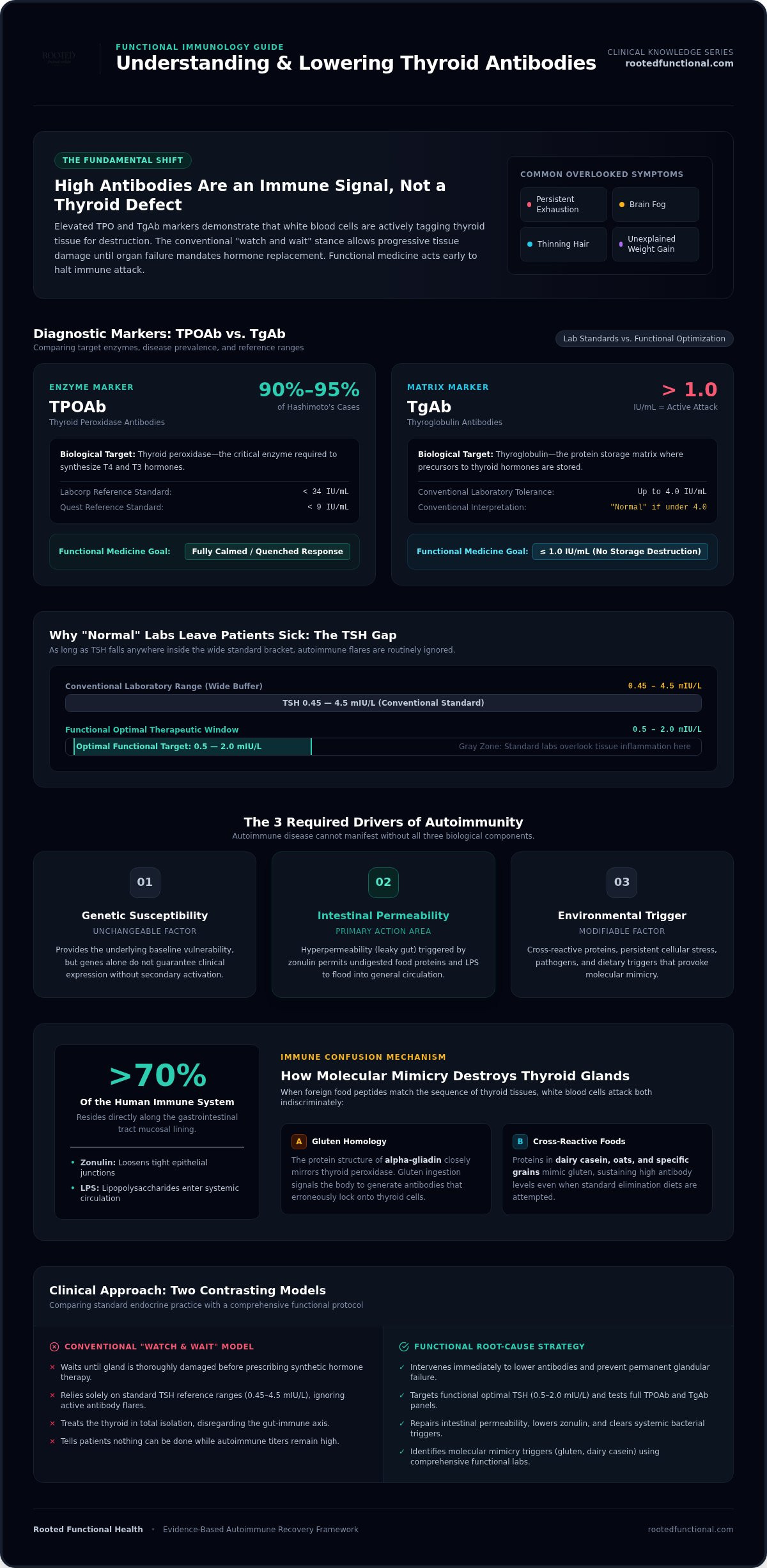
Thyroid Peroxidase Antibodies (TPOAb): These target thyroid peroxidase, the critical enzyme your body uses to synthesize T4 and T3 hormones. Elevated TPO antibodies appear in 90% to 95% of patients with Hashimoto's thyroiditis. Conventional laboratories define normal as less than 34 IU/mL (Labcorp) or less than 9 IU/mL (Quest), but optimal health requires calming this response entirely.
Thyroglobulin Antibodies (TgAb): These attack thyroglobulin, the protein matrix where your body stores thyroid hormone precursors. While standard laboratories tolerate levels up to 4.0 IU/mL, functional medicine considers anything above 1.0 IU/mL a clear sign of ongoing immune attack.
Why "Normal" Lab Ranges Leave Patients Sick
Standard reference ranges for thyroid-stimulating hormone (TSH) span a wide 0.45 to 4.5 mIU/L. In contrast, functional medicine targets an optimal window of 0.5 to 2.0 mIU/L. As long as your TSH falls anywhere inside that wide conventional bracket, traditional medicine often ignores your antibody levels entirely. You are told your labs are normal, even while you struggle with relentless exhaustion, stubborn weight gain, and brain fog.
Treating a lab number instead of a living person leaves you stranded in chronic illness. Discovering how to lower thyroid antibodies naturally requires digging beneath standard lab cutoffs to identify the inflammatory drivers provoking your immune system, halting tissue destruction long before your thyroid burns out.
The Hidden Root Causes Driving Elevated Thyroid Antibodies
Your immune system does not attack your body by accident. Autoimmunity always requires three distinct ingredients: genetic susceptibility, a leaky intestinal barrier, and an environmental trigger. While you cannot alter your genetic code, you hold immense control over the other two factors. When conventional medicine views elevated titers merely as an inevitable consequence of bad genes, it ignores the biological pathways driving that immune assault. Understanding how to lower thyroid antibodies naturally requires digging into the upstream triggers firing up your defenses.
Leaky Gut and the Gut-Thyroid Axis
Over 70% of your immune system resides directly along the gastrointestinal tract. When chronic stress, poor nutrition, or dysbiosis damages the delicate mucosal lining, the protein zonulin triggers the loosening of tight junctions. This intestinal hyperpermeability lets undigested food proteins, toxins, and bacterial fragments like lipopolysaccharides slip into systemic circulation. In response, your white blood cells launch an emergency defense. Verifying this activation through clinical thyroid antibody testing helps track how chronic gut inflammation spills into systemic autoimmunity.
Food Sensitivities and Molecular Mimicry
Once foreign proteins enter the bloodstream, the immune system manufactures targeted antibodies. Problems accelerate when a foreign invader resembles human tissue, a process known as molecular mimicry:
Gluten homology: The protein structure of alpha-gliadin closely mirrors thyroid peroxidase. Every time you ingest gluten, your immune system fires antibodies that mistakenly lock onto thyroid cells.
Cross-reactive foods: Dairy casein, oats, and various grains can mimic gluten, sustaining high antibody levels even on a standard gluten-free diet.
Hidden sensitivities: Chronic reactions to otherwise healthy foods create constant low-grade inflammation, draining your cellular defenses.
Chronic Toxins and Cellular Stress
Environmental toxic burdens place a massive load on metabolic function. Heavy metals like mercury, lead, and cadmium naturally bind to hormone receptors in the thyroid gland. Meanwhile, environmental endocrine disruptors and toxic mold byproducts (mycotoxins) impair normal cellular detoxification pathways. When your cells cannot clear waste, free radical damage triggers localized oxidative stress, signaling immune cells to clean up the damaged tissue and spiking antibody production.
Calming an overactive immune response means systematically identifying which of these environmental triggers are overwhelming your system. If you are exhausted from guessing which dietary changes or detox protocols your body actually needs, you can schedule a Root Cause Consultation to pinpoint your precise inflammatory drivers.
The 4-Step Clinical Protocol to Lower Thyroid Antibodies Naturally
Lowering antibodies requires a methodical, sequenced approach. Swallowing random handfuls of supplements rarely succeeds if the underlying inflammatory fire is still burning. A structured clinical roadmap systematically removes immune irritants while restoring cellular function. Here is how to lower thyroid antibodies naturally by working through four foundational phases.
Step 1: Remove Immune Irritants and Food Triggers
You must stop fueling the immune response before you can calm it. Eliminate gluten, industrial seed oils, and refined sugars for at least 60 days to reduce systemic antigenic load. Because individual reactions vary, targeted Food Sensitivity Testing helps uncover unexpected culprits like eggs, soy, or nightshades that keep your immune system on high alert. Focus your meals on nutrient-dense proteins, healthy fats, and colorful produce that stabilize blood sugar and soothe cellular pathways.
Step 2: Repair the Gut Barrier and Microbiome
Sealing the gut lining stops endotoxins and undigested proteins from leaking into systemic circulation. Therapeutic compounds such as L-glutamine, zinc carnosine, and soothing botanicals like marshmallow root help rebuild epithelial tight junctions. Supporting stomach acid and digestive enzyme production ensures food breaks down completely before reaching the intestines. Pairing these with spore-based probiotics re-establishes microbiome diversity, promoting the immune tolerance necessary to halt tissue attacks.
Step 3: Replenish Targeted Thyroid-Supporting Nutrients
Correcting cellular nutrient deficiencies directly calms autoimmune activity. Clinical trials show that supplementing with 83 to 200 mcg daily of selenomethionine lowers TPO antibodies by an average of 40% to 42%. When paired with 600 mg of myo-inositol, research shows an impressive 44% drop in TPOAb and a 48% drop in TgAb over six months. Optimize your vitamin D3 levels between 50 and 80 ng/mL alongside vitamin K2 to promote regulatory T-cell function. Tracking these changes via routine thyroid antibody testing verifies that tissue destruction is slowing down.
Step 4: Calm the Adrenal Axis and Regulate Cortisol
Chronic stress creates elevated cortisol levels that blunt cellular thyroid hormone receptors and break down gut barrier integrity. Regulating your neuroendocrine axis with targeted adaptogens, such as ashwagandha or rhodiola, helps balance daily cortisol output. Pair this support with eight hours of deep, uninterrupted sleep to allow for overnight cellular repair. Resolving adrenal strain relieves constant pressure on your immune system, solidifying long-term recovery.
Essential Lab Testing: Tracking What Truly Matters Beyond TSH
Relying solely on standard TSH tests leaves you blind to active autoimmune destruction. Conventional laboratories often run only a basic reflex TSH panel. If that number falls within the broad reference window, they look no further. This narrow view fails to reveal hormone conversion blockages, cellular receptor resistance, or rising autoantibody titers. If you want to know how to lower thyroid antibodies naturally, you must first quantify the full scope of your physiology with comprehensive functional lab work.
Standard medicine and functional medicine approach these biomarkers with entirely different clinical goals:
The Complete Functional Thyroid Panel
A true assessment requires running TSH, Total T4, Free T4, Total T3, Free T3, and Reverse T3 simultaneously. T4 is merely an inactive storage hormone; your cells depend on active Free T3 for daily energy. When systemic inflammation or chronic stress runs unchecked, your body shunts T4 into Reverse T3, an inactive mirror molecule that blocks cellular receptors. Always test both TPO and TgAb alongside this panel. Remember to pause high-dose biotin supplements for 48 to 72 hours before any blood draw to avoid false lab readings.
Root-Cause Labs That Uncover Hidden Triggers
Evaluating the thyroid tells you what is happening, but root-cause testing reveals why it began in the first place:
Comprehensive Stool Testing: Evaluates bacterial dysbiosis, opportunistic pathogens, and secretory IgA to assess mucosal immune defenses.
Advanced Food Sensitivity Testing: Identifies delayed IgG and immune-complex reactions that continuously trigger systemic flares.
Red Blood Cell (RBC) Nutrient Profiling: Measures intracellular stores of selenium, zinc, and magnesium rather than deceptive serum levels.
You can discover more about this investigative process by exploring what is a functional medicine doctor. Retesting your functional markers every 90 to 120 days objectively quantifies your progress. If you are ready for a clear, lab-guided strategy to halt autoimmune damage, book your Root Cause Consultation today.
Building Your Personalized Autoimmune Recovery Plan with Telehealth
Autoimmune conditions are deeply unique to each individual. A supplement stack that calms someone else's thyroid flare might trigger an inflammatory reaction in your own body. True healing doesn't come from a generic checklist found on social media; it requires an investigative approach that uncovers your specific triggers, cellular stresses, and gut barrier health. Discovering how to lower thyroid antibodies naturally requires a tailored roadmap built around your distinct biochemistry. Through nationwide functional telehealth care, you can access specialized clinical expertise right from home.
Why Guesswork Slows Your Healing Journey
Trying to resolve an autoimmune flare alone often leads to protocol fatigue. Many patients spend months cycling through rigid elimination diets, only to end up malnourished, exhausted, and anxious around food. Worse, randomly taking immune-boosting herbs can unintentionally stimulate the exact immune pathways driving tissue destruction. Self-directed trials consume valuable time while glandular tissue sustains ongoing damage. A data-driven approach removes this trial-and-error cycle by using validated testing to confirm exactly which systems need clinical support.
How Virtual Functional Medicine Support Works
Modern telehealth brings comprehensive clinical care directly to your living room without the friction of travel. Advanced functional test kits arrive at your doorstep with clear collection instructions, letting you complete specialized evaluations safely and conveniently. Once your results return, your practitioner conducts an in-depth video consultation to review your health timeline, symptom history, and lab discoveries.
From there, you receive a tailored strategy through specialized clinical programs like the Autoimmune Solutions Program or Cellular Detoxification Program. Your protocol integrates targeted therapeutic nutrition, gut mucosal repair, and cellular support designed to calm immune reactivity systematically. Real healing happens when you stop managing symptoms and start addressing root causes. You can take your first decisive step by scheduling a Root Cause Consultation today.
Take Control of Your Thyroid Health Today
Elevated antibodies are not an inevitable life sentence, nor are they a reason to passively watch and wait for glandular damage. Understanding how to lower thyroid antibodies naturally gives you the power to halt the autoimmune cascade at its origin. By repairing intestinal permeability, eliminating hidden inflammatory food triggers, and tracking comprehensive functional markers, you can calm systemic inflammation and help your body regain immune tolerance.
Led by Dr. Adrienne Guthrie, recognized for emerging national functional leadership, our practice designs comprehensive lab-guided autoimmune protocols personalized to your cellular biochemistry. You don't have to navigate persistent fatigue, brain fog, and confusing lab results alone. Convenient nationwide telehealth care delivers the clinical guidance and root-cause answers you deserve straight to your home. If you are ready to uncover what is truly driving your autoimmune flares, schedule your Root Cause Consultation today and take your first step toward lasting vitality.
Frequently Asked Questions
Can thyroid antibodies ever return to normal levels?
Yes, thyroid antibodies can return to normal reference ranges or drop to undetectable levels once underlying immune triggers are resolved. While conventional medicine often views antibodies as permanent, functional medicine protocols frequently achieve seronegative status. Calming gut hyperpermeability, balancing the microbiome, and clearing hidden chronic infections halts the autoimmune attack. This gives your thyroid gland the opportunity to recover without persistent inflammatory interference.
How long does it take to lower thyroid antibodies naturally?
Most patients see measurable antibody reductions within three to six months of beginning a targeted, root-cause protocol. Because circulating antibodies have an average biological half-life and tissue repair takes time, learning how to lower thyroid antibodies naturally is a gradual process. Retesting your labs every 90 to 120 days provides an objective roadmap of whether your dietary shifts, gut healing, and cellular nutrients are working.
Is it possible to have elevated antibodies with a completely normal TSH?
Yes, you can carry elevated thyroid antibodies for years while maintaining completely normal TSH levels. This common stage of autoimmunity occurs while your gland works overtime to compensate for ongoing immune destruction. Standard screening usually misses this window because conventional medicine only investigates once hormone output collapses. Elevated antibodies are a vital early warning signal to take action before permanent glandular damage occurs.
Will cutting out gluten automatically lower my thyroid antibodies?
Eliminating gluten is an essential first step, but it is rarely enough on its own to resolve elevated antibodies. Gluten shares structural homology with thyroid tissue, so removing it prevents cross-reactive molecular mimicry attacks. However, if other drivers like intestinal dysbiosis, heavy metal toxicity, or cross-reactive foods like dairy casein remain unaddressed, antibodies will persist. Comprehensive functional lab testing helps uncover which secondary triggers need clinical attention.
What supplements have clinical evidence for reducing TPO antibodies?
Selenomethionine and myo-inositol demonstrate the strongest clinical evidence for lowering elevated TPO antibodies. Research shows that supplementing with 83 to 200 mcg daily of selenium reduces TPO antibodies by roughly 40% to 42%, while adding 600 mg of myo-inositol accelerates this reduction and stabilizes TSH. Vitamin D3, dosed to reach optimal serum levels between 50 and 80 ng/mL, also calms the autoimmune response.
Can chronic emotional or physical stress cause a spike in thyroid antibodies?
Yes, chronic physical and emotional stress directly drives antibody spikes by destabilizing your neuroendocrine system. Prolonged stress floods the body with cortisol, which damages the intestinal lining and impairs regulatory T-cell signaling. This breakdown allows autoimmune inflammation against thyroid proteins to flare unchecked. Finding how to lower thyroid antibodies naturally must include calming the adrenal axis through targeted botanicals, nervous system balance, and restorative sleep.
Do I still need thyroid medication if my antibodies decrease?
Lowering your antibodies halts active tissue destruction, but your need for medication depends on how much healthy glandular tissue remains. If significant cellular damage occurred before the autoimmune fire was calmed, supplemental thyroid hormone may still be necessary. However, calming immune flares often stabilizes hormone conversion and prevents escalating doses. Any changes to prescription medications must always be coordinated directly with your prescribing physician.


