SIBO Symptoms and Treatment: A Functional Medicine Guide to Root Cause Healing
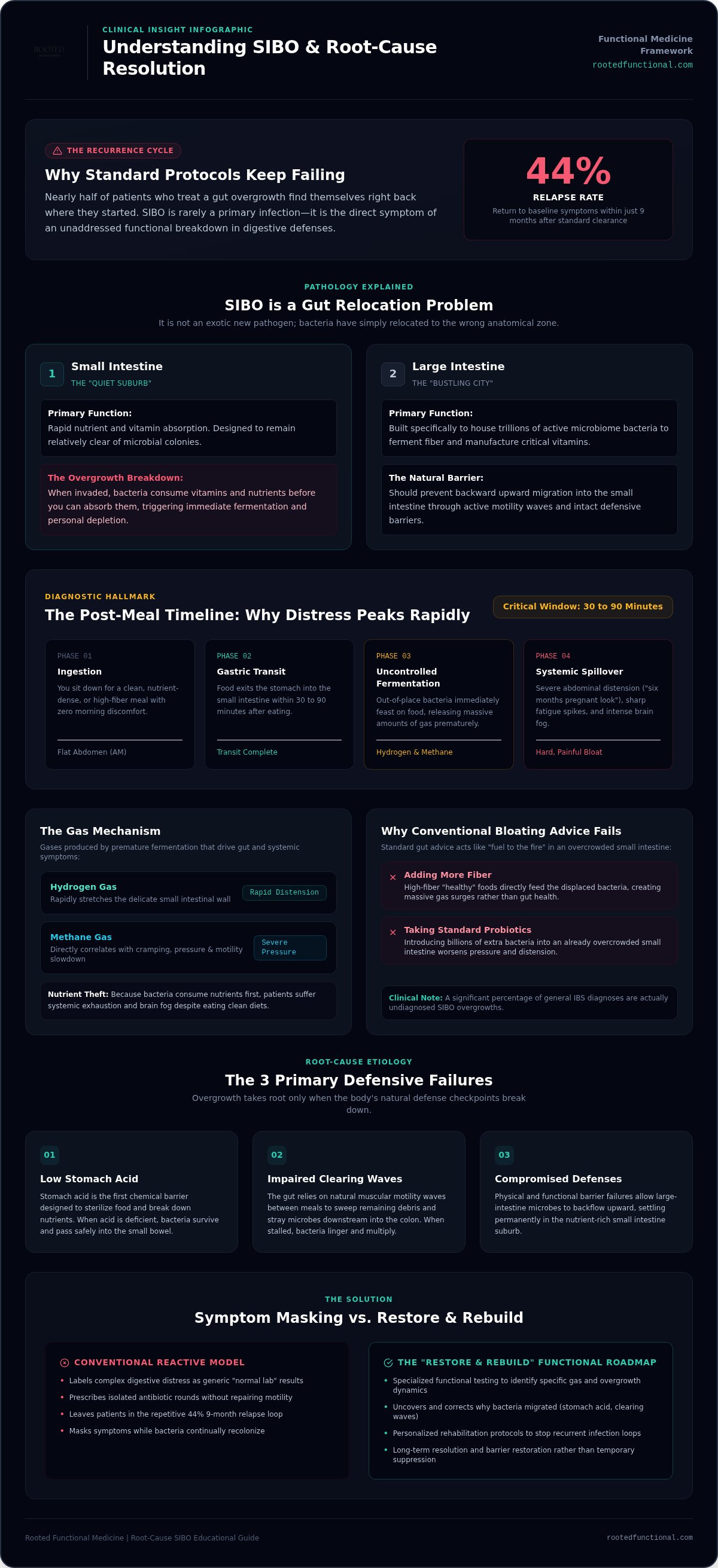
Nearly 44 percent of people who clear a gut infection find themselves right back where they started within just nine months. It's a cycle of frustration. You dread every meal. You wonder why your body is failing you. You've likely tried the standard protocols, yet the extreme bloating and brain fog remain. If you're searching for answers regarding SIBO symptoms and treatment, you deserve to know why the typical approach often misses the mark.
I know how exhausting it is to be told your labs are normal while you feel anything but. You aren't crazy. You aren't stuck with this forever. We're going to look past the surface level to discover why bacteria migrated where they don't belong. This guide will show you why SIBO keeps returning and how a personalized, functional approach can finally restore your gut health for good. We'll explore the hidden causes of overgrowth, the roadmap for accurate testing, and the exact steps to stop the cycle of relapse. It's time to stop masking symptoms. It's time to start digging for the root cause.
Table of Contents
Understanding SIBO: Why Your Gut Feels Out of Control
You sit down for a healthy meal, but within thirty minutes, you feel like you've swallowed a balloon. The pressure is real. The frustration is even heavier. Many of my patients arrive after years of being told their tests are "normal" while they struggle with debilitating gas and brain fog. When we talk about SIBO symptoms and treatment, we have to start by reframing what this condition actually is. It isn't a mysterious infection you caught from a bad meal. It's a relocation problem.
Your gut is a complex system of neighborhoods. The large intestine is the bustling city where your microbiome belongs. It's designed to house trillions of bacteria that help ferment fiber and produce vitamins. The small intestine, however, is a quiet suburb. Its primary job is nutrient absorption. When bacteria from the large intestine migrate upward into the small intestine, the system breaks. This state, known as small intestinal bacterial overgrowth, means your food is being eaten by guests who weren't invited to the table.
The emotional weight of this "unexplained" distress is exhausting. It's not just the physical pain; it's the fear of eating and the isolation of feeling unheard by conventional medicine. I want you to know that you aren't crazy. Your body is simply responding to a functional failure in your digestive defenses. SIBO is rarely the primary problem. It's a symptom of a deeper issue that we need to uncover together.
The Role of the Small Intestine
Your small intestine should be relatively clear of bacteria so it can absorb vitamins and minerals efficiently. When overgrowth occurs, these bacteria begin to ferment your food before you can digest it. This process creates gases like hydrogen and methane. These gases are the direct cause of the physical distension and discomfort you feel. It's also why "healthy" high-fiber foods often trigger the worst reactions. You're essentially feeding the overgrowth, which leads to more fermentation and more pain. When the bacteria eat your nutrients first, you're left feeling fatigued and depleted despite eating a clean diet.
Why Conventional Bloating Advice Often Fails
Most people are told to eat more fiber or take a standard probiotic when they feel bloated. In the context of SIBO, this is often the worst thing you can do. Adding more bacteria to an area that is already overcrowded is like adding fuel to a fire. This is a major reason why many people fail to find relief through traditional methods. Understanding what causes bloating requires looking at why your body's natural clearing waves stopped working in the first place. If we don't address the underlying motility or acid issues, the bacteria will simply return after every round of antibiotics.
SIBO Symptoms: Identifying the Signs Beyond the Bloat
The physical experience of SIBO is often visual. Many of my patients describe the "six months pregnant" look. You wake up with a flat stomach. By the evening, your abdomen is hard, distended, and painful. This isn't just a little gas. It's the result of trillions of bacteria fermenting your food in a space that wasn't built for it. When we look at SIBO symptoms and treatment, we have to look beyond the digestive tract. This condition impacts your cellular health and systemic inflammation levels.
The timing of your distress is a major clue. Symptoms often peak 30 to 90 minutes after you eat. This is the exact window when food moves from your stomach into the small intestine. If the bacteria are waiting there, the fermentation begins immediately. This process produces hydrogen or methane gases that stretch the intestinal walls. It causes intense pressure. It also causes the brain fog that makes you feel like you're moving through a cloud.
Common Digestive Red Flags
Digestive distress is the most obvious sign. You might experience chronic bloating, abdominal cramping, and unpredictable bowel habits. Some people struggle with urgent diarrhea. Others face stubborn constipation. Many deal with both. There is a profound overlap between these presentations and what causes irritable bowel syndrome. Research suggests that a significant percentage of IBS diagnoses are actually undiagnosed overgrowths. For more detail, you can review Yale Medicine's clinical overview of SIBO symptoms and care to see how these conditions intertwine.
The Surprising Systemic Symptoms
SIBO doesn't stay in the gut. It creates an environment that allows inflammatory markers to enter your bloodstream. This often leads to brain fog and chronic fatigue. When bacteria eat your nutrients before you can, you become deficient. Low levels of B12 and iron are common red flags. Your skin may also tell the story. Conditions like rosacea and acne often flare when your gut is out of balance. If you're tired of guessing which foods will trigger a flare, a Root Cause Consultation is the first step toward clarity. Effective SIBO symptoms and treatment protocols must address these systemic connections to be successful.
The Root Causes: Why Did SIBO Develop in the First Place?
SIBO is rarely about "bad" bacteria. It's about normal bacteria living in the wrong neighborhood. When your gut's natural defenses fail, these bacteria migrate from the large intestine into the small intestine. If you only focus on killing the overgrowth, you're treating the smoke and ignoring the fire. This is why SIBO symptoms and treatment often become a cycle of frustration. Statistics show that up to 60 percent of patients experience a relapse within a year if the underlying motility or structural issues aren't addressed. We must fix the house, not just evict the tenants.
Your body has three primary defense mechanisms designed to keep the small intestine clear. These include stomach acid, digestive enzymes, and the Migrating Motor Complex. When one or more of these systems break down, the "neighborhood" becomes vulnerable. To achieve lasting healing, we have to identify which of these barriers failed and why. It's an investigative process that moves beyond temporary symptom management.
The Migrating Motor Complex (MMC)
Think of the MMC as your gut's nighttime cleaning crew. This is a wave of electrical activity that sweeps through the small intestine every 90 to 120 minutes between meals. It pushes undigested food and bacteria down into the large intestine where they belong. If this "sweep" stops, bacteria settle and multiply. Chronic stress, past bouts of food poisoning, and thyroid dysfunction can all paralyze this process. Even constant grazing or snacking keeps the MMC turned off. Your gut needs windows of fasting to clean itself properly. Without this mechanical clearing, bacteria will inevitably return.
Low Stomach Acid and Enzyme Deficiencies
Stomach acid is your first line of defense. It's designed to sterilize your food before it ever reaches the small intestine. When acid levels are low, bacteria survive the journey and take root in the wrong place. This is a significant concern for those on chronic proton-pump inhibitors (PPIs). Research indicates that PPI use can more than double your risk of developing overgrowth. Beyond acid, you need robust bile flow and pancreatic enzymes. These substances don't just digest food. They create an environment that is naturally hostile to overgrowth. We must restore these chemical barriers to ensure SIBO symptoms and treatment protocols lead to permanent resolution.
SIBO Testing and Treatment: A Functional Medicine Roadmap
Finding the right path for SIBO symptoms and treatment requires more than a single prescription. It requires a roadmap. Conventional care often stops at a positive test and a round of antibiotics. This is the "kill-only" approach. It's incomplete. In functional medicine, we don't just clear the bacteria. We restore the entire ecosystem. We use advanced functional labs to look at the full picture of inflammation and cellular health. This ensures we aren't just masking a problem that will return in three months. You deserve a solution that lasts.
Treatment must be as unique as your own biology. We don't use a one-size-fits-all protocol because your gut doesn't behave like everyone else's. Whether you are dealing with hydrogen-dominant overgrowth or methane-dominant Intestinal Methanogen Overgrowth (IMO), your strategy must be specific to that gas type. We look at the data to decide which botanicals and motility supports will actually work for your body.
Breath Testing: The Gold Standard
The lactulose breath test is the current gold standard for a reason. You drink a solution that your body can't absorb, but bacteria love to eat. As they ferment it, they release hydrogen or methane gases. We measure these gases in your breath to see where the overgrowth is located. Success depends on the prep diet. You must follow a strict 24-hour protocol of plain meat and white rice. This starves the bacteria so we can get an accurate baseline. A "normal" test from a standard lab might miss functional overgrowth if the timing or gas types aren't analyzed through a functional lens.
The 5-R Framework for Gut Healing
We follow a proven framework to ensure lasting resolution. First, we Remove the overgrowth using targeted botanicals like berberine or oregano oil. These are effective and gentle on the rest of your microbiome. Next, we Replace what's missing. This often includes supporting your digestion with enzymes or HCL. Then, we move to Reinnoculate, Repair, and Rebalance. This is where we heal the intestinal lining and jumpstart your motility to prevent relapse. We often use food sensitivity testing during this phase. Identifying your unique triggers reduces systemic inflammation and allows the gut to rest. We don't just want you to feel better today. We want you to stay well for years.
If you're ready to stop the cycle of relapse, the first step is an investigation into your unique gut profile. Schedule your Root Cause Consultation to begin your personalized healing journey.
Finding Lasting Relief: The Rooted Functional Medicine Approach
Most patients arrive at my practice after they've been dismissed or failed by conventional protocols. They've been told their symptoms are just "part of life" or that a single round of antibiotics is the only solution. We do things differently. Dr. Adrienne Guthrie takes a deep, investigative dive into your unique biology. We don't just look for a label. We look for the "why." When we address SIBO symptoms and treatment from a functional perspective, we're looking at the whole person. We examine your history, your stressors, and your cellular health. You don't have to live with the fear of eating forever. There is a path back to a life where food is fuel, not a trigger. We're here to help you find it.
The cycle of relapse is exhausting. It's often a sign that the root cause was never uncovered. Our goal is to stop the "kill-and-repeat" cycle and start a "restore-and-thrive" journey. This isn't a detached, institutional approach. It's a partnership. We meet you where you are, acknowledge the frustration you've faced, and offer a certain path forward. Healing is possible when you have the right guide and the right data.
Personalized Lab Testing and Discovery
Standard blood work often misses the subtle signs of gut dysfunction. Our advanced functional labs look deeper. We identify specific markers of inflammation and nutrient deficiencies that traditional tests ignore. We also prioritize cellular detoxification. Reducing your total body burden is essential for long term gut stability. If your cells are struggling to process toxins, your gut won't heal properly. This investigative work begins with a Root Cause Consultation. This is where we stop guessing and start knowing. We uncover the specific failures that allowed your overgrowth to start in the first place.
Telehealth: Expert Care Nationwide
Specialized functional care shouldn't be limited by your zip code. Dr. Guthrie works with patients across the country through our secure telehealth platform. You can access world class expertise from the comfort of your own home. Managing a chronic illness is exhausting enough. You shouldn't have to worry about travel or waiting rooms. Our remote appointments provide the same deep, personal connection as an in-office visit. We're here to walk beside you through every step of your SIBO symptoms and treatment journey. If you're ready to find answers that actually last, it's time to take action. I invite you to book a consultation today. Let's start the work of restoring your health for good.
Reclaim Your Health and Silence the Bloat
Living with constant digestive distress is exhausting, but you don't have to navigate this journey alone. We've explored how SIBO is a relocation problem driven by failed defenses like poor motility or low stomach acid. True resolution requires looking past the surface to address these underlying functional gaps. When you choose a personalized, lab-based approach, you stop the cycle of relapse and start the process of genuine restoration.
Dr. Adrienne Guthrie, recognized as the Best Emerging Leader in Functional Medicine 2025, specializes in uncovering these hidden triggers through nationwide telehealth support. Getting the right SIBO symptoms and treatment plan means moving beyond temporary symptom masking. It's about digging deep to find why your gut fell out of balance and building a roadmap to bring it back. You deserve to eat without fear and live without brain fog. Your body is capable of healing when it has the right support. Book Your Root Cause Consultation and Start Healing Your Gut today. Let's work together to restore your vitality and get you back to feeling like yourself again.
Frequently Asked Questions
Can SIBO go away on its own without treatment?
SIBO rarely resolves on its own because it stems from a breakdown in your body's natural protective barriers. Without addressing the root cause, such as low stomach acid or impaired motility, the overgrowth remains. Your small intestine isn't designed to house these bacteria. Waiting for it to clear naturally often leads to worsening nutrient deficiencies and chronic inflammation. We focus on identifying the specific functional failure to ensure the bacteria don't return.
Is the Low FODMAP diet a permanent cure for SIBO?
A Low FODMAP diet is a helpful tool for managing symptoms, but it is not a permanent cure. While it reduces the fuel source for the bacteria, it doesn't fix the underlying motility issues. Long term restriction can actually harm your microbiome diversity by starving your beneficial bacteria. We use this diet strategically during the healing phase, but our goal is always to expand your diet back to normal.
Why does my SIBO keep coming back after antibiotics?
Recurrence after antibiotics happens because the medication only addresses the bacteria, not the environment that allowed them to grow. If your Migrating Motor Complex isn't functioning, your gut can't perform its "nightly sweep." This leaves the door wide open for recolonization. Effective SIBO symptoms and treatment must include prokinetic support and lifestyle changes to keep the small intestine clear. Without this restoration, the bacteria simply move back in.
How long does a functional SIBO treatment protocol typically take?
A comprehensive functional protocol typically spans three to six months. This timeline allows us to move through the essential phases of clearing the overgrowth, repairing the intestinal lining, and restoring healthy motility. Every body heals at a different pace. We prioritize a sustainable pace that ensures your gut ecosystem is resilient enough to prevent future relapses. It's a journey of rebuilding your health from the cellular level upward.
Can SIBO cause symptoms outside of the digestive tract, like brain fog?
Yes, SIBO frequently causes systemic issues like brain fog, fatigue, and skin flares. When bacteria ferment food in the small intestine, they produce gases and metabolic byproducts that can enter the bloodstream. This triggers an immune response and systemic inflammation. Additionally, the overgrowth often interferes with the absorption of critical nutrients like B12 and iron. Addressing SIBO symptoms and treatment is often the key to clearing persistent cognitive clouds.
What is the difference between SIBO and IBS?
IBS is a descriptive diagnosis based on a group of symptoms like gas and bloating. SIBO is a specific, measurable condition where bacteria have relocated to the small intestine. Many people diagnosed with IBS are actually suffering from undiagnosed overgrowth. While conventional medicine often treats IBS as something to "manage," functional medicine looks for the SIBO or other root causes that are driving those digestive red flags.
Do probiotics help or hurt when you have SIBO?
Probiotics are a double-edged sword when you have an active overgrowth. Standard lactobacillus or bifidobacterium blends can sometimes worsen bloating by adding more bacteria to the small intestine. However, specific spore-based probiotics can be very effective at rebalancing the environment without feeding the overgrowth. We carefully select the right strains based on your lab results to ensure we are supporting your gut rather than adding to the congestion.
Can stress cause SIBO by affecting gut motility?
Chronic stress is a primary driver of SIBO because it keeps your body in a sympathetic "fight or flight" state. This state suppresses the parasympathetic "rest and digest" functions, including the Migrating Motor Complex. When your gut's "nightly cleaning crew" is paralyzed by stress, bacteria are free to migrate and multiply. Restoring your nervous system balance is just as important as clearing the bacteria if you want to find lasting relief.


