Neuropathy Root Cause Testing: What to Ask For When Standard Tests Fail
Updated: Sep 8
What if your doctor is using the wrong map to find the source of your pain? You have likely been told your blood work looks "fine" or that your glucose levels are within a safe range. Yet, the burning in your feet persists. The numbness is spreading. It's exhausting to feel dismissed by a system that often only measures how much your nerves have already died. If you are searching for functional medicine for diabetic neuropathy, you already know that masking symptoms with medication isn't a real solution. You deserve to know what is actually killing your nerve cells.
We understand the fear of losing your mobility and the frustration of "normal" results that don't match your daily reality. This article bridges that gap. You will discover the advanced functional lab tests that uncover exactly why your nerves are struggling at a cellular level, even when standard panels miss the mark. We provide a specific checklist of tests to request and explain why conventional markers are not enough to guide your recovery. There is real hope for nerve restoration, and it begins with digging deeper for the truth.
Table of Contents
Beyond the Diagnosis: Why Standard Neuropathy Testing Often Falls Short
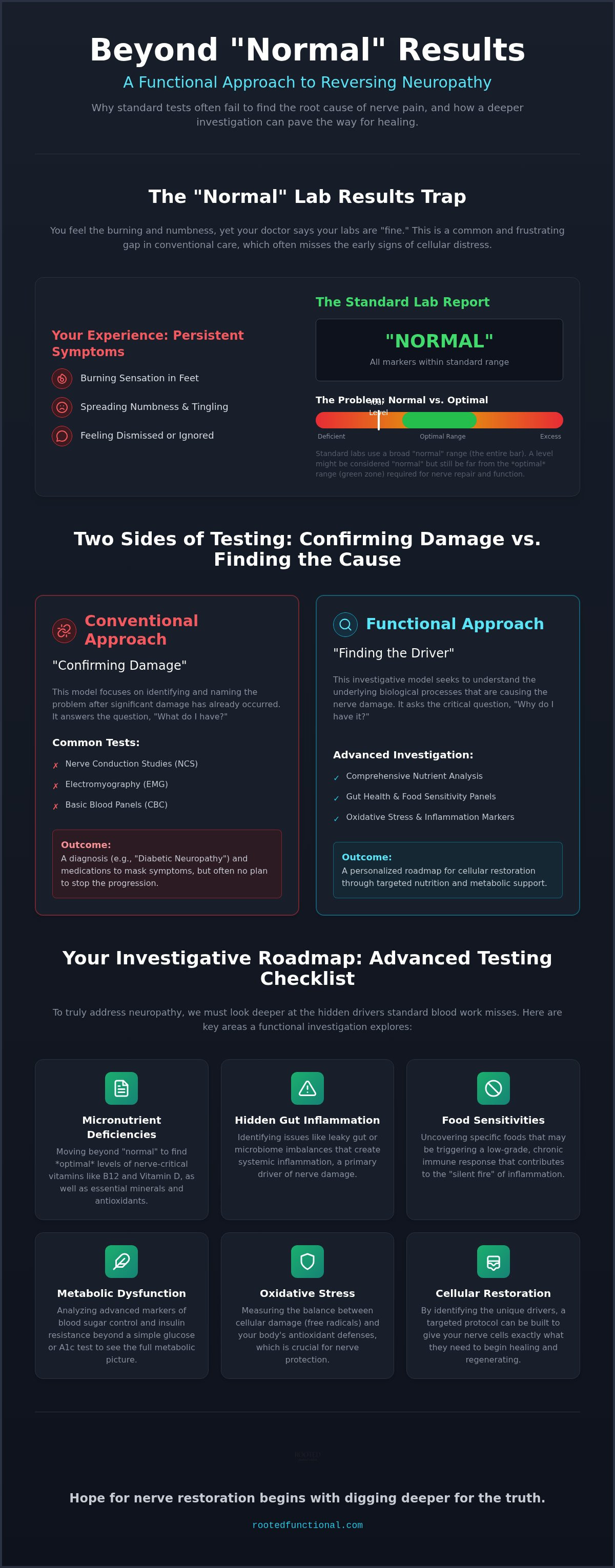
Confirming Damage vs. Finding the Driver: The Two Sides of Testing
The Functional Advantage: Advanced Lab Testing for Unseen Root Causes
Building Your Investigative Roadmap: How to Ask for Root Cause Testing
Reclaiming Nerve Health: The Rooted Functional Medicine Protocol
Beyond the Diagnosis: Why Standard Neuropathy Testing Often Falls Short
Receiving a diagnosis is often a relief. It gives the pain a name. But for many, that diagnosis is followed by a word that feels like a dead end: idiopathic. This term simply means the cause is unknown. It is a clinical admission that standard testing has reached its limit. If you've been told your results are normal while your feet are burning, you aren't imagining things. You're experiencing a gap in the conventional care model. Standard labs are designed to identify end-stage disease, not early-stage cellular dysfunction. This Diabetic neuropathy overview shows how complex the condition is; yet, most patients only receive a basic blood panel and a prescription for symptom-masking medication. Functional medicine for diabetic neuropathy starts by validating your experience. Being dismissed by a provider because your labs look "fine" is a clinical failure. It ignores the reality that your nerves are struggling for a reason. You can learn more about this investigative approach in our Healing Neuropathy Webinar.
The Problem with Normal Lab Ranges
Standard lab ranges are based on population averages. They represent a broad bell curve of people who are "not yet sick" enough to be hospitalized. They don't represent optimal health. For example, a B12 level at the bottom of the "normal" range might be enough to keep you from having anemia, but it's rarely enough to support nerve repair. We look at functional ranges instead. These are narrower, evidence-based windows where the body actually thrives. A low-normal Vitamin D or B12 level can be the hidden trigger for chronic nerve pain. We don't want you to just be average. We want your levels to be optimal so your body can begin the work of cellular restoration.
When Symptoms Precede Lab Changes
Your body is a highly sensitive instrument. It often signals trouble years before a standard Complete Blood Count (CBC) shows a red flag. Nerve dysfunction usually begins with silent inflammation. This is a quiet, systemic fire that basic tests often overlook. By the time a test comes back "abnormal," the damage is already significant. This is why you must trust your symptoms over a piece of paper. If you feel the tingling, the numbness, or the sharp stabs of pain, the driver is already active. Functional medicine for diabetic neuropathy uses advanced testing to find these drivers while there's still time to act. We look for the "why" before the "what" becomes permanent.
Confirming Damage vs. Finding the Driver: The Two Sides of Testing
Most people start their journey in a cold exam room. They undergo physical exams that check for sensation, strength, and reflexes. Your doctor might use a tuning fork or a small needle to see what you can still feel. These tests are necessary baseline measurements, but they are also deeply incomplete. A physical exam can tell your doctor that your nerves are dying; it can't tell them why they are dying. This is the critical moment where the investigative process often stops in conventional medicine. We believe it's exactly where the real work should begin.
The Role of Electrodiagnostic Studies
Nerve Conduction Studies (NCS) and Electromyography (EMG) are the gold standards for conventional diagnosis. NCS measures how fast electrical signals travel through your nerves. EMG assesses how your muscles respond to those signals. These tests are often uncomfortable. They can even be painful. Patients often leave these appointments with a stack of papers confirming they have Diabetic Neuropathy, but no plan for how to stop the progression. These tests are snapshots of damage that has already occurred. They identify the location of the problem, but they don't reveal the biological triggers behind the decay. In many cases, these results can even come back inconclusive if the damage is occurring in the small nerve fibers that these machines can't easily detect.
The Investigative Shift to Root Causes
Shifting to the investigative approach of functional medicine for diabetic neuropathy means moving from damage confirmation to biological investigation. We pivot from asking "What do I have?" to "Why do I have it?" Instead of just measuring nerve speed, we look at the internal environment of the nerve cell. We ask what is preventing the cell from repairing itself. Is it a lack of specific micronutrients? Is it chronic oxidative stress? Is it a hidden food sensitivity? This shift in perspective is what changes a standard management plan into a personalized healing protocol. You can find deeper context in our Healing Neuropathy Pillar. We look for the arsonist rather than just documenting the fire. If you're ready to stop just managing your decline and start uncovering your specific drivers, you can schedule a Root Cause Consultation to begin your own investigative roadmap.
The Functional Advantage: Advanced Lab Testing for Unseen Root Causes
Standard blood work usually stops at A1C and fasting glucose. While these are important markers, the nerve damage that is caused by diabetes is often driven by factors these tests never touch. Functional medicine for diabetic neuropathy shifts the focus to the cellular environment. We look for the hidden fires that keep your nerves from healing. If we don't address the systemic inflammation, the most expensive supplements in the world won't make a difference. We investigate why the body is attacking itself and what is preventing natural repair.
Gut Health and the Nervous System
Your gut is the gateway to your nervous system. When the gut lining is compromised, often called "leaky gut," undigested food particles and toxins enter the bloodstream. This triggers a systemic immune response. This chronic inflammation can eventually attack the myelin sheath, the protective coating around your nerves. We use specific Food Sensitivity Testing to identify exactly which foods are fanning these flames. If your gut is inflamed, your nerves will be too. Malabsorption is another hidden factor we uncover. If you aren't absorbing B vitamins or healthy fats, your nerves lack the raw materials they need for repair. We find these gaps so you can start rebuilding.
Cellular Health and Toxicity
Sometimes the driver isn't what is missing, but what is present. Environmental toxins like heavy metals, mold, or pesticides can act as neurotoxins. They interfere with mitochondrial health, the power plants of your cells. Nerves require massive amounts of energy to regenerate. If your mitochondria are poisoned by toxins, the repair process stops. Our Cellular Detoxification Program focuses on a mineral based approach to safely uncover and remove these burdens. We also look at metabolic markers that go beyond a simple A1C. High triglycerides, fasting insulin, and markers of oxidative stress tell a much deeper story. They explain why your nerves are struggling even when your blood sugar seems controlled.
You don't have to guess about your health anymore. Neuropathy Root Cause Testing provides the data we need to build a personalized path forward. We look at the whole picture to ensure nothing is missed. If you are ready to see what is happening beneath the surface, you can explore these advanced options in our Healing Neuropathy Webinar. You can also book a Root Cause Consultation to begin your own investigation. Finding the driver is the first step toward lasting relief. That is the core of functional medicine for diabetic neuropathy.
Building Your Investigative Roadmap: How to Ask for Root Cause Testing
Taking the first step toward answers requires more than just hope. It requires a strategy. You have likely spent years following a standard protocol that hasn't stopped your symptoms. This is because comprehensive metabolic restoration requires more than one vial of blood. It requires looking at the complex web of your biology. When you walk into your next appointment, you need to be your own best advocate. If a doctor tells you a test is unnecessary, remember that they are often looking for disease, while you are looking for vitality. Functional medicine for diabetic neuropathy is about bridging that gap with data. It's about finding the "why" behind the "what."
The Must-Have Functional Panel
Standard tests often look at Glucose and B12. While helpful, they don't tell the whole story. We recommend requesting specific functional markers that reveal how your cells are actually performing. These include:
Fasting Insulin: This identifies metabolic stress long before your A1C starts to climb.
Homocysteine: High levels of this amino acid indicate systemic inflammation and a higher risk for nerve damage.
Methylmalonic Acid (MMA): This is the gold standard for testing B12. It tells us if your cells can actually use the vitamin, regardless of what your blood levels say.
If you feel nervous about asking, try using this simple script: "I am concerned about the cellular drivers of my nerve pain. I would like to run a functional panel including Fasting Insulin and MMA to ensure we aren't missing any underlying metabolic triggers." You deserve a practitioner who listens to your concerns and values your investigative spirit. Functional medicine for diabetic neuropathy thrives on this level of detail, and for those who require professional wellness panels or phlebotomy services to obtain these results, you can learn more about Dyvine Medical & Wellness.
You don't need to live near a specialized clinic to access these answers. We utilize nationwide functional medicine lab kits that are shipped directly to your door. You can complete your collection at a local draw site, and the results are sent to us for a deep-dive analysis. Through secure telehealth, we interpret these markers together and build your personalized plan. This approach removes the barriers to care and puts the tools for recovery in your hands. If you are ready to stop guessing and start digging, you can Book your Root Cause Consultation to start your testing roadmap. We are here to help you uncover the truth about your health.
Reclaiming Nerve Health: The Rooted Functional Medicine Protocol
Dr. Guthrie uses the findings from your advanced lab work to build a roadmap as unique as your DNA. We don't just hand you a prescription and send you on your way. Instead, we integrate three specific pillars: cellular detoxification, targeted metabolic support, and nutrient-dense nutrition. This approach addresses the underlying drivers that conventional medicine often ignores. Functional medicine for diabetic neuropathy is about more than just managing blood sugar; it's about restoring the environment your nerves need to thrive. If you're ready to start learning right now, our Healing Neuropathy Webinar provides immediate education on this investigative process.
Personalized Care vs. One-Size-Fits-All
Standard treatments treat every patient like a statistic. We treat you like an individual. Two people can have identical burning sensations but require completely different interventions. One person may need our Autoimmune Solutions Program to calm a hyper-reactive immune system that is attacking the nerves. Another may need a deep focus on mitochondrial repair to restore cellular energy, while some may find that clinical interventions like bariatric surgery New Jersey are necessary to address the profound metabolic drivers of their condition. Our Reversing Diabetic Neuropathy guide explains how these paths differ. This investigative model allows us to stop guessing and start fixing. We look at your specific mineral levels, toxin burdens, and inflammatory markers to ensure the protocol fits your biology.
The journey from suffering to solution begins with a single question: Why? Once we uncover your root causes, the path to reclaiming your mobility becomes clear. You don't have to accept a future of worsening symptoms and lost independence. Nerve health is possible when you identify the right drivers and provide the body with the natural support it needs to heal. We have seen the transformation that occurs when patients are finally heard, finally understood, and finally helped. It's time to stop managing your decline and start your restoration. Schedule your consultation today to uncover your neuropathy root cause.
Your Path to Lasting Nerve Restoration
You don't have to settle for "normal" labs while your symptoms continue to worsen. We have explored how standard testing often stops at the diagnosis, leaving you without a plan for actual healing. By shifting your focus to functional medicine for diabetic neuropathy, you move from simply managing pain to uncovering the biological triggers like gut inflammation, hidden toxins, and cellular metabolic stress. You deserve a map that leads to restoration, not just a label that explains your decline.
Led by Dr. Adrienne Guthrie, PhD, DNM, our practice uses evidence-based functional protocols to help you reclaim your mobility and your life. Whether you are struggling with burning, numbness, or the fear of losing your independence, there are real answers available through our nationwide telehealth consultations. It's time to stop masking symptoms and start digging for the truth. You can schedule your Root Cause Consultation today to begin your investigative roadmap. There is hope for your nerves. There is a path back to feeling like yourself again. We are ready to walk it with you.
Frequently Asked Questions
What is the best test to find the root cause of neuropathy?
There isn't one single "best" test because root causes are individual to your biology. Instead, we use a comprehensive functional panel to uncover the whole story. This includes markers for metabolic health, nutrient status, and systemic inflammation. We look at fasting insulin, homocysteine, and methylmalonic acid to see the cellular picture. This investigative approach is the core of functional medicine for diabetic neuropathy and finding your specific drivers.
Can neuropathy be reversed if the root cause is found?
Yes, many patients experience significant restoration when the biological triggers are identified and removed. Conventional medicine often focuses on symptom management, but we focus on cellular repair. By addressing factors like oxidative stress and nutrient deficiencies, we give the body the environment it needs to heal itself. The goal is to stop the progression and restore nerve function naturally through targeted metabolic support and detoxification.
Why did my EMG come back normal if I still have nerve pain?
An EMG only measures damage in large nerve fibers that has already occurred. It often misses small fiber neuropathy, which is where many people experience their first symptoms of burning and tingling. A "normal" result doesn't mean your pain isn't real. It simply means the test wasn't sensitive enough to detect the specific type of dysfunction happening. Your body is signaling trouble that machines often miss early on.
What blood tests should I ask for if I suspect neuropathy?
You should request more than just a basic glucose and B12 screen. Ask for fasting insulin, methylmalonic acid (MMA), and homocysteine. These markers provide a much deeper look into your metabolic and cellular health. If your doctor refuses, it's time to seek an investigative approach that values functional ranges. We use these specific markers to build your personalized nerve-healing protocol and move past the frustration of "normal" results that leave you suffering.
How does functional medicine testing differ from conventional testing?
Functional medicine for diabetic neuropathy looks for optimal ranges rather than just the absence of disease. Conventional tests are designed to find end-stage damage. Functional testing investigates the "why" behind the symptoms. We look at gut health, food sensitivities, and toxic burdens that standard panels ignore. This allows us to find the drivers of inflammation before they cause permanent damage. We seek the arsonist, not just the fire.
Is there a test for idiopathic neuropathy?
"Idiopathic" is just a label that means the cause hasn't been found yet. There isn't one test for it because it's a category of exclusion. We use Neuropathy Root Cause Testing to move past this label. By looking at heavy metals, mold, and gut dysfunction, we often find the "unknown" cause that conventional medicine missed. Every symptom has a driver; we just have to dig deeper into your biology to find it.
Can food sensitivities really cause nerve damage?
Yes, chronic food sensitivities trigger systemic inflammation that can eventually attack the nervous system. When your gut lining is compromised, undigested proteins enter the bloodstream and cause an immune flare. This immune response can damage the myelin sheath that protects your nerves. Identifying these triggers through specific Food Sensitivity Testing is often a critical step in stopping the fire. We must heal the gut to heal the nerves and allow for repair.
How long does it take to get results from functional lab testing?
Most functional lab results return within two to three weeks. Because these tests are more complex than standard blood work, they require specialized processing. Once the data is back, we schedule a Root Cause Consultation to interpret the findings together. This timeline allows us to be thorough. We want to ensure we have every piece of the puzzle before building your restoration plan and starting your personalized nerve-healing protocol.


