Signs of Hormone Imbalance in Women: Symptoms and Causes
Hormone-related symptoms can be temporary or ongoing. Signs of hormone imbalance in women may include irregular or heavy periods, fatigue, mood changes, acne, sleep problems, and changes in weight or sex drive. Hormone levels naturally shift during the menstrual cycle, pregnancy, and menopause, but persistent or worsening symptoms may also point to an underlying condition. The pattern and duration matter.
If you’re dealing with symptoms that are hard to explain, it’s understandable to wonder whether hormones are involved. Hormonal changes can affect more than your period, and symptoms can overlap with other health concerns. A symptom on its own doesn’t reveal the cause.
This guide explains how hormones affect menstrual cycles, which symptoms and conditions may be connected, and how temporary changes differ from persistent problems. You’ll also learn what evaluation and treatment options to discuss with a clinician, helping you understand what may be driving your symptoms and what to consider next.
Table of Contents
What are the signs and symptoms of hormonal imbalance?
Hormones influence menstrual cycles, fertility, sleep, mood, metabolism, and sexual function. Signs of hormone imbalance in women can affect several areas, including periods, energy, skin, and weight. Common examples include irregular periods, fatigue, acne, or unexpected weight changes.
Common Signs and Symptoms
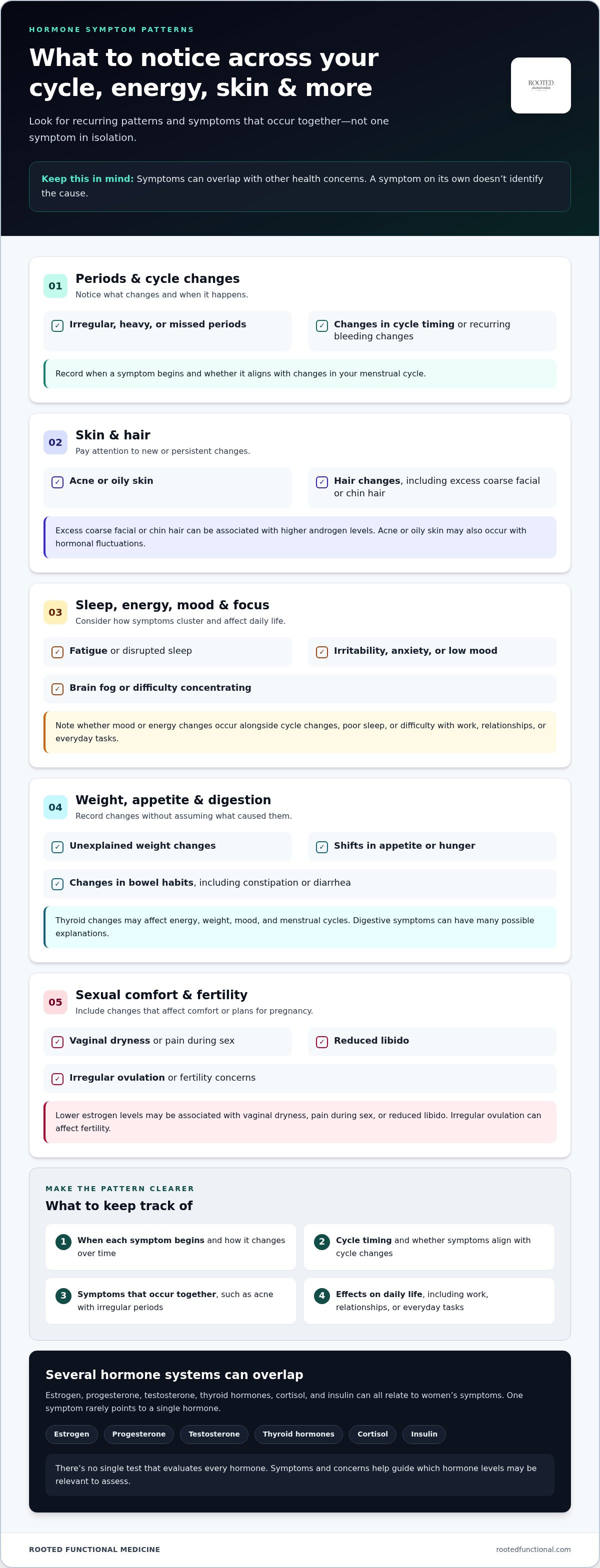
Hormonal imbalance means having too much or too little of one or more hormones in the bloodstream. Symptoms may include irregular, heavy, or missed periods; acne or oily skin; unexplained weight changes; fatigue; hair changes; sleep problems; and difficulty concentrating. A combination of symptoms or a recurring pattern may offer more useful clues than one symptom alone.
Notice whether new acne occurs alongside irregular periods, for example, or whether fatigue coincides with disrupted sleep. Symptoms can also stem from other health issues, so they don’t identify the cause by themselves. Record when each symptom begins and how it changes during your menstrual cycle. This makes it easier to describe the pattern during a clinical discussion.
Symptoms of Sex Hormone Imbalance
Changes in estrogen, progesterone, or testosterone may affect periods, skin, sexual comfort, and fertility. Lower estrogen levels may be associated with vaginal dryness, pain during sex, or reduced libido. Excess coarse facial or chin hair can be associated with higher androgen levels. Androgens are a group of hormones that includes testosterone. These changes matter when they disrupt comfort, cycle patterns, or plans for pregnancy.
Acne or oily skin may also occur with hormonal fluctuations, while irregular ovulation can affect fertility. One symptom doesn’t reveal which hormone is involved. Consider how signs occur together, such as cycle changes alongside new facial hair or persistent acne. When describing these changes during an evaluation, include when they happen and how they affect daily life.
Mood, Energy, and Cognitive Changes
Hormone-related symptoms may include irritability, anxiety, low mood, sleep disturbance, fatigue, and brain fog. These changes can affect work, relationships, or everyday tasks, especially when several occur together. For example, difficulty concentrating after repeated poor sleep gives a clinician more context than simply reporting “low energy.”
Track when mood or energy changes occur and whether they align with menstrual-cycle changes. Also note appetite or digestion changes, such as shifts in hunger or bowel habits. These details help describe the pattern, but mood symptoms and fatigue can have causes beyond hormones. Persistent or disruptive changes deserve attention rather than dismissal as ordinary stress.
Hormones Associated with Common Symptoms
Estrogen and progesterone are key reproductive hormones. Testosterone, thyroid hormones, cortisol, and insulin can also relate to women’s symptoms. Thyroid changes may affect energy, weight, mood, and menstrual cycles. Cortisol is associated with the body’s stress response, while insulin helps regulate blood sugar. Because several systems can overlap, one symptom rarely points to a single hormone.
Fatigue, for instance, may occur alongside sleep problems, mood changes, or weight shifts, and different factors may be involved. There’s no single test that evaluates every hormone. Symptoms and concerns guide which hormone levels are relevant to assess. Sharing specific examples, cycle timing, and changes in daily function makes the conversation more useful.
What conditions are caused by hormonal imbalances?
Hormone changes can arise from normal life stages, medical conditions, stress, or shifts in weight and eating patterns. The same symptom can have different causes: irregular periods, for example, may relate to polycystic ovary syndrome (PCOS), thyroid conditions, or changing reproductive hormones. Understanding the possible source matters because treatment depends on the underlying cause.
Hormone levels naturally fluctuate during puberty, the menstrual cycle, pregnancy, and menopause. These shifts are expected, but persistent symptoms may have another explanation. PCOS can involve elevated androgen levels, acne, and irregular periods, and may interfere with regular ovulation. Hypothyroidism and hyperthyroidism can also disrupt menstrual cycles, energy, weight, and mood.
Primary ovarian insufficiency is described as premature ovarian failure before age 40, according to the National Institute of Child Health and Human Development. It differs from ordinary cycle variation because ovarian function changes earlier than expected. A pattern of missed or irregular periods alongside other ongoing changes gives a clinician useful context for considering possible causes.
Can stress, sleep, diet, or medications affect hormone balance in women? Prolonged stress can raise cortisol and interfere with estrogen, progesterone, and insulin balance. Some medications may also be associated with hormone changes. Significant weight gain or loss, or restrictive eating, can disrupt reproductive hormones. Sleep and diet patterns offer context about overall health, but symptoms alone don’t prove their cause.
Other contributing factors may involve the thyroid, ovaries, or other hormone-producing glands. Cysts and tumors may affect hormone levels, and environmental chemical exposure has also been associated with hormonal changes. Hyperpigmentation, including dark patches on the neck, groin, or under the breasts, can occur with hormone-related changes. Constipation or diarrhea may also occur, although digestive symptoms have many possible explanations.
Movement and weight changes need context, not blame. A shift in weight may be a cause, a symptom, or part of a broader condition. PCOS and thyroid disorders can affect both weight and menstrual cycles. Exercise habits, eating patterns, stress, medication changes, and symptom timing can help identify possible contributors. No single detail explains every case.
If symptoms persist, worsen, or appear alongside cycle changes, a focused review of their timing and possible causes can be useful. A Root Cause Consultation can help explore contributing factors and clarify what to discuss next with a clinician.
Treatment options
Treatment starts with identifying the cause, rather than treating every symptom as the same problem. Thyroid medication may address a thyroid disorder, while cycle changes or PCOS may call for different options. Pregnancy goals, current medicines, medical history, and symptoms affecting daily life all shape the discussion.
When should women see a doctor about possible hormone imbalance symptoms? Seek evaluation when symptoms interfere with work, relationships, or daily routines, or when menstrual changes, unexplained fatigue, or mood changes persist. If you’ve tried to conceive for six months without success, discuss an evaluation; thoughts of self-harm call for immediate support through 988, according to the Substance Abuse and Mental Health Services Administration.
What treatments are available for hormone imbalance in women, and what are their risks? Options may include lifestyle changes, thyroid medication, hormonal birth control, anti-androgen drugs, hormone therapy, or vaginal estrogen. Each option has different potential side effects and considerations. Discuss expected benefits, risks, medication interactions, and pregnancy plans before choosing treatment.
Evaluation helps connect symptoms with a likely cause. A clinician may review your health history and medications, discuss cycle patterns, and perform an examination. Blood tests can assess hormone levels, while urine testing can measure hormones related to the menstrual cycle. No single test evaluates every hormone, so the tests chosen depend on your symptoms and concerns.
If a structural problem is suspected, imaging may help investigate it. A pelvic ultrasound can assess ovarian or reproductive health, while imaging may look for cysts or tumors that affect hormone levels. The findings matter because a structural concern may call for a different approach than a temporary fluctuation or thyroid condition.
Hormonal birth control containing estrogen and progesterone may help regulate menstrual cycles and reduce some symptoms. It comes in forms such as a pill, patch, ring, injection, or intrauterine device. Anti-androgen medicines may be considered for symptoms linked to elevated androgens. Hormone therapy or vaginal estrogen may be options for specific concerns, depending on the underlying cause.
Non-hormonal care can also play a role. Regular sleep, stress management, a balanced diet, and limiting caffeine and alcohol may support general health. Moderate movement, such as walking, can be part of a routine; the research-backed target is 150 minutes per week. These measures don’t replace medication when a condition requires it, but they can complement a treatment plan.
Some causes call for targeted care. Thyroid medication may treat hypothyroidism, while fertility treatment such as in vitro fertilization may be suggested for PCOS complications when pregnancy is the goal. A treatment plan may change as symptoms, hormone results, or pregnancy plans change. Track those details and review them during follow-up discussions.
Menstrual changes
Menstrual changes can reflect normal fluctuations or an underlying condition, so the pattern matters. PCOS, thyroid disorders, and perimenopause can all affect hormone levels. PCOS may disrupt ovulation, thyroid conditions can alter cycle regularity, and perimenopause brings changing reproductive hormones before periods stop.
Irregular Cycles and Bleeding
An irregular cycle involves periods that become absent, frequent, or unpredictable rather than following a consistent pattern. A typical menstrual cycle often lasts 21-35 days, but timing can vary. Changes in bleeding may also include unusually heavy flow or painful periods. Recording when bleeding starts, how long it lasts, and whether it changes helps show whether a new pattern is emerging.
Persistent changes deserve attention, especially when they occur alongside fatigue or other symptoms. A cycle record can help distinguish an occasional variation from a recurring shift.
Heavy Periods and Uterine Fibroids
Heavy menstrual bleeding can have several causes, including uterine fibroids, which are benign masses fueled by estrogen. Unusually heavy periods warrant evaluation rather than dismissal as an inconvenience. Fibroids may affect bleeding even when other signs of hormonal change aren’t obvious.
Note changes in flow and related symptoms, such as fatigue. A clinician may recommend a pelvic exam to assess concerns involving the uterus or ovaries.
PCOS and Menstrual Changes
Polycystic ovary syndrome (PCOS) can disrupt ovulation and cause irregular periods. Some women with PCOS don’t ovulate regularly or at all, which can also affect fertility. Elevated androgen levels may occur alongside acne or other cycle changes. Looking at these signs together gives a clearer picture than focusing on missed periods alone.
Track cycle timing alongside skin changes and other symptoms. This pattern can help guide evaluation for PCOS and related concerns.
Thyroid Disorders and Perimenopause
Hypothyroidism and hyperthyroidism can disrupt menstrual cycles, energy, weight, and mood. Perimenopause can begin years before periods stop, as reproductive hormone levels fluctuate. These changes can overlap, so cycle shifts alongside fatigue or mood changes don’t point to one cause on their own.
Noting when symptoms began and how they change across cycles can help clarify the picture.
For a useful record, note each period’s start date, bleeding pattern, and accompanying symptoms for a few months. Include missed periods, unusually heavy flow, acne, or fatigue. If the pattern persists, discuss it during a medical evaluation. A pelvic exam may help assess concerns involving the ovaries or uterus. Your record can help connect menstrual changes with possible causes and show what may need further assessment.
Temporary versus chronic imbalances
A short-lived hormone shift and a persistent problem can feel similar at first. Stress, travel, mild illness, or a change in hormonal contraception can temporarily affect symptoms. An ongoing pattern, worsening symptoms, or changes that continue after a trigger passes deserve closer attention. Duration and context help distinguish a brief fluctuation from an issue that needs evaluation.
Temporary changes often follow a clear event. A period may shift during a stressful month, for example, or symptoms may change after starting, stopping, or switching hormonal birth control. When the trigger settles, hormone levels may also settle. Track when the change began, what was happening at the time, and whether symptoms ease as normal routines return.
Persistent symptoms call for a different approach. If suspected hormone-related symptoms continue or worsen after more than a few weeks, seek medical care. A doctor can consider the pattern alongside medication changes, menstrual history, sleep, stress, and physical symptoms. Ongoing fatigue with cycle changes, for instance, offers more context than fatigue alone.
Chronic conditions can cause recurring symptoms when the underlying cause remains. PCOS can disrupt ovulation, while thyroid disorders can affect menstrual cycles, energy, weight, and mood. Perimenopause and menopause involve natural reproductive hormone changes, but new or disruptive symptoms still merit discussion. A symptom diary can show whether changes are continuous, cyclical, or linked to a specific trigger.
Weight changes provide context, not a diagnosis. Significant weight gain or loss, or restrictive eating, can affect reproductive hormones. Weight may also change alongside conditions that affect metabolism, such as thyroid disorders. Note whether appetite, activity, eating patterns, or medication changes occurred around the same time. This information can help distinguish a possible contributing factor from a symptom that needs its own evaluation.
Stress and sleep patterns can also help clarify the timeline. Prolonged stress can raise cortisol and interfere with thyroid hormones, estrogen, and progesterone. A disrupted sleep schedule can coincide with mood or energy changes, so record both rather than assuming one caused the other. Exercise routines and major changes in daily activity add useful context, especially when weight or menstrual patterns shift.
Hormone therapy is one possible treatment, but it isn’t a general fix for every symptom. Care depends on the underlying cause, symptoms, medical history, and pregnancy goals. Testosterone, thyroid hormones, and reproductive hormones each have distinct roles, so treatment should follow an appropriate evaluation. Don’t start supplements or alternative therapies without discussing them with a healthcare professional.
If persistent weight changes are part of the pattern, book a conversation about weight-related factors and how they fit with your broader symptoms.
Rooted Functional Medicine: Healing Neuropathy Webinar
Our Healing Neuropathy Webinar focuses on neuropathy, not hormone imbalance. If ongoing symptoms have you looking for contributing factors across your health, a Root Cause Consultation may be a more relevant next step. It gives you the opportunity to discuss your concerns and explore whether further evaluation could help clarify what to address with a clinician.
Hormone-related symptoms can have several causes, and this article can’t determine which applies to you. Track changes in your cycle, energy, sleep, and mood, then discuss the pattern with a qualified healthcare professional. A Root Cause Consultation can complement that process by helping you explore broader health factors, without replacing medical evaluation or treatment.
To learn more about our offerings, visit our official website today.
Take the Next Step Toward Clarity
When signs of hormone imbalance in women affect your quality of life, you deserve a thoughtful conversation about what to do next. Bring your concerns, symptom notes, and questions to a clinician. A clear record can help you explain what has changed and what support you’re seeking.
Rooted Functional Medicine offers a Root Cause Consultation for exploring broader health concerns, an Autoimmune Solutions Program for autoimmune support, and the Healing Neuropathy Webinar for neuropathy education. Each has a distinct focus, and these offerings don’t replace medical evaluation for hormone-related symptoms.
You don’t have to make sense of every change on your own. Choose a next step that fits your needs and helps you feel heard. Contact Rooted Functional Medicine to learn more about a Root Cause Consultation.
Small, informed steps can lead to better questions and more personalized care.
Frequently Asked Questions
What are hormones?
Hormones are chemical messengers that travel through the bloodstream and help coordinate body functions. Scientists have identified over 50 hormones, which help regulate growth, metabolism, mood, reproduction, and sexual function. For example, thyroid hormones influence energy use, while estrogen and progesterone are involved in reproductive processes. Hormone levels naturally change over time, so a single fluctuation doesn’t by itself establish a health problem.
What are common signs of hormone imbalance in women?
Common signs include changes in menstrual bleeding, acne, hair, energy, sleep, mood, weight, or sex drive. For example, someone might notice new acne alongside missed periods, or persistent fatigue with disrupted sleep. These patterns are useful to describe, but symptoms can overlap with other health issues. Track when changes occur and how they affect daily life.
Which hormone imbalances can cause irregular or missed periods?
PCOS can disrupt ovulation and cause irregular or missed periods. Thyroid disorders can also affect menstrual regularity, while changing reproductive hormones during perimenopause may alter cycle patterns. Hormonal changes can affect menstrual patterns. Because these causes differ, note whether cycle changes occur alongside other symptoms, such as acne, fatigue, or weight shifts. This context helps guide what to discuss during an evaluation.
Can hormone imbalance cause weight gain, fatigue, or mood changes in women?
Yes. Thyroid disorders can affect weight, energy, and mood, while prolonged stress can raise cortisol and interfere with other hormone levels. But weight gain, fatigue, and mood changes can have causes beyond hormones. For example, note whether fatigue began around the same time as a cycle change or medication adjustment. A clinician can consider that timeline alongside your health history.
What are symptoms of estrogen dominance or low estrogen in women?
Low estrogen may be associated with vaginal dryness, pain during sex, and reduced libido. Heavy menstrual bleeding can have several causes, including uterine fibroids fueled by estrogen. The phrase “estrogen dominance” doesn’t identify a cause on its own, and symptoms can overlap with other conditions. Describe specific changes, such as discomfort during sex or heavier bleeding, instead of relying only on a hormone label.
What are signs of low progesterone or testosterone in women?
A symptom alone can’t establish that progesterone or testosterone is low. Changes in menstrual patterns may prompt a closer look at reproductive hormones, while excess coarse facial or chin hair can be associated with higher androgen levels, including testosterone. Note when changes began and whether they occur alongside acne, cycle shifts, or sexual symptoms. This gives an evaluation more context than guessing a hormone level from one sign.
How do doctors diagnose hormone imbalances in women, and which tests are used?
Evaluation may include a health history, discussion of symptoms, physical examination, and tests selected for your concern. Blood tests can assess estrogen, progesterone, cortisol, or thyroid hormone levels; urine testing can measure hormones related to the menstrual cycle. A pelvic ultrasound may help assess ovarian or reproductive health, while other imaging can investigate suspected gland issues. No single test measures every hormone, so symptoms guide which tests are chosen.