The Autoimmune and Type 2 Diabetes Connection: Why Your Immune System May Be the Root Cause
- 6 days ago
- 12 min read
What if your high blood sugar isn't a failure of willpower, but a case of mistaken identity by your own immune system? It's a question many of my patients ask after years of being told to just eat less and move more. You've likely felt the sting of being blamed for a condition that feels completely out of your control. Even with a strict calorie deficit, the weight stays on. The fear of neuropathy or long term complications keeps you up at night. Research now suggests that for up to 15 percent of people, the autoimmune and type 2 diabetes connection is the real reason the traditional advice isn't working.
You deserve to understand the "why" behind your insulin resistance. This article explores the emerging science that links metabolic dysfunction to an overactive immune response. We'll look at the specific triggers conventional doctors often miss, from gut health to hidden cellular stressors. You will learn how a functional medicine approach moves beyond masking symptoms. We focus on identifying the root causes to help you reverse the progression of Type 2 Diabetes naturally and reclaim your vitality. There is a path forward that doesn't involve more blame, only real answers.
Table of Contents
Is Type 2 Diabetes an Autoimmune Disease? Redefining the Connection
For decades, the medical community viewed Type 2 diabetes as a simple equation of lifestyle choices. It's often described as a metabolic failure. In this traditional model, your body stops responding to insulin because of diet, weight, or lack of movement. But this explanation leaves too many people behind. It doesn't account for the patient who eats perfectly yet sees their numbers climb. We're seeing a massive shift in how we understand this disease. The autoimmune and type 2 diabetes connection suggests that for many, the immune system is the silent driver behind high blood sugar.
Researchers now use the term "metainflammation" to describe this crossover. This is the precise point where your metabolism meets your immune system in a destructive cycle. Chronic, low-grade inflammation isn't just a side effect. It's a primary cause. Your immune cells, specifically B-cells, can actually begin attacking insulin-responsive tissues. This creates a state of metabolic autoimmunity. This shift in thinking is critical for 2026 diabetes care. It changes the goal from just managing blood sugar to restoring cellular peace and calming an overactive immune response.
The Spectrum: Type 1, Type 2, and LADA (Type 1.5)
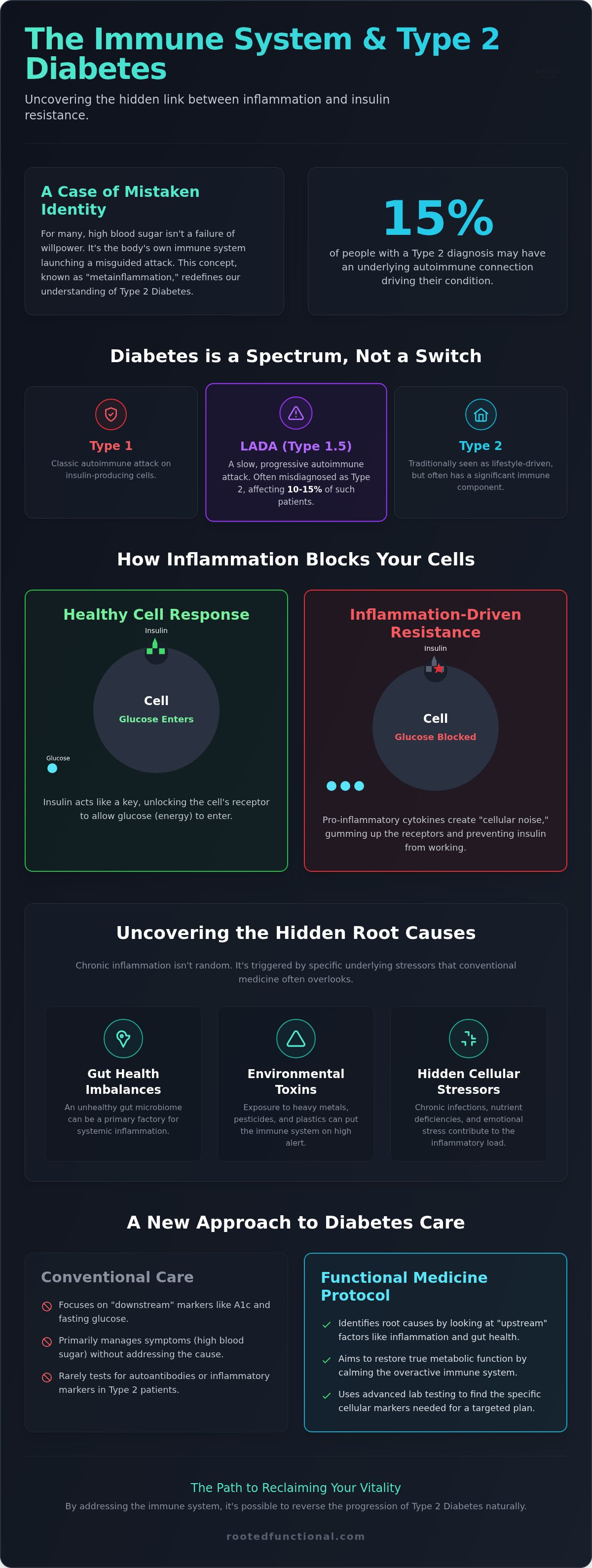
We used to think diabetes was binary. Type 1 was an autoimmune attack; Type 2 was a lifestyle issue. We now know it's a spectrum. Latent Autoimmune Diabetes in Adults (LADA), often called Type 1.5, sits right in the middle. Approximately 10 to 15 percent of patients diagnosed with Type 2 show evidence of islet cell autoimmunity. Many are actually struggling with LADA. Their bodies are slowly attacking the insulin-producing cells in the pancreas. Standard treatments often fail these patients because the treatments don't address the underlying immune attack. If your immune system is the driver, forcing your body to process more sugar won't solve the root cause. It's like trying to put out a fire while someone is still pouring gasoline on it.
Why Conventional Medicine Misses the Immune Link
Standard care relies almost exclusively on A1c and fasting glucose levels. These tests are helpful for a diagnosis, but they're "downstream" markers. They tell us the house is on fire, but they don't tell us who started it. Most doctors rarely look for autoantibodies in Type 2 patients because they aren't trained to see the autoimmune and type 2 diabetes connection. Metabolic autoimmunity is a self-perpetuating cycle of inflammation where the immune system damages metabolic pathways, leading to more inflammation and deeper insulin resistance. To find real answers, we have to look deeper than a standard blood panel. We have to look at the immune system itself.
The Mechanism: How Inflammation Drives Insulin Resistance
To understand why your blood sugar won't stabilize, we have to look at the immune system's messengers: cytokines. These pro-inflammatory proteins act like gum in a lock. They clog your insulin receptors. When this happens, insulin can't "unlock" the cell to let glucose in. This is the autoimmune and type 2 diabetes connection in action. It isn't just about what you eat. It's about the "cellular noise" created by an overactive immune response. This noise drowns out the signals your body needs to stay balanced. The result is a body that remains resistant to its own hormones, no matter how many carbs you cut.
Many people view body fat as simple storage. It's actually an active immune organ. Visceral fat, the kind that wraps around your organs, secretes inflammatory markers constantly. It pumps out signals that tell your immune system to stay on high alert. This creates a state of chronic metainflammation. Simply managing sugar levels doesn't stop this internal attack. It's like treating a fever while ignoring the infection. We have to address the factory of inflammation if we want to see real change.
The B-Cell Connection: Your Body’s Internal Defense Gone Wrong
Groundbreaking research from Stanford Medicine has fundamentally changed our perspective. Their study found that B-cells, a type of white blood cell, produce antibodies that target the body’s own insulin receptors. This is a classic autoimmune response. When these B-cells are overactive, they drive the insulin resistance we see in many Type 2 patients. High blood sugar then feeds this fire. It creates a vicious cycle. More sugar leads to more inflammation, which leads to more B-cell activity. To break this loop, we must address the immune dysfunction directly rather than just chasing glucose numbers.
Cellular Health and Mitochondrial Dysfunction
Your mitochondria are the powerhouses of your cells. When they become damaged by toxins or poor nutrition, they release "danger signals." These signals trigger an alarm response in your immune system. This isn't a mistake. It's your body trying to protect you. However, this constant alarm state prevents blood sugar stability. True restoration requires cellular repair. We can't just lower a number on a lab report. We have to fix the energy production at the source. If you suspect your immune system is the missing piece of your puzzle, a Root Cause Consultation can help uncover these hidden triggers and start the process of cellular healing.
Identifying the Root Causes: Why Your Immune System is Flare-Up
Your immune system is a protector. It only attacks when it perceives a threat. If your body is stuck in a cycle of metabolic autoimmunity, we have to ask what is sounding the alarm. Conventional medicine often ignores these triggers. They focus on the high blood sugar rather than the fire that started it. To understand the autoimmune and type 2 diabetes connection, we must look at the primary drivers of chronic inflammation. These are the factors that keep your body in a state of high alert, preventing your metabolism from ever finding its balance.
You may have been told that your condition is simply a result of age or genetics. While those play a role, they are rarely the whole story. Your environment and internal health dictate how those genes express themselves. When we identify and remove the triggers, the body often begins to restore itself. It's about finding the "why" that your standard blood work missed. It's about looking at the gut, the environment, and the stressors that have pushed your system to the brink.
The Role of the Microbiome in Blood Sugar Regulation
Your gut is the headquarters of your immune system. About 70 percent of your immune cells live there. When the gut lining becomes permeable, often called "leaky gut," things that shouldn't enter your bloodstream begin to slip through. This includes lipopolysaccharides (LPS), which are toxins from certain bacteria. When LPS enters your system, it triggers metabolic endotoxemia. This leads directly to systemic insulin resistance. Your immune system sees these particles as invaders and launches an attack. This collateral damage hits your insulin receptors. You can learn more about how this impacts your energy in our guide on blood sugar and fatigue.
Toxins and Cellular Detoxification
We live in a world full of "obesogens." These are environmental chemicals and heavy metals that disrupt your endocrine system. They interfere with your hormone receptors. They make it nearly impossible for your cells to hear the signal of insulin. Your liver is responsible for clearing these, but when it's overwhelmed, your metabolism suffers. This is why a Cellular Detoxification Program is often a necessary step for those who feel stuck. We have to clear the path for your hormones to work again. Without addressing this toxic load, even the best diet may fail to yield results.
Chronic stress and food sensitivities also play massive roles. Stress isn't just a feeling. It's a chemical event. When you are under constant pressure, your HPA axis releases cortisol, which tells your liver to dump glucose into your blood. Similarly, if you are sensitive to a "healthy" food like eggs or almonds, your immune system reacts every time you eat. This keeps the inflammatory cascade flowing. We don't guess about these things. We uncover them through testing so you can finally stop the flare-up at its source.
The Functional Medicine Diabetes Protocol: A Different Path
Conventional management is often a slow slide toward more medication. It's glucose-centric. It ignores the fire and focuses only on the smoke. Functional medicine offers a different path. We look for the autoimmune and type 2 diabetes connection to find why your body is attacking its own metabolic pathways. Our goal isn't just management; it's restoration. We use a "Repair, Replace, Rebalance" framework. We repair the gut lining to stop systemic triggers. We replace nutrient deficiencies that stall your metabolism. We rebalance the immune response to stop the internal attack. This isn't a one-size-fits-all diet. It's a bio-individual protocol designed for your unique cellular needs.
Advanced Testing: What to Ask Your Functional Doctor
Standard labs often miss the early warning signs. Your A1c might look "fine" while your body is screaming for help. We dig deeper. We look at Fasting Insulin and HOMA-IR to see how hard your pancreas is working. We check GlycMark to see those hidden post-meal spikes. We measure hs-CRP to find systemic inflammation that "gums up" your receptors. Food Sensitivity Testing is another essential tool. It identifies which "healthy" foods are actually causing your immune system to flare. Normal labs often hide functional imbalances that keep you stuck in a state of weight loss resistance.
Nutritional Strategies for Immune Modulation
Calming the immune system requires more than just cutting out sugar. We use phytonutrients as biological signals. These compounds tell your immune system to "stand down" and stop the inflammatory attack on your tissues. We also look at the "when" of eating. Circadian biology plays a massive role in blood sugar repair. Eating in alignment with your body's natural rhythms allows for deeper cellular repair during sleep. This approach restores the conversation between your cells and your hormones. It's about using food to signal safety to your immune system. If you're ready to stop the guesswork and find your root cause, book a Root Cause Consultation today to start your personalized journey.
Reversing the Cycle: Your Next Steps to Restoration
You've lived with the frustration of managed decline for long enough. The standard model of diabetes care often feels like a slow retreat. But understanding the autoimmune and type 2 diabetes connection changes everything. It shifts the focus from managing a number to restoring a system. When we calm the overactive immune response, we remove the primary roadblock to metabolic health. We stop the internal attack. We clear the cellular noise. We restore the communication between your cells and your hormones. This is the path to true restoration.
Our Type 2 Diabetes Reversal Program is specifically built to target the triggers driving the autoimmune and type 2 diabetes connection. We don't just give you a meal plan. We provide a comprehensive framework for cellular health. Because we offer nationwide telehealth, you can access this investigative care from the comfort of your own home. Geography is no longer a barrier to finding the answers you deserve. You are not "broken." You haven't failed. You simply haven't identified the right triggers yet. We are here to help you find them.
The Root Cause Consultation
Your journey begins with a deep-dive investigative session. This is not a typical ten-minute office visit. We listen. We dig. We uncover the timeline of your health. During your Root Cause Consultation, we review your history to identify where the immune system first lost its way. We then use advanced functional lab testing to build a personalized roadmap. These labs look at gut health, toxic load, and inflammatory markers that standard tests ignore. This data allows us to create a protocol that is unique to your biology. If you are ready for a different approach, book your consultation to start the process of uncovering your "why."
A Message of Hope from Dr. Adrienne Guthrie
As a practitioner who has walked through chronic illness personally, I understand the weight of being unheard. At Rooted Functional Medicine, our mission is to meet you with both maternal warmth and clinical conviction. We believe that your body has an incredible capacity to heal when the right obstacles are removed. Our focus is always on cellular health rather than just masking symptoms with more prescriptions. We want to see you thrive, not just survive. If you also struggle with the burning or tingling of nerve pain, I encourage you to watch our Healing Neuropathy Webinar. There are real answers available for you. Let's find them together.
Your Path to Metabolic Restoration Starts Here
The traditional view of blood sugar management is evolving. We now understand that the autoimmune and type 2 diabetes connection is a reality for many who feel stuck in a cycle of weight loss resistance and rising A1c levels. Your immune system isn't your enemy; it's simply reacting to triggers that conventional medicine often overlooks. By identifying these root causes and restoring your cellular health, you can move beyond masking symptoms and start the process of metabolic restoration.
Dr. Adrienne Guthrie, named Best Emerging Leader in Functional and Natural Medicine 2025, developed our specialized Type 2 Diabetes Reversal Protocol to help you find these answers. Whether you are across the street or across the country, our nationwide telehealth support ensures you don't have to walk this path alone. It's time to stop feeling blamed and start feeling heard. There is a way to calm the inflammation and fix your metabolism naturally. You aren't broken. You just need a guide who knows how to look deeper.
Begin Your Journey to Reversal: Book Your Root Cause Consultation
Frequently Asked Questions
Is Type 2 Diabetes officially considered an autoimmune disease in 2026?
No, it's not officially classified as an autoimmune disease yet, but research shows a significant crossover. Studies suggest about 10 to 15 percent of patients have islet cell autoimmunity. This shifts the focus toward the autoimmune and type 2 diabetes connection. While the label remains metabolic, we treat the underlying immune dysfunction to achieve results. We look past the label to see the person and the root cause.
Can functional medicine help if I have been on insulin for years?
Yes, functional medicine can often support those who've relied on insulin for a long time. The goal is to identify why your body requires such high levels of external support. We investigate the inflammation clogging your receptors. By restoring cellular health and improving sensitivity, many patients find they can reduce their dependence under medical supervision. We focus on the root cause rather than just managing the dose you take.
What is the difference between Type 1 and Type 1.5 (LADA)?
Type 1 is usually a rapid autoimmune attack that occurs in childhood. Type 1.5, or Latent Autoimmune Diabetes in Adults, is a slower autoimmune destruction of the pancreas that appears later in life. It's frequently misdiagnosed as standard Type 2. Because LADA involves the immune system, lifestyle changes alone aren't enough. We must address the specific autoimmune and type 2 diabetes connection to slow the progression and restore your metabolic health.
How long does it take to see results in a diabetes reversal program?
Every body is different, but most patients begin to see changes in their energy and blood sugar stability within 4 to 12 weeks. Cellular repair takes time. We don't look for a quick fix that fades. We're rebuilding your metabolic foundation. The total duration of a protocol depends on your toxic load, gut health, and how long the inflammation has been present. Consistency is the key to lasting restoration.
Do I need to stop my current medications before starting functional medicine?
No, you should never stop or change your prescription medications without consulting your prescribing physician. Our role is to work alongside your current care. As your body begins to heal and your blood sugar naturally stabilizes, your primary doctor may decide to adjust your dosages. We focus on creating the internal conditions that make those medications less necessary over time through root cause restoration and personalized cellular support.
Can food sensitivities actually cause my blood sugar to spike?
Yes, food sensitivities can trigger an immune response that leads to systemic inflammation. When your immune system is flaring, it releases cortisol and other stress hormones. These hormones tell your liver to release stored glucose into your bloodstream. This means a healthy food you're sensitive to could be driving your numbers up. We use specialized testing to uncover these hidden metabolic disruptors and calm your immune system at the source.
What lab tests will a functional doctor run that my primary care didn’t?
We look at upstream markers that traditional doctors often overlook. This includes Fasting Insulin, hs-CRP for systemic inflammation, and HOMA-IR to measure resistance. We also utilize:
Comprehensive gut microbiome analysis
Food sensitivity panels
Cellular nutrient levels
Heavy metal and toxin screenings
These tests help us build a personalized roadmap for your recovery rather than just monitoring your A1c. We dig deeper to find the triggers others miss.
Is the Rooted Functional Medicine program available if I don’t live in California?
Yes, our programs are available to patients nationwide through our secure telehealth platform. You can access our Type 2 Diabetes Reversal Program and Autoimmune Solutions Program from anywhere in the United States. We coordinate your lab testing locally and provide all your consultations virtually. This ensures you receive high level, root cause care regardless of your physical location. You deserve access to real answers, no matter where you live.


Comments