What Causes Bloating? The Root Cause Guide to Lasting Relief
- 7 hours ago
- 12 min read
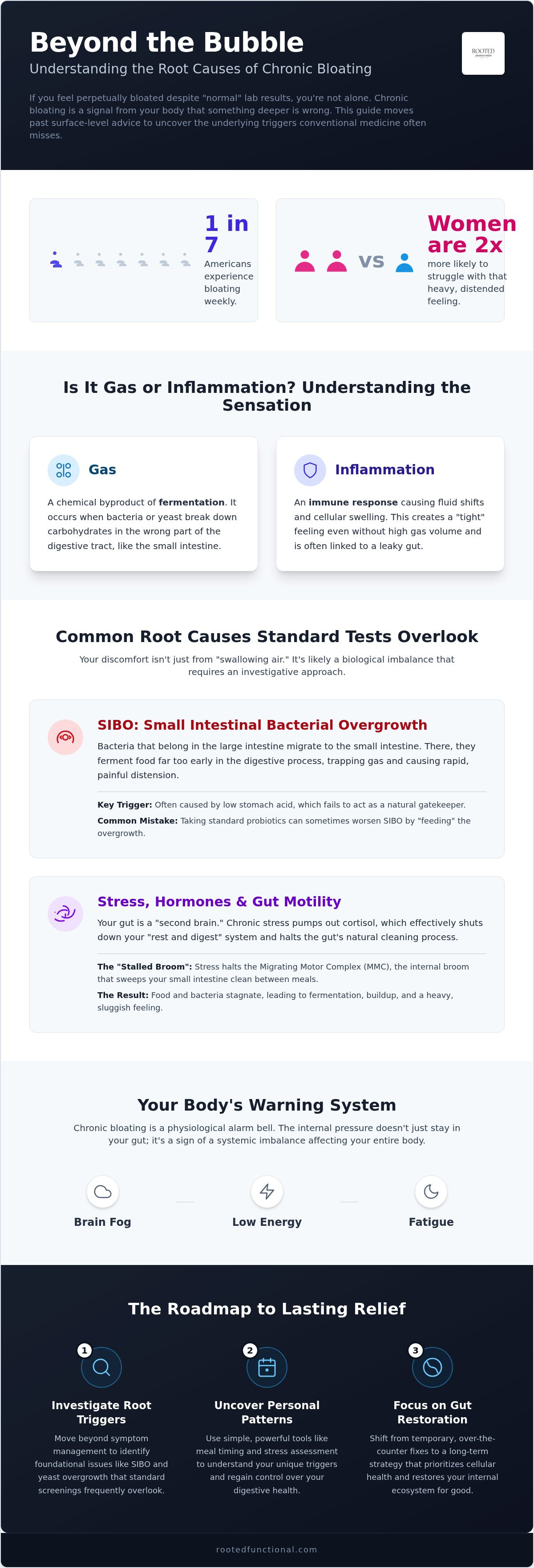
What if your "normal" lab results are the very reason you still feel six months pregnant every single evening? It's a frustrating reality. You visit the doctor, describe the painful tightness, and leave with a clean bill of health but no actual relief. About 1 in 7 Americans experience this weekly. Women are twice as likely to struggle with that heavy, distended feeling that makes getting dressed an act of anxiety. You know something is wrong, even if the standard blood work says otherwise.
We understand that you're tired of masking symptoms with over the counter pills that only offer a few hours of peace. You want to understand what causes bloating at a cellular level so you can finally eat out without fear. This guide moves past surface level advice like eating more fiber or drinking more water. Instead, we're going to dig into the underlying triggers conventional medicine often misses. You'll learn about the specific mechanisms behind your discomfort, how to test for the true root causes, and the path to restoring a flat, comfortable stomach once and for all.
Table of Contents
Beyond the Bubble: What Is Bloating Really Telling You?
Bloating is more than a simple inconvenience. It is a communication. Most people assume that a tight stomach is just a byproduct of swallowing air or eating too much fiber. While those factors can play a role, true abdominal bloating is frequently an inflammatory response. Your body is under pressure from the inside out. Understanding what causes bloating requires looking beyond the immediate sensation of fullness. It requires a shift from viewing your stomach as a balloon to seeing it as a complex immune center that is sounding an alarm.
There is a major difference between occasional post-meal fullness and chronic distension. Feeling satisfied after a large holiday meal is physiological and normal. Feeling like your skin is stretching by late afternoon every single day is not. We distinguish between pathological bloating, which stems from a specific disease, and functional bloating. Functional issues are often invisible on standard medical tests but cause significant daily pain. This persistent state is often a sign of the gut-brain axis in distress. When your nervous system stays in a state of high alert, your digestive process stalls. Emotional stress manifests as physical expansion because your body cannot prioritize digestion while it's trying to survive a perceived threat.
The Difference Between Gas and Inflammation
Gas and inflammation are two distinct processes that feel very similar. Gas is a chemical byproduct of fermentation. It happens when bacteria or yeast break down carbohydrates in the wrong part of the digestive tract. Inflammation is an immune response. You might feel "inflated" even when there isn't a high volume of gas present. This happens because of fluid shifts and cellular swelling within the gut lining. If you have a leaky gut, your immune system is constantly triggered. This creates a cycle of tightness and discomfort that traditional over the counter gas pills cannot touch because they don't address the underlying immune activation.
When Bloating Becomes a Chronic Signal
Bloating crosses the line from a minor issue to a health warning when it becomes your daily reality. If you are choosing your outfits based on how much they can stretch, your body is calling for help. Investigating what causes bloating in your specific case is the only way to find peace. This chronic pressure doesn't just stay in your gut. It often brings brain fog, low energy, and a general sense of fatigue. These are not separate issues; they are all symptoms of the same systemic imbalance. Bloating is a physiological alarm bell for underlying dysfunction. It is a signal that your internal environment needs to be restored, not just managed.
The 4 Most Common Root Causes of Chronic Bloating
Standard medical advice often stops at "eat more fiber" or "chew your food better." For someone living with daily discomfort, these suggestions feel dismissive. If your stomach feels like it might pop by 4:00 PM, you aren't just eating too fast. You are likely dealing with a biological imbalance that requires an investigative approach. Understanding what causes bloating means looking at the specific drivers that disrupt your digestive rhythm. We focus on four primary areas where things typically go wrong.
SIBO: The Hidden Driver of Post-Meal Distension
Small Intestinal Bacterial Overgrowth, or SIBO, happens when bacteria that belong in your large intestine migrate into the small intestine. When you eat, these bacteria ferment your food far too early in the digestive process. This creates gas that becomes trapped in a narrow space, leading to that "six months pregnant" look within minutes of finishing a meal. Many patients try to fix this by taking standard probiotics. Unfortunately, adding more bacteria can sometimes make SIBO-related tightness worse by feeding the overgrowth. This migration is often triggered by low stomach acid, which fails to act as the natural gatekeeper for your gut ecosystem. According to Johns Hopkins, SIBO is one of the most significant clinical causes of bloating that conventional tests frequently miss.
Hormones, Stress, and Gut Motility
Your gut is essentially a second brain. When you are under chronic stress, your body pumps out cortisol, which effectively flips the switch on your "rest and digest" system. This halts the Migrating Motor Complex, or MMC. Think of the MMC as an internal broom that sweeps your small intestine clean between meals. When stress stops this broom from working, food and bacteria stagnate. This leads to fermentation, bacterial buildup, and a heavy, sluggish feeling. Hormonal shifts, particularly estrogen dominance, also play a role by slowing down transit time. This stagnation often creates a cycle of systemic inflammation, a connection we explore deeply in our Autoimmune Disease Root Cause Guide.
Beyond bacteria and stress, we must consider the impact of dysbiosis and food sensitivities. An imbalance of yeast or "bad" bacteria can turn your gut into a brewery, fermenting even small amounts of sugar into painful gas. Even "healthy" staples like kale, almonds, or garlic can become triggers if your gut lining is compromised. If you're tired of guessing which food will cause a reaction, a Root Cause Consultation can help you identify these triggers with precision and start the process of restoration.
The 'Normal Lab' Myth: Why Conventional Tests Miss the Mark
Imagine leaving the doctor's office with a "normal" lab report while your stomach is physically pulsing with pain. It's a common, deeply frustrating experience. Conventional medicine is built to identify pathology. They look for tumors, ulcers, or late-stage disease. If your blood work doesn't show a clinical crisis, you're often told everything is fine. But health exists on a spectrum, and "normal" labs often miss the early stages of dysfunction that lead to chronic tightness. A standard colonoscopy can see structural problems, but it cannot see the microscopic inflammation or the delicate bacterial imbalances that dictate your comfort.
When we investigate what causes bloating, we shift our focus from pathological ranges to functional ones. This is the investigative nature of Functional Medicine. We don't wait for a diagnosis of a major disease to start healing your gut. We look for the subtle shifts in your internal environment that standard tests simply aren't equipped to find. You aren't crazy, and your pain is not "all in your head." Your body is simply speaking a language that basic blood panels can't translate.
What Advanced Functional Testing Reveals
To get real answers, we use tools that go deeper than the surface. A comprehensive stool analysis, such as the GI-MAP, uses DNA technology to identify pathogens, yeast, and bacterial overgrowth that standard cultures miss. While basic advice might help you manage bloating through temporary diet changes, these advanced tests reveal the specific proteins and organisms causing your immune system to flare. SIBO breath testing is another essential tool. It measures gases produced in the small intestine, providing a level of specificity that blood work cannot offer. We also use food sensitivity testing to identify which specific proteins are triggering an immune response in your unique system.
Looking at Cellular and Mineral Health
Your digestion relies on a series of complex chemical reactions. If you are deficient in essential minerals like magnesium or zinc, your body cannot produce the digestive enzymes needed to break down your food. This leads to fermentation and expansion. We also prioritize cellular detoxification. When your cells are bogged down by systemic inflammation, you experience a "puffiness" that no amount of calorie counting can fix. By uncovering these cellular gaps, we move beyond masking symptoms and begin the process of genuine restoration.
GI-MAP Testing: Uncovers microscopic dysbiosis and hidden infections that cultures miss.
Breath Testing: Identifies the specific type of gas causing small intestinal pressure.
Mineral Analysis: Ensures your body has the raw materials needed for enzyme production.
Food Sensitivity Panels: Pinpoints the exact foods causing your immune system to react.
How to Identify Your Personal Bloating Triggers
Generic lists of "bad foods" are rarely helpful. They don't account for your unique biology. To truly understand what causes bloating in your body, you must become a detective of your own daily habits. This isn't about following a blanket rule. It's about uncovering the specific moments your system begins to struggle. We recommend a five step investigative process to find your answers.
Track the timing of your symptoms relative to your meals.
Assess your stress load and nervous system state while eating.
Conduct strategic, temporary eliminations rather than permanent restriction.
Evaluate your daily hydration and mineral balance.
Seek professional interpretation of advanced functional lab work.
The 30-Minute Rule: Timing Your Symptoms
Timing is your most valuable data point. If you feel tightness or pressure within 30 minutes of eating, the issue is likely in your upper GI tract. This often points to low stomach acid or a lack of digestive enzymes. If the distension happens two or more hours later, the problem is deeper. This usually indicates fermentation in the small or large intestine. It suggests the dysbiosis or SIBO we explored in previous sections. Keep a simple log of these windows. This information allows us to pinpoint the exact location of the dysfunction during a consultation.
You must also assess your state of mind. Are you eating while scrolling through emails or driving? If your body is in fight-or-flight, it cannot prioritize digestion. This creates stagnation and physical expansion. Similarly, check your mineral intake. Without adequate magnesium and zinc, your cellular pumps cannot manage fluid balance. This leads to a heavy, water-logged feeling that many people mistake for simple gas.
Strategic Elimination vs. Restriction
Many people try to "cut everything out" in a moment of desperation. This often backfires. Chronic restriction leads to nutrient deficiencies and increases your body's stress load. Instead, use a strategic approach. Remove a specific group, monitor the change, and then reintroduce it. This identifies true triggers without starving your microbiome. If this process feels overwhelming, Food Sensitivity Testing serves as a clinical shortcut. It identifies the specific proteins causing your immune system to flare. This saves you months of trial and error.
Finally, don't try to interpret complex labs alone. Specialized testing requires an expert eye to connect the dots between your minerals, your microbes, and your symptoms. Finding lasting relief is a process of discovery. We are here to walk that path with you. To start uncovering your unique triggers, you can book your Root Cause Consultation today.
Finding Lasting Relief: The Functional Medicine Roadmap
True relief doesn't come from a bottle of simethicone or a generic suggestion to chew more slowly. While over the counter medications might temporarily mask the pressure, they never address the biological reason the gas is there in the first place. To stop the cycle, you must move from "managing" symptoms to "restoring" the internal environment. This requires a personalized roadmap that accounts for your specific cellular needs and microbiome balance. Understanding what causes bloating in your unique system is the only way to build a foundation for a flat, comfortable stomach that lasts.
Building a Resilient Microbiome
Restoring your gut isn't as simple as swallowing a daily probiotic. In fact, a one-size-fits-all supplement might actually hinder your progress if you have an underlying overgrowth like SIBO. We use a clinical approach to gut restoration that focuses on three specific phases:
Weed: Remove the specific pathogens, yeast, and bacterial overgrowths that are causing fermentation.
Seed: Reintroduce the targeted beneficial microbes your unique system is lacking.
Feed: Provide the exact nutrients required to heal the gut lining and sustain a healthy microbiome.
Nervous system regulation is the often-overlooked half of this equation. You can have the perfect plate of food, but if your body is stuck in a state of high alert, your digestion will remain stalled. We help you integrate simple practices to move your body back into a "rest and digest" state. This ensures that the personalized nutrition protocols we design for you can actually be absorbed and utilized at a cellular level. Healing is about more than just food; it's about creating an internal environment where your body feels safe enough to function correctly.
Taking the Next Step to Healing
You have spent enough time guessing which foods might be the culprit. You have likely been told your labs are normal when your lived experience says otherwise. It's time to stop guessing and start testing. Through our nationwide telehealth platform, we provide advanced diagnostics and integrative protocols to help busy individuals reclaim their health without the need for endless office visits. We dig deep to uncover the microscopic triggers that conventional tests miss.
Your journey to a comfortable, predictable stomach begins with a single investigative step. The Root Cause Consultation is the bridge between the frustration you feel today and the vibrant health you deserve. We are ready to help you uncover what causes bloating in your body and provide the clinical guidance to fix it. Schedule your Root Cause Consultation to uncover your triggers today.
Your Path to a Flat, Comfortable Stomach
You don't have to live with the daily anxiety of unpredictable reactions or clothing that simply doesn't fit by the end of the day. We have moved past generic advice to look at the cellular, hormonal, and microbial drivers of your discomfort. By looking at functional lab ranges and identifying what causes bloating in your specific biology, you can finally stop masking symptoms and start restoring your health. You aren't just managing gas; you are rebuilding your foundation.
Dr. Adrienne Guthrie, named Best Emerging Leader in Functional & Natural Medicine 2025, leads our team in providing advanced, lab-based protocols that go beyond standard blood work. Through our secure nationwide telehealth platform, we offer the precision testing and personalized support you need to feel heard and healed. Stop settling for "normal" labs that don't explain your pain. There is a clear path back to a flat, comfortable stomach and the freedom to eat without fear.
Ready to find your root cause? Book your consultation here.
We are ready to help you uncover the answers and restore your peace. You deserve to feel well again.
Frequently Asked Questions
Why am I bloated even when I eat a healthy, plant-based diet?
High-fiber, plant-based diets can overwhelm a compromised gut lining or an imbalanced microbiome. If you have SIBO or low stomach acid, the healthy fibers and natural sugars in plants ferment too early in the digestive tract. This leads to painful expansion and gas. You might be eating the "right" foods for a healthy person but the "wrong" foods for your current state. We analyze your specific ability to break down these complex carbohydrates effectively.
Can chronic stress actually cause physical stomach bloating?
Yes, chronic stress shuts down your digestive system by triggering the fight-or-flight response. When cortisol levels are high, your body deprioritizes the migrating motor complex, which is the internal broom that clears out debris. This stagnation leads to fermentation and physical distension. Stress doesn't just make you feel bloated; it creates the physiological conditions for your stomach to physically expand. Restoring your nervous system is as important as changing your diet.
How is bloating related to autoimmune conditions?
Bloating is frequently a sign of systemic inflammation and a compromised gut barrier, both of which are foundational to autoimmune conditions. When the gut lining is "leaky," undigested food particles enter the bloodstream and trigger a persistent immune flare. This response causes cellular swelling and fluid shifts that feel like pressure. We investigate these connections to silence the immune system and stop the cycle of inflammation at its source.
What is the difference between a food allergy and a food sensitivity?
A food allergy is an immediate, often severe immune reaction, while a food sensitivity is a delayed response that can take days to manifest. Sensitivities are much harder to track because symptoms like brain fog or fatigue might appear 72 hours after eating. Identifying these specific proteins is a key part of understanding what causes bloating in your unique system. We use advanced testing to find these hidden triggers.
Is it normal to be bloated every single day?
No, it is never normal to be bloated every single day. While occasional fullness after a heavy meal happens, daily distension is a clear distress signal from your body. It indicates a persistent imbalance in your microbiome or a breakdown in your digestive enzymes. If you feel "six months pregnant" by the end of every day, your system is asking for a root-cause investigation rather than just another over-the-counter pill.
Can a lack of certain minerals make my bloating worse?
Absolutely, mineral deficiencies are a primary driver of digestive dysfunction. You need zinc to produce stomach acid and magnesium to regulate the muscles that move food through your GI tract. Without these raw materials, your digestion stalls and food begins to ferment. We check your mineral levels to ensure your cellular pumps and enzymes have exactly what they need to keep your stomach flat and comfortable. Mineral restoration is often the missing piece.
How do I know if my bloating is caused by SIBO?
You might have SIBO if your bloating happens almost immediately after eating or if "healthy" probiotics make your symptoms worse. SIBO often causes a visible protrusion of the upper abdomen and is frequently accompanied by changes in bowel habits. Because these symptoms mimic other issues, we use specialized breath testing to confirm the presence of hydrogen or methane producing bacteria. This provides the clinical certainty needed for a targeted, effective protocol.
When should I see a functional medicine doctor for my bloating?
You should see a functional medicine doctor when your standard lab results come back "normal" but you still feel unwell. If you are tired of masking symptoms with temporary fixes and want to understand what causes bloating at a cellular level, it's time for a different approach. We specialize in digging deeper to find the triggers that conventional medicine often overlooks. Our goal is to move you toward lasting, natural relief.


Comments