Diet to Reverse Prediabetes: A Practical, Evidence-Informed Guide
A prediabetes diagnosis can be a reason to make practical changes, not a prediction of what comes next. If you’re unsure which foods support steadier blood sugar, or tired of advice that says to cut out entire food groups, you’re not alone. A diet to reverse prediabetes isn’t a rigid menu or a guarantee. It’s a sustainable way of eating that may help bring blood sugar back into the normal range.
Prediabetes doesn’t make type 2 diabetes inevitable. The Diabetes Prevention Program showed that lifestyle changes can reduce the risk of developing type 2 diabetes, though individual results vary. In this guide, you’ll learn how to build satisfying, repeatable meals, what evidence can and can’t tell us about reversal, and how to track progress without chasing quick fixes. You’ll also find guidance on when personalized support may help you make sense of your health history and lab results.
Table of Contents
What a Diet to Reverse Prediabetes Can, and Cannot, Do
Prediabetes means blood glucose is higher than normal but below the range used to diagnose type 2 diabetes. It’s a signal to pay attention, not proof that diabetes is inevitable. A sustainable diet to reverse prediabetes may support healthier glucose levels, but “reverse” is common search language, not a promise of a permanent cure or a reason to stop medical follow-up.
Blood glucose can improve, and a later test may fall outside the prediabetes range. That’s encouraging, but one improved result doesn’t erase future risk or show that the condition can’t return. Food choices are one part of metabolic health, alongside activity, sleep, stress, medications, and personal health history. Aim for steady, measurable progress rather than a quick fix.
What does prediabetes mean for blood sugar?
The American Diabetes Association’s 2026 criteria define prediabetes as an A1C of 5.7% to 6.4%, fasting plasma glucose of 100 to 125 mg/dL, or a two-hour oral glucose tolerance test result of 140 to 199 mg/dL. A1C reflects average blood glucose over roughly the past few months; fasting glucose is measured after fasting.
These numbers help frame a result, but they aren’t a diagnosis for you to make alone. A qualified clinician can interpret your test and health history and determine whether further assessment is needed. A single reading is only one piece of the picture. For broader background on the condition, see Prediabetes.
What can food changes realistically support?
Eating in a more balanced, consistent way can be part of a broader plan to support blood glucose and overall metabolic health. Results vary with health history, daily habits, other conditions, and medications, so the same meal plan won’t produce identical results for everyone.
Symptoms aren’t a reliable way to tell whether glucose is changing. Prediabetes may not cause noticeable symptoms, and feeling well doesn’t confirm that blood sugar is in range. Follow-up testing, interpreted with a clinician, offers a clearer measure of progress.
Think of improved results as a reason to keep building habits, not as a guarantee that risk has disappeared. Continue recommended medical monitoring even if a future test is normal, and discuss the timing of repeat testing with your clinician. If you take medication, don’t stop or change it based on diet changes or a single result without discussing it with the prescribing clinician.
The practical takeaway is hopeful and grounded: meals can be a meaningful part of managing prediabetes, but they don’t replace individualized care. Focus on changes you can sustain, track progress with appropriate lab testing, and use your results and personal circumstances to guide next steps with a qualified clinician.
How to Build Blood-Sugar-Supportive Meals for Prediabetes
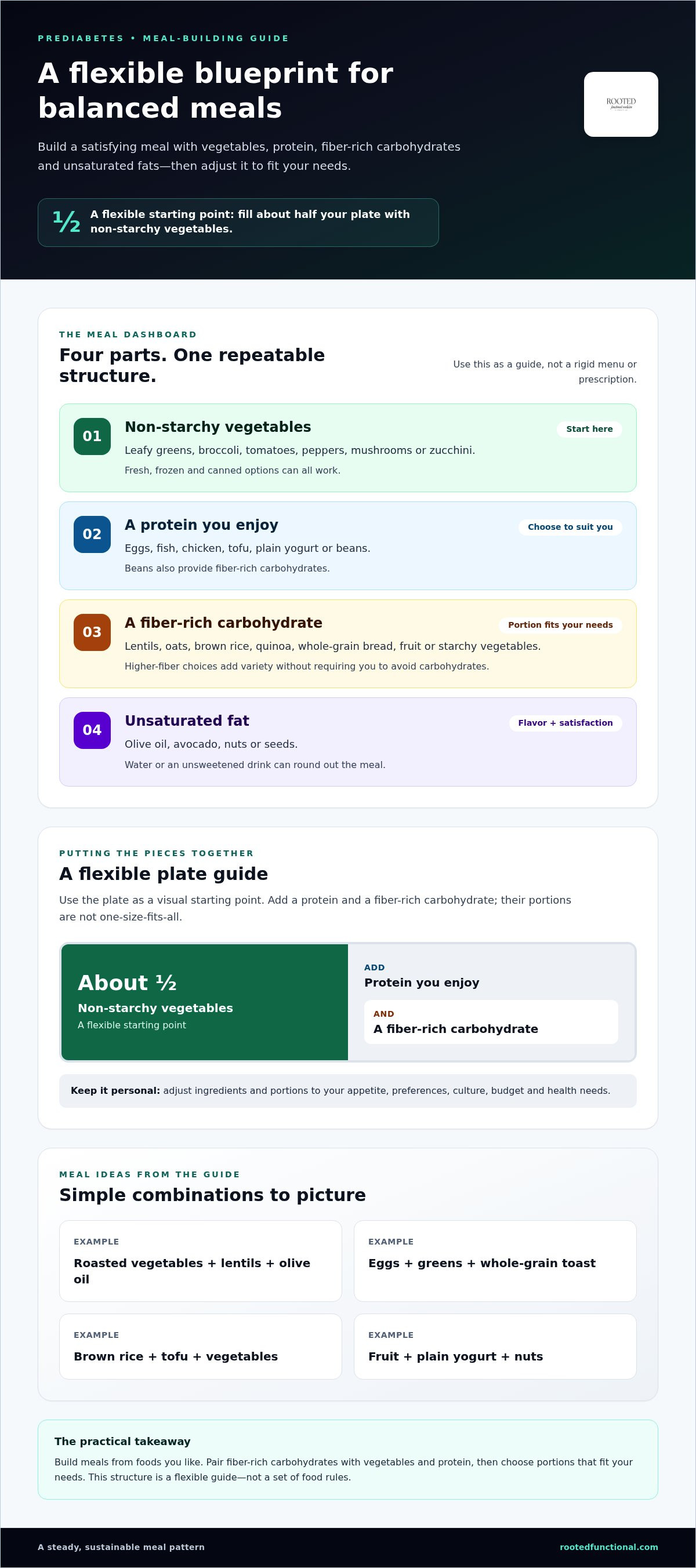
Balanced meals don’t require special products or a rigid menu. Use a simple structure as a starting point, then adjust ingredients and portions to your appetite, preferences, culture, budget, and health needs. The goal is a repeatable meal that satisfies you, not food rules you can’t sustain.
Start with non-starchy vegetables. Add leafy greens, broccoli, tomatoes, peppers, mushrooms, or zucchini. Fresh, frozen, and canned options can all work. Choose preparations that suit your needs and taste.
Add a protein you enjoy. Try eggs, fish, chicken, tofu, plain yogurt, or beans. Protein can make a meal more satisfying, and beans also provide fiber-rich carbohydrates.
Choose a fiber-rich carbohydrate. Consider lentils, oats, brown rice, quinoa, whole-grain bread, fruit, or starchy vegetables. Higher-fiber options add variety and texture without requiring you to avoid carbohydrates.
Include unsaturated fat for flavor and satisfaction. Use options such as olive oil, avocado, nuts, or seeds. Water or an unsweetened drink can round out the meal.
Fiber-rich foods can add substance to a balanced meal. Pair them with vegetables and protein, then choose a carbohydrate portion that fits your needs.
Which foods can form the foundation of everyday meals?
Build a grocery routine around minimally processed staples you like, such as vegetables, beans, whole grains, nuts, seeds, eggs, fish, poultry, tofu, and plain dairy or suitable alternatives. For example, combine roasted vegetables with lentils and a spoonful of olive oil, or serve eggs with greens and whole-grain toast. If they suit your needs, keep convenient options on hand, such as frozen vegetables and no-added-salt canned beans.
How can you make carbohydrate choices more manageable?
Carbohydrate quality, portion, and the rest of the meal all matter. Try brown rice with tofu and vegetables, or fruit with plain yogurt and nuts. Compared with refined grains, higher-fiber choices such as oats, beans, or whole-grain bread generally add more fiber to a meal. That doesn’t make refined foods “bad”; it gives you another option to try. If glucose monitoring is appropriate for you, ask your clinician how to interpret patterns and whether tracking meal responses would be useful.
Portions aren’t one-size-fits-all. Appetite, activity, medications, preferences, and health needs can all affect what feels right. One helpful starting point is to fill about half your plate with non-starchy vegetables, then add protein and a fiber-rich carbohydrate. Treat this as a flexible guide, not a prescription. If you’d like help relating meal choices to your history and goals, a personalized Root Cause Consultation can offer space to discuss them.
Which Eating Pattern Is Best for Prediabetes? Compare Without Chasing a “Perfect” Diet
Conflicting advice can make it seem as if one diet must be right and all the others wrong. The evidence doesn’t establish one eating pattern as best for every person with prediabetes. The American Diabetes Association emphasizes individualized eating plans. Food quality, personal fit, and consistency matter more than adopting a particular label.
How do common evidence-informed eating patterns differ?
These approaches offer different starting points, not strict prescriptions. Each can be adapted to include nourishing foods and suit individual needs. Use the comparison to decide what seems practical for your life, rather than looking for a universally “correct” diet.
These are broad descriptions, not guarantees of a particular glucose result. A diet to reverse prediabetes doesn’t have to exclude a whole food group to be useful.
Why is sustainability a better test than restriction?
A plan has to work beyond the kitchen. Food preferences, cultural traditions, cost, access to ingredients, and daily routines all affect whether a change is manageable. A highly restrictive rule may be difficult to maintain, especially if it leaves you hungry, cuts out familiar foods, or makes shared meals stressful.
Carbohydrates aren’t a single type of food, and fruit doesn’t automatically need to be eliminated. Beans, fruit, and whole grains provide carbohydrates along with nutrients and fiber. Consider the type and amount that work for you, then notice how meals fit into your day. Personal glucose responses differ, so don’t assume a food affects everyone the same way.
Some needs call for more individualized guidance. Pregnancy, kidney disease, food allergies, medication use, and other health conditions can affect what’s appropriate. Rather than adopting a strict plan from a general article, discuss your needs with a qualified clinician or dietitian. The best pattern is one you can sustain while meeting your health needs, not the one with the most rules.
How to Start a Prediabetes Diet: A Practical One-Week Reset
A useful reset isn’t a strict menu or a test of willpower. It’s a chance to notice your routines, choose one manageable change, and make it easier to repeat. Use the week to learn what fits your life, not to chase a promised blood sugar or A1C result. A diet to reverse prediabetes should be built around habits you can continue beyond the first few days.
What can you change first without overhauling everything?
For several days, jot down what you eat and drink, when you feel hungry, and how meals fit into your routine. Keep it simple. Look for patterns, not reasons to judge your choices. Then select one adjustment to test consistently, such as adding a vegetable to lunch or choosing water instead of a sweetened drink with one regular meal.
Observe. Note your usual meals, drinks, hunger, and schedule without trying to change everything at once.
Choose one focus. Pick a realistic habit based on what you noticed. Keep other routines steady while you test it.
Plan a few flexible meals. Choose a couple of breakfasts, lunches, or dinners you enjoy. Make a short shopping list, including convenient ingredients that suit your needs.
Prepare for busy moments. Wash or chop produce, cook an ingredient ahead, or keep easy staples ready. A backup meal can help you avoid relying on whatever is quickest when you’re hungry.
Review and adjust. At the end of the week, ask what felt satisfying, practical, and repeatable. Keep what worked and choose a next step when you’re ready.
Movement and sleep can support overall health, too. Look for a realistic way to move more during your day, and protect a consistent bedtime when possible. These are supportive habits, not requirements you must perfect before making food changes.
How can you track progress safely and usefully?
Lab follow-up recommended by your clinician is the primary way to assess glucose status. A home glucose meter or other tracking device isn’t necessary for everyone. If you’re wondering whether monitoring would be useful for you, discuss it with your clinician and ask how to interpret results in context. Don’t change prescribed medication based on a reading or a new eating routine without guidance from the clinician who manages it.
Between appointments, track the habit you chose, how manageable meals feel, and patterns in hunger or energy. These notes can help you see whether a change fits your daily life and give you something concrete to discuss at follow-up. They don’t replace lab testing, and a particular feeling or meal isn’t proof that glucose has changed.
If you’d like to review your health history, goals, and relevant lab results with personalized support, discuss your health goals in a Root Cause Consultation. A thoughtful plan starts with your circumstances and builds changes you can sustain.
When Personalized Support Can Help With Prediabetes Diet Changes
General meal-building ideas are a useful starting point, but they can’t account for every health history or lab result. A clinician’s guidance may be especially helpful if you take medication that affects blood glucose, have another condition that shapes food choices, or aren’t sure how to interpret test results. If you have new or concerning symptoms, bring them to a qualified clinician rather than relying on diet changes alone.
Personalized support should add to ongoing medical care, not replace it. Keep the clinician who manages your glucose testing and medications involved as you make changes. A diet to reverse prediabetes is not a reason to stop monitoring or assume future risk has disappeared.
What can an individualized consultation add?
A consultation can make space to review your health history, goals, relevant laboratory results, current routines, and questions about food. That context helps shape recommendations around the individual instead of applying a generic meal plan to everyone. At Rooted Functional Medicine, Dr. Adrienne Guthrie leads personalized functional medicine care. Root Cause Consultations are available through secure telehealth for patients nationwide.
Functional medicine considers health in the context of the whole person and individual history. That perspective can inform a conversation about appropriate goals and next steps while working alongside your existing medical care.
How should nutrition guidance work alongside medical care?
Coordinate food changes with the clinician managing your medications and glucose testing, especially if a change in eating affects your routine or appetite. Don’t stop or adjust prescribed medication on your own. Ask how and when to follow up on glucose measures, and share confusing results so they can be interpreted in context.
Bring practical details to the conversation, too. Note which meals are realistic for your schedule, which foods you prefer or avoid, and what has been hard to sustain. If you have kidney disease, food allergies, pregnancy, or another condition that affects nutrition, mention it. These details can help make guidance more relevant to your circumstances.
Rooted Functional Medicine offers personalized consultations to discuss your history, goals, and relevant lab results. This support is not a substitute for ongoing medical care, and it cannot guarantee that a particular eating pattern will return blood glucose to the normal range. The aim is to understand your situation and consider appropriate next steps, not to promise the same result for everyone.
If you’re ready to discuss how your health history and goals relate to food choices, book a Root Cause Consultation.
Choose a Next Step You Can Sustain
You don’t need a perfect plan to begin. Choose one food or routine change that feels realistic, give it time to become part of daily life, and keep your follow-up care in the picture. The most useful diet to reverse prediabetes is not the strictest one. It’s an approach you can adapt as your needs, preferences, and health information become clearer.
If you’re unsure how to connect your goals with your personal health history, a conversation can help you identify questions and consider a thoughtful next step. Book a Root Cause Consultation to discuss your goals and relevant lab results.
Small, steady choices count. Keep moving forward with curiosity, support, and a plan that can grow with you.
Frequently Asked Questions
Can a diet reverse prediabetes?
A sustainable eating pattern can support healthier blood glucose, and some people may see test results return to the normal range. That outcome isn’t guaranteed, and “reversal” doesn’t mean future risk is gone. If a result improves, ask your healthcare professional what it means for your individual risk and when to test again. The diet to reverse prediabetes that works best for you should fit your health needs and be paired with appropriate follow-up.
What is the best diet for prediabetes?
There isn’t one eating pattern that’s best for everyone with prediabetes. A practical approach can include vegetables, fiber-rich foods, suitable protein sources, and minimally processed choices, adapted to your preferences and health needs. Mediterranean-style and other balanced patterns are options to discuss with a clinician. Consider whether a plan works with your usual meals, schedule, and food access, rather than choosing one because it has a popular diet label.
Do I need to stop eating carbohydrates if I have prediabetes?
No, most people don’t need to eliminate every carbohydrate simply because they have prediabetes. The kind of food, portion, preparation, and meal combination can all matter. Beans or whole grains, for example, can provide fiber along with carbohydrates. If you’re unsure how a particular meal fits your needs, discuss your medical history and glucose results with your clinician. They can help you decide whether adjustments make sense for your situation.
Can people with prediabetes eat fruit?
Yes, fruit can fit into many balanced eating patterns, and a prediabetes diagnosis doesn’t automatically mean you must avoid it. Whole fruit provides fiber and nutrients; juice is easier to drink quickly and may affect glucose differently. Your needs may depend on medications, other conditions, and your overall eating pattern. If you monitor glucose, ask your healthcare professional whether tracking responses to fruit is appropriate and how to interpret what you observe.
How long does it take for diet changes to improve A1C?
There’s no reliable timeline that applies to everyone. A1C reflects average blood glucose over roughly the preceding few months, so it won’t show the effect of one meal or a single day. The degree and timing of change can depend on your starting results, health factors, and the changes you make. Ask your clinician when follow-up testing is appropriate, and avoid judging progress against a promised date.
Should I stop taking medication if my blood sugar improves?
No. Don’t stop, reduce, or change prescribed medication because of a diet change or one improved reading without speaking with the prescribing clinician. Medication decisions depend on your health history and ongoing measurements. Keep scheduled follow-up, and tell your care team about meaningful changes in your eating or activity. If you use a glucose meter, ask how to respond to readings and when to report a pattern or an unexpected result.