Managing Blood Sugar Without Medication: Safe, Practical Steps for 2026
Can you improve blood sugar without medication while keeping your health safe? Conflicting online advice can make it hard to know what to eat, what to track, or how to think about medication. Managing blood sugar without medication may be possible for some people, but it isn’t guaranteed. Never stop or reduce a prescribed treatment on your own. Medication decisions belong in a conversation with your clinician, based on your health and glucose patterns.
This guide covers practical steps to discuss with your care team: building balanced meals, adding regular movement, and paying attention to sleep and stress. You’ll also learn what to monitor, how to spot patterns, and when readings or symptoms call for prompt clinical guidance. The aim isn’t to follow a rigid plan or chase perfect numbers. It’s to find sustainable habits and personalized support that help you make informed decisions, with clinical supervision at every step.
Table of Contents
Can You Manage Blood Sugar Without Medication? Start With Safety
If you want to feel more in control, understand why treatment was recommended, or learn how to lower your risk of complications, start with reliable information. Online advice can make lifestyle changes and medication sound like competing choices. They aren’t. Daily habits can support glucose management, and medication may still be an important part of keeping you safe.
Safe blood sugar management means using sustainable habits and appropriate monitoring alongside a care plan tailored with a qualified clinician. It doesn’t mean assuming medication can be avoided.
Whether lifestyle changes alone are appropriate depends on your diagnosis, glucose readings over time, health history, and other factors. A clinician can assess the whole picture and explain what your results mean. Blood sugar regulation offers useful background, but general information can’t determine the right treatment for you.
What does managing blood sugar without medication actually mean?
It means working on supportive daily habits, such as choosing nourishing foods, moving regularly, getting enough sleep, and monitoring glucose when appropriate. These steps can contribute to glucose management, but they aren’t guaranteed substitutes for prescribed treatment. Their role depends on the person and the condition.
Needs differ across prediabetes, type 2 diabetes, and type 1 diabetes. Some people with prediabetes or type 2 diabetes may manage glucose with lifestyle support, while others need medication as part of their care. People with type 1 diabetes require insulin. Never stop prescribed insulin or other medication because of an online tip or a single reading. Only a qualified clinician who understands your circumstances can assess whether a treatment change is appropriate.
When should medication decisions stay with your clinician?
Speak with your prescribing clinician before starting, stopping, or changing a medication dose. A dose that feels unnecessary may be helping prevent high glucose, and changes to food intake or activity can affect glucose and medication needs. Don’t adjust your treatment on your own, even if you’ve started a new routine or your readings seem improved.
Your care needs can change. Symptoms, recurring glucose patterns, pregnancy, and other health conditions may affect what’s safest. If you monitor at home, keep a record of readings along with relevant symptoms and routine changes. Share that information with your clinician instead of interpreting every result in isolation.
Seek prompt medical advice if readings concern you, symptoms worsen, or you’re unsure what your treatment plan asks you to do. If you feel acutely unwell, seek urgent medical care. Clear guidance matters more than guessing, especially when treatment or glucose safety is in question.
Learning about managing blood sugar without medication can help you understand supportive habits. Discuss how those habits fit your diagnosis and current care, without treating medication avoidance as the goal or an expected outcome.
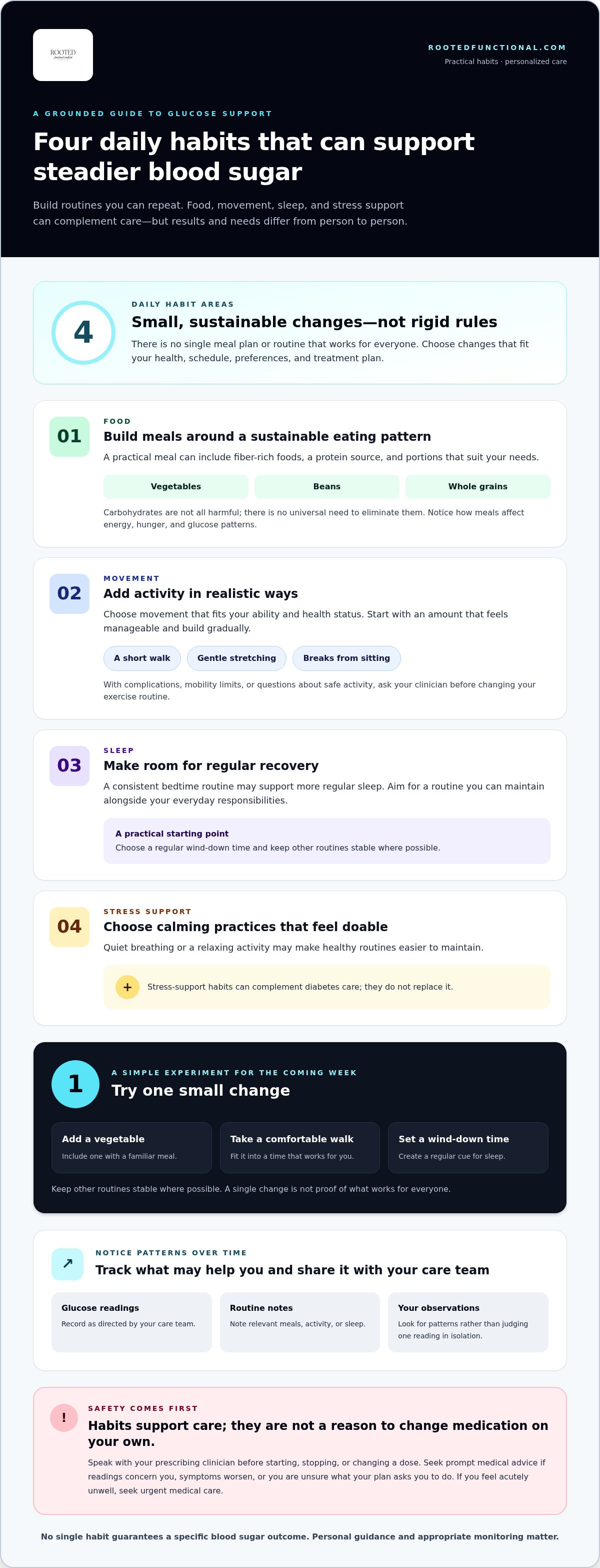
Four Daily Habits That Can Support More Stable Blood Sugar
There’s no single meal plan or daily routine that works for everyone. Food, movement, sleep, and stress support can complement one another, but their effects depend on your health, schedule, preferences, and treatment plan. Choose changes you can repeat rather than strict rules that leave you feeling deprived or promises of rapid results.
No single habit can guarantee a specific blood sugar outcome. Steady routines and individual monitoring can help you learn what supports your health.
Build meals around a sustainable eating pattern
A practical meal can include fiber-rich foods such as vegetables, beans, or whole grains, along with a protein source and portions that suit your needs. Carbohydrates aren’t all harmful, and there’s no universal reason to eliminate them. Notice how different meals affect your energy, hunger, and glucose patterns rather than following a restrictive online diet.
Meal timing and portion needs vary, especially if you use medication that affects glucose. The CDC Guidelines for Blood Sugar Management offer general guidance. If you monitor glucose, a clinician can help interpret patterns and discuss whether meal or timing changes are appropriate. Avoid using supplements or major dietary changes as a substitute for a treatment plan.
Add movement and recovery in realistic ways
Choose movement that fits your ability and health status. You might take a short walk, do gentle stretching, or break up long periods of sitting. Start with an amount that feels manageable and build a routine gradually. If you have complications, mobility limits, or questions about safe activity, ask your clinician for guidance before changing your exercise routine.
Recovery matters, too. A consistent bedtime routine may support more regular sleep. Simple stress-support practices, such as quiet breathing or a relaxing activity, can also make healthy routines easier to maintain. These habits complement diabetes care; they don’t replace it.
To make these ideas concrete, choose one small experiment for the coming week: add a vegetable to a familiar meal, take a comfortable walk when it fits your day, or set a regular wind-down time. Keep other routines stable where possible. If you track glucose, record readings as directed by your care team, along with relevant notes about meals, activity, or sleep. Look for patterns over time rather than treating one change as proof of what works for everyone.
That’s a grounded approach to managing blood sugar without medication: build supportive habits while keeping treatment decisions connected to your individual needs. Rooted Functional Medicine offers a Root Cause Consultation for personalized support informed by your health history and functional lab work.
Compare Blood Sugar Strategies by Effort, Use, and Limitations
Each strategy has a different role. Some changes fit into an existing routine, while tracking and clinician-guided care may require more planning. The best starting point depends on your schedule, preferences, mobility, diagnosis, and current care. Use this comparison to identify what may be practical, not to rank strategies or predict a particular glucose change.
Which strategies are easiest to begin and sustain?
A small food adjustment or a short movement break may be simpler to try than logging every meal or checking glucose repeatedly. Ease is personal, though. A work schedule may make meal timing unpredictable; mobility or pain may shape activity choices; and household routines can influence sleep and food preparation. Choose an option you can realistically repeat, then review whether it fits. Difficulty is a reason to adjust the plan, not a personal failure.
What can glucose tracking tell you, and what can’t it?
A home reading is a snapshot from a particular moment. Several readings recorded as directed may reveal patterns, while an A1C test reflects average glucose over roughly the past two to three months. These measures answer different questions. A clinician interprets them alongside symptoms, health history, and other laboratory results. Glucose monitoring can inform decisions, but it cannot independently diagnose or treat diabetes.
Tracking can also draw attention to low readings, which matter for people whose treatment may cause low blood glucose. The NIDDK guide to hypoglycemia explains why recognizing and responding to lows is part of safety. Don’t rely on a general target from an article. Ask your clinician what readings mean for you and what to do if they fall outside your care plan.
For managing blood sugar without medication, the useful comparison isn’t “natural versus medical.” Consider which supportive steps are feasible, what information they provide, and where professional interpretation is needed. A strategy that works for one person may not suit another, and no single method guarantees a specific result.
Create a Safe, Practical Blood Sugar Plan You Can Follow
A useful plan doesn’t need to be complicated. It needs to fit your diagnosis, current care, and daily life. Use these steps to organize what you know and prepare for a focused conversation with your clinician.
Clarify your diagnosis. Confirm whether you have prediabetes, type 2 diabetes, type 1 diabetes, or another condition affecting glucose. Your diagnosis helps determine which habits and monitoring approaches make sense.
Review your current care. List medications, instructions, and questions about your treatment. Don’t start, stop, or change a dose on your own, even if you’re changing your routine.
Choose one manageable habit. Pick a realistic change, such as adding a short walk that suits your ability or adjusting one meal. A small step is easier to review than several changes made at once.
Track as directed. Record relevant glucose readings, meals, movement, sleep, symptoms, and medication if your clinician has asked you to monitor. Follow their instructions rather than setting your own glucose targets.
Follow up and reassess. Share your notes with your clinician. Together, you can discuss what the patterns may mean and whether the plan needs to change.
What to track before changing your routine
A brief, consistent log can make a follow-up conversation more useful. Note when a reading was taken and any details your care team has asked you to record. You might also jot down a meal, activity, disrupted sleep, or symptom if it seems relevant. Keep the record simple enough to maintain, and bring it to your appointment rather than trying to diagnose yourself from individual numbers.
How to discuss lifestyle changes and medication safely
Bring specific questions: What should I monitor? Which changes are safe with my current treatment? What side effects or symptoms should I report? When should I seek prompt medical advice? If readings remain concerning, symptoms worsen, or you’re unsure how to follow your care plan, contact your clinician for timely guidance. Seek urgent care if you feel seriously unwell.
Medication isn’t a personal failure, and lifestyle changes aren’t a substitute for treatment you need. Any medication adjustment belongs with the prescribing clinician, who can weigh your readings, symptoms, diagnosis, and other health needs. Be open about what feels manageable and what doesn’t. That information helps shape a plan you can follow.
Some people also want a broader review of their health history and possible contributing factors. Rooted Functional Medicine offers personalized, lab-guided support intended to complement sustainable habits, not replace necessary medical treatment or guarantee medication changes. Read this functional medicine doctor guide to learn about the root-cause approach. For individualized support, book a Root Cause Consultation.
Approaching managing blood sugar without medication safely means gathering useful information, making considered changes, and keeping clinical guidance involved. A clear plan can replace guesswork with a more informed next step.
When Personalized Functional Medicine Support May Help
Sometimes you’ve established basic habits, yet glucose concerns persist or your results leave you with more questions than answers. An individualized review can put your health history, current symptoms, previous lab results, and daily routines into context. The aim is to understand your situation more fully and identify appropriate next steps, not to assume there’s one hidden cause or one plan that works for everyone.
What an individualized root-cause review can add
Rooted Functional Medicine offers personalized, lab-guided care, including Root Cause Consultations and support for people with type 2 diabetes. A review may consider your diagnosis, symptoms, medical history, existing laboratory results, and relevant testing. Testing and protocols are selected for the individual rather than applied as a universal formula. This can add a broader perspective to sustainable habit changes while remaining alongside appropriate medical care.
Functional medicine is not a substitute for urgent care or for the clinician responsible for your diabetes treatment and prescriptions. Keep your care team informed, and don’t stop or change medication based on a new protocol or test result without discussing it with the prescribing clinician. Medication decisions depend on your full health picture.
If you’re exploring managing blood sugar without medication and want an additional perspective, Rooted Functional Medicine provides personalized care through secure telehealth nationwide. No consultation or test can promise diabetes reversal, a specific glucose result, or that medication can be avoided.
How to take the next step without making assumptions
Come prepared to describe what’s happening and what you hope to understand. Helpful information to gather includes:
Your diagnosis and relevant health history
A current medication and supplement list
Glucose records or laboratory results you already have
Symptoms, recent routine changes, and questions about next steps
These details can make a consultation more focused. You might ask how your history and results inform the discussion, what any proposed testing is intended to assess, and how lifestyle support can fit alongside your existing care. A consultation is an opportunity to assess and plan with your individual circumstances in view. It isn’t a promise of medication-free results.
If you have nerve symptoms such as numbness, tingling, or pain, bring them up promptly with your healthcare team. They deserve clinical attention, not a medication adjustment made on your own. Persistent or worsening symptoms call for timely medical advice.
If you’re ready to discuss your health history, questions, and possible next steps in a personalized setting, book a Root Cause Consultation. Keep your existing medical care and treatment decisions properly supervised.
Choose Your Next Step With Confidence
You don’t have to solve everything at once. Decide what you want clearer answers about: your glucose patterns, a habit you’re trying to sustain, or how your current care fits your goals. Bring those questions to your clinician, and keep medication decisions supervised. Progress isn’t measured by whether you avoid medication. It’s about making informed choices that support your health.
If you’d like a broader, individualized perspective, Rooted Functional Medicine offers Type 2 diabetes support through secure nationwide telehealth, with care informed by functional lab work. This support can add context to your health history and goals, without promising a particular result or medication change. Exploring managing blood sugar without medication can begin with curiosity, realistic expectations, and appropriate clinical guidance.
When you’re ready to discuss your situation and possible next steps, book a Root Cause Consultation. Keep asking questions and building a plan that fits your life. You deserve care that takes your concerns seriously.
Frequently Asked Questions
Can you manage type 2 diabetes without medication?
Some people with type 2 diabetes may manage their glucose without medication, but it depends on their individual health and can’t be assumed in advance. Managing blood sugar without medication may be an option to discuss if lifestyle changes are part of your care, but good readings don’t prove treatment is no longer needed. Ask your clinician what your results mean and whether your plan should change. Never adjust treatment on your own.
Is it safe to stop diabetes medication if blood sugar improves?
No. Improved readings alone don’t mean it’s safe to stop medication. Results may reflect the treatment you’re taking, and glucose can change with illness, stress, meals, or activity. Keep taking medication as prescribed unless the clinician managing it tells you otherwise. If you’re experiencing side effects or want to reduce your medication burden, contact your prescribing clinician to discuss options and a safe plan.
What foods can help support healthy blood sugar?
Vegetables, beans, and whole grains can add fiber to meals, while foods such as eggs, fish, tofu, or unsweetened yogurt can provide protein. For example, you might pair beans and vegetables with a grain you enjoy rather than eating a carbohydrate by itself. Individual responses and portion needs vary, so use these as meal ideas, not a strict prescription. A registered dietitian or clinician can help tailor food choices to your needs.
Can exercise lower blood sugar without medication?
Physical activity can help lower blood glucose for some people, though the response varies with the person, activity, and treatment. A gentle walk after a meal may be a practical way to add movement if it’s safe for you. If you use insulin or another treatment that can cause low glucose, ask your clinician how to prepare for activity and respond to a low. Don’t change medication doses to exercise without clinical direction.
How do you monitor blood sugar when making lifestyle changes?
Follow your care team’s instructions about whether to use a meter or continuous glucose monitor and when to check. Record the time and reading, plus useful context such as a meal, activity, or symptoms. Wash and dry your hands before using a finger-stick meter, and follow its instructions. A1C is a lab test that offers a longer-term view, so your clinician may use it alongside home readings to assess your care.
Does managing blood sugar without medication apply to type 1 diabetes?
No. People with type 1 diabetes need insulin, and lifestyle changes cannot replace it. Food choices, activity, sleep, and other habits may support overall glucose management, but insulin remains essential. Never stop or reduce insulin without guidance from the clinician managing your diabetes. If you have questions about adjusting insulin around meals, exercise, illness, or changing routines, ask your diabetes care team for instructions specific to you.
For personalized, lab-guided support to discuss your health history and possible next steps, book a Root Cause Consultation.