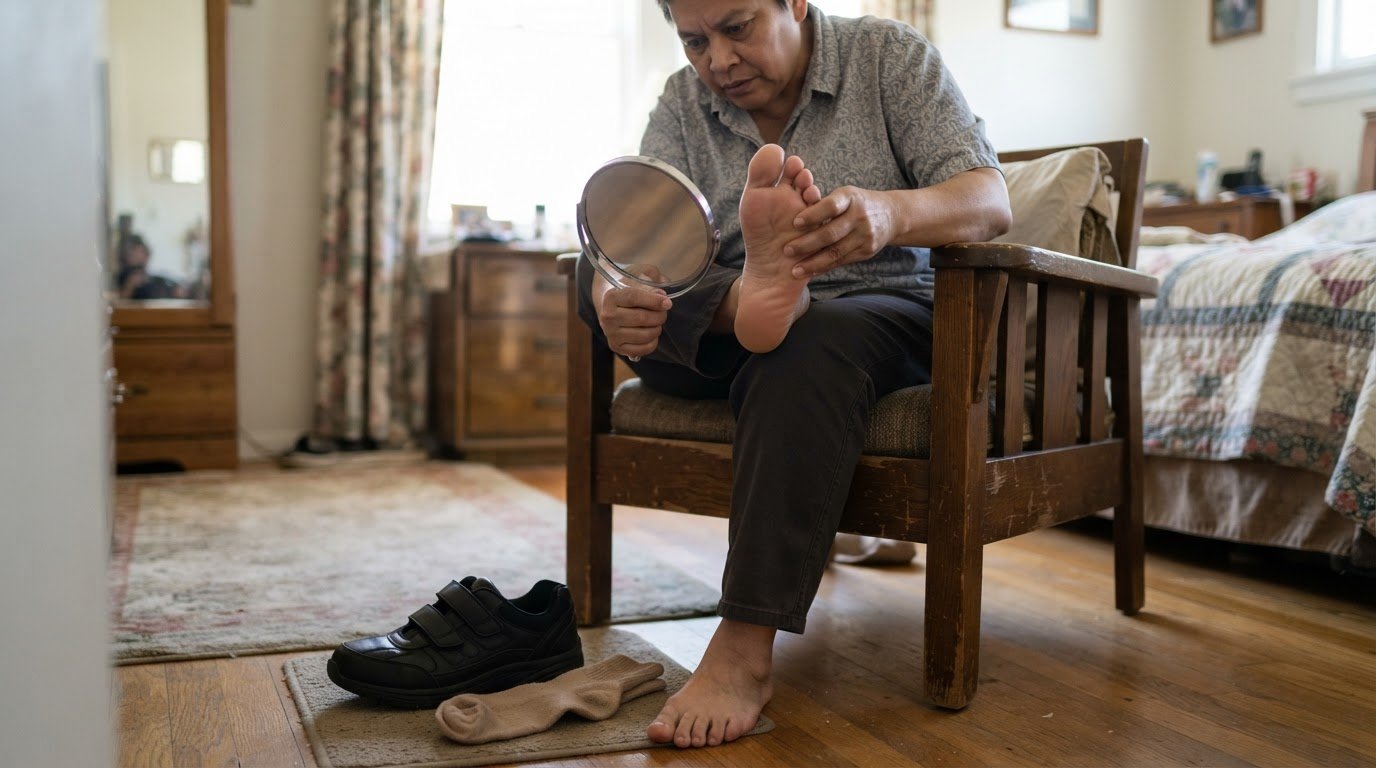
Natural remedies for neuropathy in feet: foods and supplements to consider
Foot numbness, tingling, or burning doesn’t automatically mean peripheral neuropathy. Other health problems can cause similar sensations, so it’s important to identify the cause before choosing a remedy. Natural remedies for neuropathy in the feet may support comfort, but they can’t show what’s causing your symptoms.
It’s understandable to want practical steps, especially when discomfort disrupts your day or sleep. Food choices, movement, and supplements may play a role in nerve health, but the right approach depends on what’s behind your symptoms. Nutrient deficiencies and blood-sugar issues are among the factors to consider.
This article explains what can resemble peripheral neuropathy and how to think about supplements, anti-inflammatory foods, movement, and possible vitamin or mineral deficiencies. You’ll also learn why a supplement isn’t automatically the answer, and how finding the underlying cause can guide safer, more useful next steps.
Table of Contents
1. What can be mistaken for peripheral neuropathy?
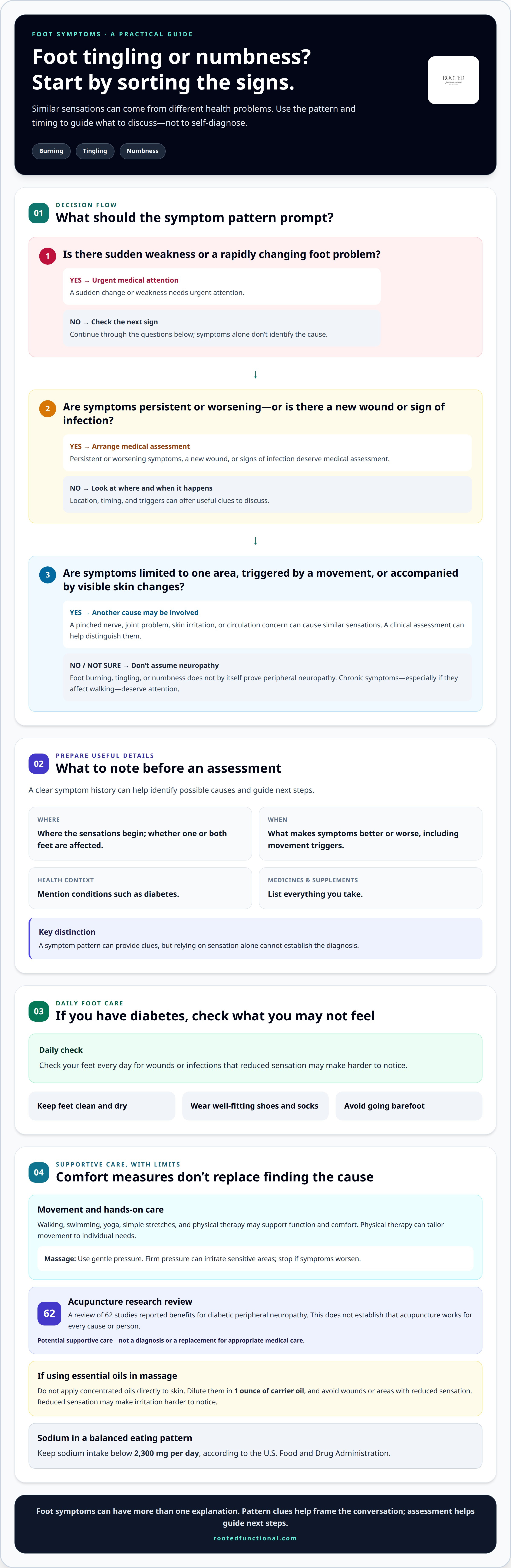
Burning, tingling, or numbness in the feet doesn’t always point to peripheral neuropathy. A pinched nerve, joint problem, skin irritation, or circulation concern can cause similar symptoms. Location and timing matter. Symptoms confined to one area, triggered by a particular movement, or accompanied by visible skin changes may point to another cause. A clinical assessment can help distinguish nerve symptoms from other problems instead of relying on sensation alone.
Chronic symptoms deserve attention, especially if they change or interfere with walking. Describe where sensations begin, whether both feet are affected, and what makes them better or worse. Mention conditions such as diabetes, and list the medicines and supplements you take. These details can help identify possible causes and guide next steps. Don’t treat foot pain as proof of a single diagnosis.
Movement and hands-on care may support function and comfort, but they don’t replace finding the cause. Walking, swimming, yoga, and simple stretches are possible ways to manage peripheral symptoms. Physical therapy can tailor movement to individual needs. Foot massage may feel soothing, but firm pressure can irritate sensitive areas. Use a gentle touch and stop if symptoms worsen.
Acupuncture is another option people consider for neuropathic pain. A review of 62 studies reported benefits for diabetic peripheral neuropathy, though that finding doesn’t establish that acupuncture works for every cause or person. Relaxation practices, including slow breathing during a session, may help reduce tension around chronic discomfort. Treat acupuncture as potential supportive care, not a diagnosis or a replacement for appropriate medical care.
Essential oils are sometimes used in massage, but concentrated oils shouldn’t be applied directly to skin. Dilute them in 1 ounce of carrier oil before use, and avoid areas with wounds or reduced sensation. A person who can’t reliably feel heat or irritation may not notice a reaction quickly. Sodium intake also matters in a balanced eating pattern: keep sodium intake below 2,300 mg per day, according to the U.S. Food and Drug Administration.
For home foot care, people with diabetes should check their feet daily for wounds or infections they might not feel. Keep feet clean and dry, wear well-fitting shoes and socks, and avoid going barefoot. Seek medical assessment for persistent or worsening symptoms, a new wound, or signs of infection. Sudden weakness or a rapidly changing foot problem needs urgent medical attention.
2. Fish oil and vitamin B12 supplements
Clinical evidence points to several options, but not one supplement that suits every cause of foot symptoms. Vitamin B12 is relevant when levels are low, while studies have also examined fish oil, alpha-lipoic acid, and acetyl-L-carnitine for peripheral neuropathy. These findings offer clues, not a reason to start several products at once.
Fish oil supplies omega-3 fatty acids, which may help reduce inflammation and pain associated with diabetic peripheral neuropathy. A clinical trial examining fish oil for diabetic nerve symptoms had an estimated completion date of 2025-2026. That timeline alone doesn’t show whether fish oil works. Consider the evidence alongside blood sugar management, the cause of symptoms, and the person’s current medicines.
Vitamin B12 deserves attention because deficiency may contribute to neuropathic pain, and supplementation might reduce it. One study reported improved symptoms after four months of B12 supplementation. B12 is found in foods such as eggs, dairy, salmon, tuna, and fortified cereals. A supplement may be useful when intake or absorption is inadequate, but it won’t necessarily resolve numbness caused by another problem.
Other supplements have also been studied. One study identified 600 mg of oral alpha-lipoic acid each day as an optimal risk-to-benefit dose. Trials in people with chronic peripheral neuropathy used acetyl-L-carnitine doses of 500-1,000 mg three times daily, while fatty acid compounds like palmitoylethanolamide (PEA), available through suppliers such as relievetherapeutics.com.au, have also drawn interest for nerve discomfort. These are study amounts, not a personal dosing plan. Different causes, health conditions, and medications can change what is appropriate.
Supplement and medication safety matters. B vitamins can interact with a person’s broader treatment plan, and high-dose products aren’t automatically harmless. Before starting a B-vitamin supplement, review your medicines, health conditions, and any available nutrient testing with a healthcare professional. This is especially relevant when managing diabetes, since blood-sugar control and nerve symptoms can affect treatment decisions. Keep a list of every supplement and medication you take.
For a practical next step, record the product name, dose on its label, and any change in symptoms. Introduce one new supplement at a time, rather than combining fish oil, B12, and other products without a clear reason. Bring that list to a discussion of persistent foot symptoms. If you’re ready to explore what may be driving them, book a root-cause-focused discussion.
3. Anti-inflammatory foods and omega-3 fatty acids
An anti-inflammatory eating pattern can feature colorful vegetables, omega-3 fats, and low-glycemic carbohydrates. These choices may help reduce systemic inflammation, particularly when symptoms occur alongside diabetes or metabolic syndrome. Food is not a replacement for care, but repeatable meal choices can support broader health goals. Among natural remedies for neuropathy in feet, food changes are practical because they can become part of ordinary meals.
Build meals from varied ingredients instead of relying on one supposed nerve-supporting food. Salmon, flaxseeds, chia seeds, walnuts, and hemp seeds provide omega-3 fatty acids. These fats may reduce inflammation and support nerve regeneration. Fatty fish offers omega-3s in a meal, while seeds and nuts provide plant-based sources. Patients can rotate these ingredients to suit their preferences and usual recipes.
A concrete food goal is 5-10 servings per day of colorful fruits and vegetables. Add 1-2 Tbs. per day of flaxseed to oatmeal, yogurt, or a smoothie. Another option is 3-4 oz. of fatty fish at least 2 times per week. Walnuts are also an omega-3 source, with a suggested amount of 3 oz. a day. These targets are meal-planning guidance, not a promise of symptom relief.
Make healthy eating practical. Add berries to breakfast, leafy greens to a sandwich, and roasted vegetables alongside dinner. Stir chia seeds into oatmeal or a smoothie, or choose salmon when it suits you. Pair meals with movement that fits your routine. Small food swaps can reduce reliance on highly processed choices without making every meal complicated.
For diabetic neuropathy, reducing sugar and processed foods may be useful, particularly alongside attention to blood sugar. Turmeric contains curcumin, which has anti-inflammatory and antioxidant properties that may help protect nerve tissue. Evening primrose oil contains gamma-linolenic acid, described as supporting nerve function. These are separate considerations, not substitutes for a balanced eating pattern. Discuss concentrated supplements before adding them, especially if you take medication.
Keep a simple food record to see which meals are sustainable and how symptoms change over time. Note specific examples, such as salmon at dinner, walnuts as a snack, or vegetables added to lunch. A record can help distinguish a consistent habit from a one-time meal. Natural remedies for neuropathy in feet work best as part of a thoughtful routine, not as a search for one magic ingredient. Start with a repeatable plate: vegetables, an omega-3 food, and a less processed carbohydrate choice.
4. Exercise, weight management, and stress reduction
Movement can help preserve function when foot symptoms make activity harder. Choose an activity that allows steady movement without aggravating numbness, such as walking, swimming, or yoga. Start at a manageable pace and notice how your feet respond during and afterward. If your balance feels uncertain, a seated routine may be a safer starting point. Physical therapy can adapt movements to your strength, sensation, and mobility.
Build a routine with stretching, strength, and balance work. Gentle stretching for five to 10 minutes can accompany strength and balance exercises. Examples include plantar fascia and hamstring stretches, hip flexion and extensions, calf raises, and seated dorsiflexion. These movements engage the foot, calf, and hip muscles in different ways. Move slowly, use a stable surface for support, and stop if an exercise sharply increases pain.
Exercise also fits into a broader plan for blood sugar and diabetic nerve symptoms. Walking, for example, adds regular movement without specialized equipment. One person with diabetic peripheral neuropathy reported walking a minimum of 5,000 steps per day and said it seemed to reduce nighttime pain and irritation. That personal experience isn’t a target for everyone. Choose activity according to current ability, foot sensation, and how symptoms change.
Approach weight management through sustainable habits, not harsh restrictions. Regular movement and balanced meals can support broader metabolic goals, including blood-sugar management. A short walk after a meal or a planned swimming session can help make activity more consistent. If weight change is one of your health goals, consider how sleep, eating patterns, mobility, and nerve symptoms interact before choosing a plan.
Stress can make it harder to sleep, stay active, and follow a routine. Try a brief relaxation practice, such as slow breathing before bed or a few quiet minutes after a walk. Yoga combines movement and relaxation, while gentle stretching can create a calmer transition between daily tasks. Track which practices support better rest or comfort, rather than expecting one technique to resolve nerve symptoms.
Alcohol also belongs in the conversation. Excess alcohol can deplete essential vitamins and contribute to nerve degeneration, so reducing intake may matter when foot symptoms are present. Note drinking patterns alongside movement, sleep, and numbness to spot habits that may affect function and recovery. For ongoing symptoms, pair activity changes with a plan that addresses the underlying cause, not movement alone.
5. Vitamin and mineral deficiencies
Foot nerve symptoms can have several causes, including diabetes and nutrient deficiencies. Diabetes is identified as the leading cause of neuropathy and may account for up to 50% of cases. Some causes, such as a correctable deficiency, may be addressed by treating the underlying problem. Whether nerve symptoms improve depends on the cause and the extent of nerve damage.
Vitamin B12 deficiency may contribute to neuropathic pain, and supplementation might reduce it. Yes, B12 deficiency can affect nerves. Testing for a deficiency before taking supplements helps clarify whether B12 is relevant and avoids treating symptoms based on guesswork.
Food sources can support intake. Eggs, dairy, salmon, tuna, and fortified cereals provide vitamin B12. Vitamin B1 has also been studied for diabetic neuropathy: one reported finding says 600 mg per day can help improve pain. A vitamin D3 study used an oral dose of 50,000 IU weekly for diabetic neuropathy. These study amounts describe research, not a personal supplement plan.
Vitamin E has been studied for chemotherapy-related nerve symptoms. Doses of 300-600 mg per day showed a beneficial effect on the incidence and symptoms of chemotherapy-induced peripheral neuropathy. That finding concerns a specific context. It doesn’t establish that vitamin E is appropriate for every person with foot numbness or nerve pain.
B vitamins support nerve health, but taking more isn’t automatically better. Vitamin B6 is another B vitamin people may encounter in supplements; a product’s B-vitamin combination can make it difficult to judge which ingredient is suitable. Review the label and discuss B-vitamin supplements with a healthcare provider, especially when taking medication or managing a chronic condition. Excess alcohol can also deplete essential vitamins and contribute to nerve degeneration.
A practical assessment starts with symptoms, diet, health history, and medication use. Testing can help determine whether a vitamin or mineral deficiency contributes to peripheral neuropathy before you add supplements. If a deficiency is found, the next step is to address its likely cause and choose an appropriate plan. This reduces uncertainty: supplements may help when a nutrient is lacking, but they won’t necessarily resolve nerve symptoms from another cause.
For persistent foot symptoms, consider a focused evaluation of possible underlying causes, including nutrient deficiencies. Book a discussion about possible root causes to explore what testing and next steps may fit your situation.
Rooted Functional Medicine
Rooted Functional Medicine helps people explore possible root causes of foot nerve symptoms and consider next steps beyond symptom relief alone. When symptoms persist, or you’re unsure whether diabetes, nutrient status, or another health factor may be involved, a Root Cause Consultation or Neuropathy Root Cause Testing can help guide that investigation. The Healing Neuropathy Webinar offers educational support, while the Type 2 Diabetes Reversal Program may be relevant when diabetes is part of the picture. The focus is on understanding your health concerns and shaping care around them, rather than assuming one remedy fits everyone.
If you’d like to discuss your foot symptoms and possible next steps, contact Rooted Functional Medicine.
Take the Next Step Toward Clarity
Choosing natural remedies for neuropathy in the feet is only one part of a thoughtful plan. Connect your symptoms, health history, and current routines, then identify which questions deserve closer attention. This can shift the focus from trying remedies one by one to understanding what may be contributing to your symptoms.
If you’re exploring whether an autoimmune concern could be relevant, Rooted Functional Medicine offers an Autoimmune Solutions Program. A conversation can help you consider which direction best fits the questions you’re trying to answer. The right next step depends on your symptoms and health circumstances.
You don’t have to sort through every possibility alone. Start a conversation with Rooted Functional Medicine and take one clear step toward a more informed plan.
Frequently Asked Questions
What can be mistaken for peripheral neuropathy?
A pinched nerve, joint problem, skin irritation, or circulation issue can cause sensations that resemble peripheral neuropathy. For example, discomfort that appears with a particular movement may have a different source than tingling across both feet. Note where symptoms occur and what triggers them. A clinician can use those details, your health history, and an examination to distinguish nerve problems from other causes.
What is the most effective treatment for neuropathy?
There isn’t one treatment that works best for every type of neuropathy. The approach depends on what’s causing the nerve symptoms and whether the priority is addressing that cause, easing pain, or improving function. For example, treatment considerations differ when symptoms relate to diabetes, a nutrient deficiency, or nerve compression. A care plan can combine steps focused on the cause with symptom support, rather than relying on one remedy alone.
What makes neuropathy worse?
Factors that continue to contribute to nerve injury can worsen symptoms or make them harder to manage. Diabetes-related nerve problems call for attention to blood sugar, while excess alcohol can contribute to nerve degeneration and deplete essential vitamins. Poorly fitting shoes may also create foot pressure or unnoticed injuries, especially when sensation is reduced. Pay attention to changes in symptoms and protect numb areas from friction, heat, and wounds.
Which vitamins or supplements may help neuropathy, and what doses have been studied?
Studies have examined B vitamins, vitamin D, vitamin E, alpha-lipoic acid, and acetyl-L-carnitine. Reported study amounts include vitamin B1 at 600 mg per day, vitamin D3 at 50,000 IU weekly, and vitamin E at 300-600 mg per day. One report describes B12 at 500 mg three times daily. These are study doses, not instructions; confirm a product and dose with a healthcare professional before use.
Can alpha-lipoic acid help neuropathy, and what are its side effects and interactions?
Alpha-lipoic acid has been studied for diabetic neuropathy, including a study using 600 mg orally each day. That does not establish that it will relieve symptoms for everyone. Side effects and interactions depend on a person’s health and other medicines; the evidence summarized here doesn’t establish a complete interaction profile. Before taking it, review your medications and health conditions with a healthcare professional, particularly if you manage diabetes.
Do acupuncture, topical capsaicin, or other natural treatments relieve neuropathic foot pain?
These approaches may support symptoms, but results depend on the person and the cause of the pain. A review of acupuncture studies reported benefit for diabetic neuropathy, while topical capsaicin may ease nerve pain by blocking pain signals. Gentle massage may feel soothing, but pressure can irritate sensitive feet. Treat these methods as possible additions to care, not proof of a diagnosis or a substitute for addressing its cause.
Which natural neuropathy remedies are unsafe or may interact with diabetes or other medications?
Concentrated supplements and herbal products deserve caution because health conditions and medications can affect whether they’re appropriate. Essential oils can irritate skin, and reduced sensation may make a reaction harder to notice. The FDA does not monitor essential oils for purity and quality. Before combining products, share a complete list of supplements, oils, and medicines with a healthcare professional, especially if you have diabetes or another chronic condition.
How can people with diabetes manage neuropathy safely alongside prescribed treatment?
Keep prescribed care in your plan, and add supportive habits without stopping or changing medicines on your own. Check your feet daily for wounds or infection, keep them clean and dry, and wear well-fitting shoes and socks. Tell your healthcare team about new numbness, changes in pain, or supplements you’re considering. These details can help coordinate diabetes care and foot protection, reducing the chance that an unnoticed injury becomes a larger problem.