Signs of Insulin Resistance in Women: Symptoms, Testing, and Next Steps
What if the signs of insulin resistance in women are easy to miss or mistaken for something else? Fatigue after meals, sugar cravings, changes in weight, skin tags, or irregular periods can raise questions, but none proves insulin resistance. These symptoms overlap with other conditions. A typical body size or a routine result in the normal range doesn’t always tell the whole story, either.
If you’ve been searching for a clear answer, it makes sense to want more than a symptom checklist. Insulin resistance can’t be confirmed by how you feel alone. A clinician considers your health history, symptoms, and relevant test results together, while also assessing related metabolic risks.
This article explains which signs may be worth discussing with a healthcare professional, how insulin resistance is evaluated, and why tests such as glucose and A1C provide important but incomplete context. You’ll also find practical steps to prepare for a personalized conversation about your health, without jumping to conclusions or relying on conflicting online advice.
Table of Contents
What are the signs of insulin resistance in women?
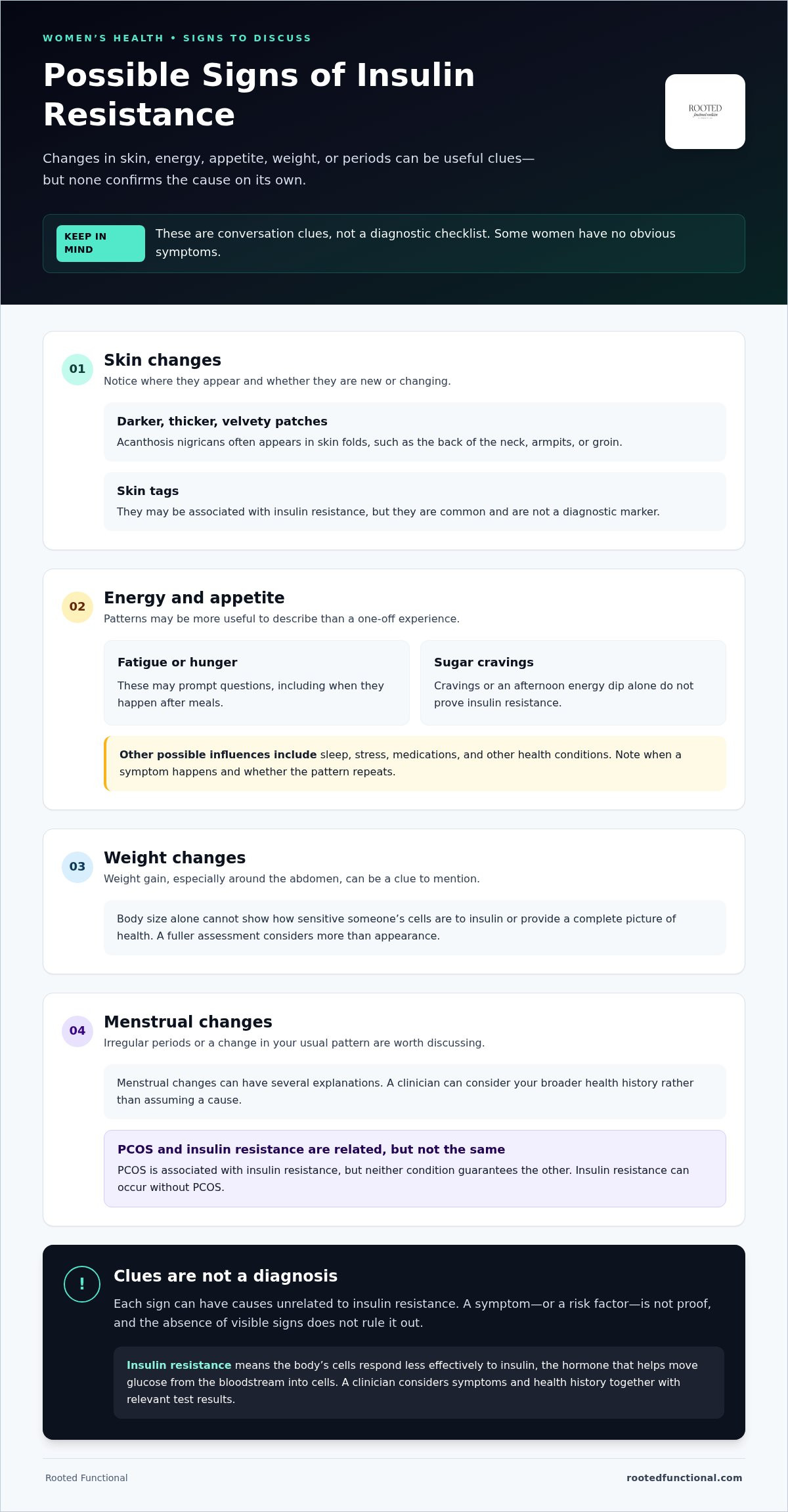
Changes in your skin, energy, appetite, or menstrual cycle can be unsettling, especially when each might have several explanations. The signs of insulin resistance in women are clues to discuss, not a checklist that confirms a condition. Some women have no obvious symptoms, so the absence of visible signs doesn’t rule it out.
Insulin resistance means the body’s cells respond less effectively to insulin, the hormone that helps move glucose from the bloodstream into cells. It describes a body process, not a confirmed diagnosis of diabetes or proof that a particular symptom has one cause. For broader background, Insulin resistance is described in this overview.
Possible clues are nonspecific and can include:
Darker, thicker, velvety patches of skin, or skin tags
Fatigue, hunger, or cravings, including after meals
Weight gain, especially around the abdomen
Irregular menstrual cycles or other changes in periods
Each of these experiences may be relevant, but can also occur for reasons unrelated to insulin resistance. Their pattern and your broader health history matter more than any one sign.
Skin changes that may be worth discussing
Acanthosis nigricans appears as darker, thicker, velvety skin, often in folds such as the back of the neck, armpits, or groin. Skin tags may also be associated with insulin resistance, but they’re common and aren’t a diagnostic marker. If you notice a new or changing skin feature, describe it to a clinician rather than trying to identify its cause from appearance alone.
Energy, appetite, and reproductive clues
Feeling tired, hungry, or drawn to sugary foods can prompt questions, but these experiences have many possible causes, including sleep, stress, medications, and other health conditions. Note when they happen and whether the pattern repeats. A craving or an afternoon energy dip on its own isn’t proof of insulin resistance.
Irregular periods are also worth discussing, especially if they’re a change for you or occur alongside other symptoms. A clinician can consider several possible explanations. Polycystic ovary syndrome (PCOS) is associated with insulin resistance, but the two terms don’t mean the same thing. A person can have PCOS without every feature linked to insulin resistance, and insulin resistance can occur without PCOS.
These signs can guide a conversation, but they can’t settle the question. Bring up changes that persist or concern you, even if they seem unrelated. A careful evaluation considers the whole picture rather than drawing a conclusion from a skin patch, one symptom, or body size alone.
Why insulin resistance can show up differently in women
Insulin helps move glucose from the bloodstream into cells, where the body can use it for energy. Think of it as a signal that helps cells take in fuel. With insulin resistance, cells respond less effectively to that signal. The pancreas may compensate by releasing more insulin, which can help keep blood glucose in range for a time. As a result, metabolic changes can occur without obvious symptoms or elevated glucose on a routine test.
Insulin resistance is reduced responsiveness to insulin; elevated blood glucose is a measurement, and diabetes is a diagnosis based on clinical criteria. These concepts are related, but they aren’t interchangeable. Glucose can rise for different reasons, and a single result needs to be interpreted in context. This distinction helps explain why appearance or symptoms alone can’t show what is happening inside the body.
How metabolic changes may relate to visible signs
Insulin signaling is part of how the body regulates glucose, but it doesn’t explain every skin, appetite, or energy change. A visible sign may have another cause, and metabolic risk can exist without a visible clue. Body size alone also can’t show how sensitive someone’s cells are to insulin or provide a complete picture of health. A fuller assessment considers more than appearance.
PCOS, life stages, and overlapping symptoms
PCOS and insulin resistance are associated, but neither guarantees the other. Menstrual changes can also have causes unrelated to either condition. Pregnancy history, including a history of gestational diabetes, menopause, medications, and other health factors may help shape what a clinician considers. Persistent or new changes to your cycle deserve assessment rather than an automatic assumption about their cause.
Women’s health changes over time, and the same clue can mean different things in different contexts. For example, a change in menstrual pattern may prompt questions about life stage, PCOS, or other health conditions. A history of gestational diabetes can add relevant context to metabolic risk. These details help guide evaluation; they don’t diagnose insulin resistance by themselves.
This is why a normal-looking weight, an absence of skin changes, or a glucose result within range shouldn’t be treated as a complete measure of insulin sensitivity. Equally, a symptom or risk factor isn’t proof. A clinician can interpret your history and available results together, then decide whether further assessment may be useful. For an individualized review, a root-cause consultation can bring symptoms, health history, and relevant lab findings into one conversation.
Do symptoms prove insulin resistance? What evaluation can clarify
No. Symptoms can raise a question, but they can’t confirm insulin resistance or identify what’s causing a change. The signs of insulin resistance in women may overlap with PCOS, thyroid disorders, medication effects, sleep problems, and other health concerns. A useful evaluation connects the clues with your medical history, risk factors, examination, and appropriate laboratory results.
Tests answer different questions. Fasting glucose and A1C reflect blood sugar, but neither directly measures how responsive your cells are to insulin. A clinician interprets results in context and decides whether additional assessment is appropriate for you.
What common blood tests can and cannot tell you
Fasting glucose measures blood sugar after a period without food. A1C estimates average blood sugar over the preceding few months. The American Diabetes Association identifies fasting glucose of 100 to 125 mg/dL or A1C of 5.7% to 6.4% as ranges for prediabetes. These are blood-sugar criteria, not standalone proof of insulin resistance. Results in a reference range don’t resolve every concern, so discuss persistent symptoms and what your results mean with a clinician.
When overlapping conditions deserve consideration
PCOS, thyroid disorders, medication effects, and other conditions can share symptoms or influence metabolic health. Weight changes may also have multiple contributors. If weight concerns are part of your picture, this root-cause weight-loss guide discusses why metabolic factors deserve a broader look.
Bring a concise timeline to your appointment: when changes began, how they’ve shifted, menstrual pattern changes, relevant diagnoses, medications, and family history. This helps the clinician weigh possible explanations instead of anchoring on one symptom. Persistent changes are worth discussing, especially if they affect your daily life or are getting worse.
There isn’t one test that suits everyone. Test selection and interpretation depend on your history, symptoms, risk factors, and the question being assessed. A fasting glucose or A1C may help identify abnormal blood sugar, while further testing may be considered when clinically appropriate. Review results with a qualified healthcare professional, such as through a private GP practice like Kingsford Medical Services, rather than using an isolated value or online symptom list to self-diagnose.
What to do if you recognize possible signs
Noticing changes can leave you unsure what deserves attention and what to do first. The signs of insulin resistance in women aren’t a diagnosis, but patterns you observe can make a clinical conversation more focused. You don’t need to solve the puzzle alone or overhaul your routine before asking for help.
A practical next step is to move from observation to discussion, then review the findings with a qualified healthcare professional:
Note patterns. Record when changes began, how often they occur, and whether they seem to shift with your menstrual cycle, sleep, meals, stress, or other circumstances. A short timeline is more useful than trying to remember every detail during an appointment.
Gather relevant history. Write down health conditions, pregnancy history if relevant, family history of diabetes or metabolic concerns, and recent changes in your health. Include medications and supplements, even if they seem unrelated.
Arrange a clinical discussion. Bring your observations and ask what possible causes should be considered, what any proposed test measures, and whether follow-up is needed. The right evaluation depends on your individual history and concerns.
Review the results. Ask what the findings mean in context, what they can and can’t establish, and what next steps make sense. Keep a copy of results so changes can be considered over time.
Persistent, worsening, or new symptoms merit professional assessment, especially when they affect your daily life or menstrual cycle. You don’t have to wait until several symptoms appear to raise a concern.
Prepare for a useful healthcare conversation
Keep your notes concise. Include when changes started and how they vary, any skin or menstrual changes, shifts in energy, and relevant family history. Bring prior lab results and an up-to-date medication and supplement list. You might ask: “What does this test assess?” and “What would you recommend if the result doesn’t explain my symptoms?”
Choose safe, evidence-aware daily foundations
Regular movement, adequate sleep, and balanced meals can support general health, but they aren’t guaranteed treatments for insulin resistance. Choose manageable habits that fit your circumstances rather than restrictive diets or intense exercise plans. Don’t start a supplement protocol or stop prescribed medication without discussing it with a qualified healthcare professional.
A root-cause approach considers health history and contributing factors alongside relevant results, rather than assuming one habit or symptom explains everything. This functional medicine doctor guide offers more context about root-cause care.
If you’d value an individualized review of your symptoms, history, and relevant lab findings, you can book a root-cause consultation to discuss your next steps.
How a root-cause consultation can support your next steps
Uncertainty about possible signs of insulin resistance in women can make it hard to know what to do with symptoms or test results. A root-cause consultation provides space to review the bigger picture: what you’ve noticed, when changes began, relevant health and family history, and any existing laboratory results. The aim is to understand what questions may need further attention, not to assume one symptom has one explanation.
At Rooted Functional Medicine, Dr. Adrienne Guthrie leads personalized consultations and uses a lab-guided approach to investigate chronic health concerns. Existing results can be reviewed alongside your symptoms and history. If further testing is considered appropriate, the choice depends on your individual context. No particular test is required for everyone, and lab findings are interpreted with the rest of your health picture rather than in isolation.
What individualized, lab-guided care means
Individualized care starts with your story, not a one-size-fits-all protocol. A clinician considers your symptoms, health history, and relevant results together to help identify possible areas for further investigation. Testing can contribute useful information, but it doesn’t guarantee a specific diagnosis or outcome. Recommendations should reflect the person and the clinical context.
This can be helpful if you have results that seem reassuring but still have unanswered questions, or if several changes have appeared over time. Bring prior lab reports and ask what each finding may indicate, what it cannot establish, and whether additional evaluation is worth discussing. The purpose is clarity about possible next steps, not a promise of an insulin-resistance diagnosis or diabetes reversal.
When telehealth may make care more accessible
Secure telehealth appointments are available nationwide for consultations and follow-up. A remote visit can provide a setting to discuss concerns and review relevant history and results, though not every health issue is suitable for care by video. A clinician can help determine whether an in-person assessment or another type of care is more appropriate for a particular concern.
A root-cause consultation does not replace primary care or urgent care. Continue routine care with your usual healthcare professional, and seek urgent or emergency services for severe or rapidly worsening symptoms. For non-urgent concerns, an individualized review may help organize what you’ve noticed and identify questions to bring forward.
You deserve to have persistent concerns considered in context, without treating a symptom list as a diagnosis. If individualized guidance and a review of relevant lab findings feel like the right next step, you can book a root-cause consultation.
Take the next step with clarity
You don’t need to be certain what’s causing a change before bringing it up. The signs of insulin resistance in women can be one reason to ask questions, but your concerns deserve thoughtful attention even when the explanation isn’t clear yet. A simple note about what you’ve noticed and what you hope to understand can help make the conversation more focused.
Dr. Adrienne Guthrie leads personalized root-cause consultations, with lab-guided care and secure nationwide telehealth available. A consultation offers an opportunity to discuss your health history and relevant results in context, then consider possible next steps without assuming one test or symptom pattern tells the whole story.
If individualized guidance feels right for you, book a root-cause consultation. Begin with the questions you have today and take the next step at a pace that feels manageable.
Frequently Asked Questions
Can insulin resistance affect fertility?
It can be associated with fertility challenges, particularly when it occurs alongside PCOS, which may affect ovulation and menstrual regularity. But insulin resistance doesn’t automatically mean someone will have difficulty conceiving, and fertility has many possible influences. If cycles are irregular or pregnancy isn’t occurring as expected, discuss the full picture with a qualified healthcare professional. They can consider ovulation, reproductive health, and other potential factors rather than assume one cause.
Can insulin resistance develop during pregnancy?
Insulin sensitivity commonly changes as pregnancy progresses, and some people develop gestational diabetes when the body can’t produce enough insulin to manage those changes. Gestational diabetes is identified through prenatal screening, not symptoms alone. Share any history of gestational diabetes or metabolic concerns with your prenatal care team, since it may inform follow-up during or after pregnancy. Don’t try to interpret pregnancy-related glucose results using nonpregnant reference ranges.
Does menopause affect insulin sensitivity?
Menopause can coincide with changes in body composition and metabolic risk, which may affect insulin sensitivity for some people. The transition doesn’t mean insulin resistance is inevitable, and symptoms such as disrupted sleep or weight changes can have several explanations. If health patterns shift during perimenopause or after menopause, discuss them alongside blood pressure, cholesterol, glucose history, and other risk factors. That context can help guide appropriate monitoring.
Can children or teenagers have insulin resistance?
Yes. Insulin resistance can occur in children and teenagers, and puberty itself can temporarily change insulin sensitivity. A young person’s growth stage, family history, health conditions, and overall development matter when a clinician considers metabolic risk. Signs such as darkened skin folds shouldn’t be used to label or diagnose a child. If you’re concerned, raise the observations with the child’s healthcare professional, who can determine whether assessment is appropriate.
Is insulin resistance the same as metabolic syndrome?
No. Insulin resistance describes reduced responsiveness to insulin, while metabolic syndrome is a combination of risk factors considered together. These may include elevated blood pressure, abnormal blood fats, increased waist measurement, and higher blood glucose. A person may have some risk factors without meeting the criteria for metabolic syndrome, and the terms aren’t interchangeable. A clinician can explain how each finding applies to your health rather than relying on a label alone.
What happens if insulin resistance is left unaddressed?
It may contribute to higher blood glucose over time and increase the risk of prediabetes, type 2 diabetes, and cardiovascular problems, but progression isn’t inevitable. Risk varies, and other health factors also matter. Follow-up can help clarify whether glucose or related risk factors are changing and whether a plan is appropriate. If you’ve been told you have abnormal results, ask what monitoring is recommended and when to review them again.