Autoimmune Disease Diet and Lifestyle: A Practical Guide
Updated: 6 days ago
What if the most supportive autoimmune disease diet and lifestyle plan isn’t the strictest one? When symptoms and energy shift, rigid food rules and ambitious routines can add stress instead of making daily life easier. Conflicting advice can also leave you wondering whether every meal or movement might trigger a flare.
It makes sense to want clear answers. Food, sleep, stress, and physical activity can all be part of overall health, but no single plan works for everyone or replaces care for your specific condition. You deserve practical guidance that takes your symptoms, needs, and day-to-day capacity into account.
This guide offers manageable habits to explore without treating restrictive diets as universal solutions. You’ll find ideas for balanced eating, activity, rest, and stress support, along with a realistic way to start, notice how you feel, and adjust carefully. It also explains when to bring questions or changes to your healthcare team, so your plan supports your health without asking you to figure it all out alone.
Table of Contents
Autoimmune Disease Diet and Lifestyle: Start With Support, Not Restriction
Build an Autoimmune-Friendly Eating Pattern Without Unnecessary Food Rules
Lifestyle Habits That Can Support Well-Being With Autoimmune Disease
How to Create and Adjust a Sustainable Autoimmune Lifestyle Plan
When Personalized Autoimmune Support Can Help You Take the Next Step
Autoimmune Disease Diet and Lifestyle: Start With Support, Not Restriction
If you’ve searched for autoimmune diet advice, you may have found one confident voice telling you to cut out entire food groups and another insisting those foods are essential. That back-and-forth can make eating feel like a risk instead of a source of nourishment. It’s understandable to want a clear answer, especially when symptoms already make daily routines harder.
A supportive autoimmune disease diet and lifestyle approach means building habits that fit your needs and complement your medical care. It does not mean food or lifestyle changes can cure an autoimmune condition, replace treatment, or guarantee symptom improvement. Supportive lifestyle care can strengthen everyday well-being, but it is not a cure or a replacement for condition-specific medical treatment.
Autoimmune diseases affect different parts of the body and can affect people in different ways. For a general overview, see What is an Autoimmune Disease? Your diagnosis, symptoms, medications, health history, and food tolerances all help shape what is appropriate for you. A plan that feels manageable for one person may be unsuitable for another.
Why there is no single autoimmune diet
A balanced eating pattern can offer a useful foundation, but it isn’t the same as medical nutrition advice tailored to a specific diagnosis. For example, celiac disease requires avoiding gluten, while someone with a different autoimmune condition may have no medical reason to remove it. Individual tolerances matter, too. No single food or eating plan explains or resolves every autoimmune condition, so be cautious of universal rules presented as guaranteed solutions.
Set a useful goal before changing habits
Before making a major dietary change, discuss it with the healthcare professionals involved in your care. This is especially important if you’re considering eliminating multiple foods, have trouble meeting your nutritional needs, or need disease-specific nutrition guidance. Don’t stop or change prescribed medication based on diet advice. Talk with the clinician who manages that treatment.
Choose one starting point. Pick a change that feels realistic this week.
Keep it specific. “Prepare lunch the night before” is easier to assess than “eat perfectly.”
Review without blame. Notice whether the habit fits your routine, then adjust or seek guidance if it doesn’t.
Build an Autoimmune-Friendly Eating Pattern Without Unnecessary Food Rules
A nourishing eating pattern doesn’t need a special label or a long list of forbidden foods. Aim for variety and enough food to meet your needs, choosing minimally processed options when they’re practical and enjoyable. The right approach depends on your diagnosis, appetite, schedule, preferences, and any guidance from your healthcare team.
Personalization matters more than the name of a diet. A useful eating pattern is one that nourishes you and can be adapted to your health needs. General guidance, including Harvard Health Publishing’s Lifestyle and Diet for Autoimmune Conditions, can offer context, but it shouldn’t replace advice tailored to your circumstances.
How to make everyday meals more nourishing
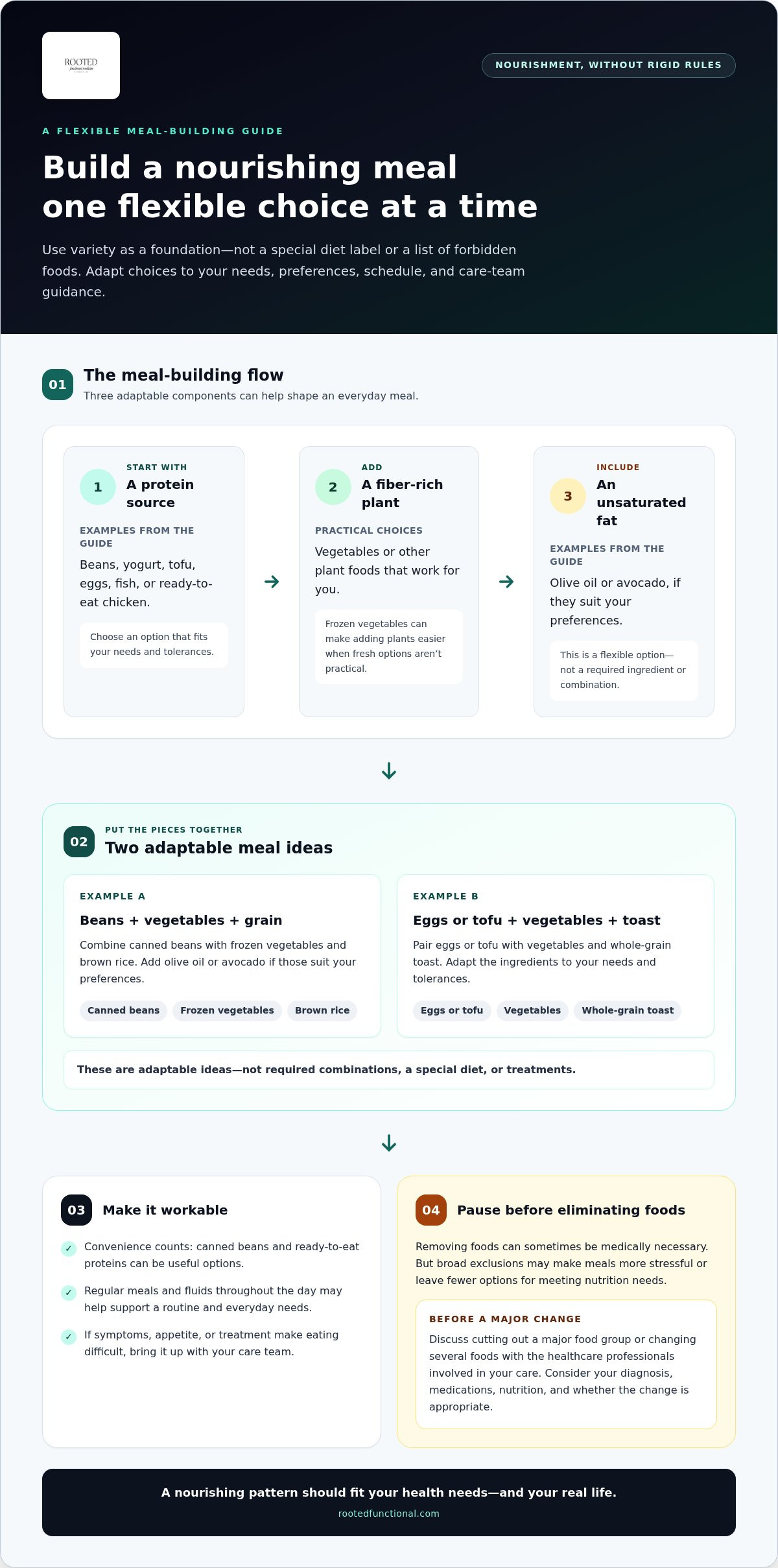
Try building a meal with a protein source, a fiber-rich plant food, and a source of unsaturated fat. For example, combine canned beans with frozen vegetables and brown rice, then add olive oil or avocado if those suit your preferences. Another meal might pair eggs or tofu with vegetables and whole-grain toast. These are adaptable ideas, not required combinations or treatments.
Convenience counts. Frozen vegetables can make it easier to add plants when fresh options aren’t practical. Canned beans, yogurt, tofu, eggs, fish, or ready-to-eat chicken can be convenient protein choices, depending on your needs and tolerances. If one option doesn’t work for you, choose another. The goal is a nourishing, realistic pattern, not a perfect plate.
Regular meals and drinking fluids throughout the day may help you maintain a routine and meet everyday needs. Neither is an autoimmune treatment, and your fluid or meal needs may vary with your health and clinician’s advice. If symptoms, appetite, or treatment make eating difficult, bring that up with your care team.
When food elimination needs extra care
Removing foods can sometimes be medically necessary, but broad exclusions may make meals more stressful or leave fewer options for meeting nutritional needs. An elimination plan can also be hard to interpret if many foods are removed at once. Avoid starting a restrictive plan simply because it is promoted as a universal solution.
Before cutting out a major food group or making several changes, discuss the plan with the healthcare professionals involved in your care. They can help you consider your diagnosis, medications, nutrition, and whether a change is appropriate. Don’t stop or adjust prescribed medication because of a diet or supplement recommendation. Talk with the clinician managing it.
If food choices feel difficult to sort through, a personalized consultation can help you consider your health context rather than follow a generic protocol. Book a personalized consultation to discuss an individualized starting point as part of your broader care.
Lifestyle Habits That Can Support Well-Being With Autoimmune Disease
Some days you may have energy for a walk or a full schedule. On others, symptoms or recovery needs may call for a slower pace. That variability isn’t a failure to stay consistent. A helpful autoimmune disease diet and lifestyle plan leaves room to adjust instead of expecting your capacity to stay the same every day.
Sleep, movement, stress support, and connection with others can contribute to overall well-being. They can’t guarantee symptom improvement or prevent a flare, and they don’t replace care for your specific condition. Everyday wellness habits can support how you feel and function, but they can’t promise a particular disease outcome.
Choose movement that fits your current capacity
Start with an activity that feels manageable, such as a brief walk, gentle stretching, or a few minutes of movement at home. Adjust the pace, duration, or intensity based on how you feel during and after activity. Movement doesn’t have to be strenuous to be worthwhile, and rest is part of a sustainable routine.
Pacing means balancing activity with recovery instead of pushing through symptoms to meet a fixed target. You might break a task into smaller parts, pause between activities, or choose a shorter route on a lower-energy day. If symptoms, physical limitations, or safety concerns make exercise choices unclear, ask a healthcare professional involved in your care for guidance.
Make sleep and stress support realistic
A repeatable wind-down routine may help you create space for rest. Consider dimming lights before bed, setting aside a few quiet minutes, or keeping a similar bedtime when your schedule allows. These are supportive habits, not promises of symptom relief. If pain, medication effects, caregiving, work, or other demands disrupt sleep, recognize the barrier rather than blaming yourself for not following a routine.
Stress support doesn’t need to become another demanding project. Choose one practice that fits your circumstances, then see whether it feels useful:
Try a few slow breaths during a quiet moment.
Spend a short time outdoors, if that feels comfortable.
Send a message or make time to talk with someone you trust.
Take a brief pause between demanding tasks when possible.
Social connection can offer companionship and practical support, especially when symptoms make plans unpredictable. A low-pressure check-in may be easier than committing to a long outing. It’s also reasonable to change plans or ask someone to adapt them with you.
How to Create and Adjust a Sustainable Autoimmune Lifestyle Plan
A plan is useful only if it works in real life. You don’t need to overhaul your meals, sleep schedule, and activity all at once to make progress. Changing several things together can make it harder to tell what feels helpful, what’s difficult to maintain, or what may need a closer look.
Try a simple cycle: choose one change, note the context, review what you recorded, then keep, adjust, or pause the change. For example, if you want a steadier breakfast routine, focus on that before also changing your exercise schedule or removing foods. This isn’t a test of willpower. It’s a way to learn about your needs while keeping your autoimmune disease diet and lifestyle plan manageable.
Track patterns without turning every meal into a test
Brief notes can be enough. Use a notebook or phone to record meals, sleep, activity, symptoms, and relevant routine or medication changes. Include context that may help you interpret the day, such as unusual stress, travel, or a change in schedule. You don’t need to measure every portion or write down every detail.
Review your notes for recurring patterns over time, not conclusions based on one meal or one difficult day. Symptoms can vary for many reasons, and a diary alone can’t establish that a food or habit caused a change. If tracking increases anxiety or feels burdensome, simplify it or stop and discuss another approach with your care team.
Know when to personalize the plan with clinical support
Bring questions and your notes to the healthcare professionals involved in your care. They can consider symptoms alongside your diagnosis, nutrition, medications, and relevant lab findings. Don’t change or stop prescribed medication or treatment based on a pattern you think you’ve noticed. Talk with the clinician managing that care before making changes.
Symptoms after a meal don’t automatically identify a food sensitivity or an autoimmune trigger. Other factors may be involved, so avoid using a log as a diagnosis or starting broad restrictions based on a single reaction. Persistent, worsening, or concerning symptoms deserve medical evaluation. Seek prompt care for symptoms that feel severe or rapidly change.
Personalized support can help you make sense of your health context and consider next steps without defaulting to a generic protocol. If you’d like guidance shaping an individualized plan, book a personalized autoimmune consultation.
When Personalized Autoimmune Support Can Help You Take the Next Step
Sometimes the hardest part isn’t finding another diet tip. It’s sorting through conflicting advice, figuring out which changes make sense for your diagnosis, or deciding what to do when symptoms shift. If food choices feel stressful or your current routine is difficult to manage, personalized support may help you organize your questions and consider a practical next step.
Individual guidance can be useful when a generic plan doesn’t reflect your health history, current concerns, or day-to-day capacity. The goal isn’t to apply a universal autoimmune protocol. It’s to consider your circumstances and identify options that fit alongside the care you already receive.
What a personalized approach can add
At Rooted Functional Medicine, the Autoimmune Solutions Program includes ongoing consultations and lab-guided interventions. Your health history, current concerns, and available findings can help inform recommendations, rather than relying on one-size-fits-all food rules. That context can also help you discuss your goals and questions as you consider how the autoimmune disease diet and lifestyle choices in this guide might fit your needs.
Guidance should be individualized, not a promise of remission, symptom relief, or a particular clinical result. Lab findings are one part of a broader health picture, not a reason to make conclusions in isolation. This support is intended to complement your existing medical care, not replace it. Keep your healthcare team informed, and don’t stop or change prescribed medication without speaking with the clinician managing it.
Support is available in person and through nationwide telehealth. Telehealth makes it possible to have consultations without being in the same location as the practice, while continuing to coordinate with the clinicians involved in your care.
Take a clear next step
You don’t need to arrive with a perfect plan. Bring a few notes about what feels challenging, what you hope to work toward, and what care or treatment you’re already receiving. You can also share questions about food choices, symptoms, or relevant lab findings. That gives the conversation a useful starting point and keeps the focus on your situation, not a generic checklist.
If individualized guidance would be helpful, book a personalized consultation to discuss your concerns and explore how personalized autoimmune support can fit alongside your current care.
Let Your Next Step Be Small and Personal
You don’t have to solve every question about your health before moving forward. Choose one concern you’d like to understand better, and bring it into a conversation with your healthcare team. A useful autoimmune disease diet and lifestyle plan can evolve as your needs and circumstances change. It should support your life, not become another standard you feel pressured to meet.
If you’d like help thinking through an individualized path, Rooted Functional Medicine offers personalized autoimmune support through ongoing consultations and lab-guided interventions. Book a personalized consultation to discuss your questions and goals. One thoughtful next step is enough to begin.
Frequently Asked Questions
Can diet cure an autoimmune disease?
No. Diet hasn’t been established as a cure for autoimmune disease, and it shouldn’t replace condition-specific medical care. Eating changes may support general health or help address an individual nutrition need, but their effects vary. Be cautious of claims that a food, cleanse, or supplement can reverse every autoimmune condition. If you’re considering a major change, discuss it with your healthcare team, especially if it could affect your treatment or ability to meet nutrition needs.
Is there one diet that works for every autoimmune condition?
No single eating plan fits every diagnosis or person. For example, someone with celiac disease needs to avoid gluten, while another person may not have the same medical need. The autoimmune disease diet and lifestyle choices that suit you can depend on your condition, symptoms, nutritional needs, and personal tolerances. A named diet may offer ideas, but it shouldn’t be treated as a universal prescription or a substitute for individualized medical advice.
Should I eliminate gluten if I have an autoimmune disease?
Not necessarily. Gluten avoidance is medically necessary for people with celiac disease, but having another autoimmune condition doesn’t automatically mean you need to remove gluten. If you suspect a problem, speak with a clinician before eliminating it. Testing for celiac disease can be affected by going gluten-free beforehand, so ask about evaluation before changing your diet. If gluten is excluded for a medical reason, get guidance on maintaining a nourishing, balanced diet.
Can fasting help with autoimmune disease?
Fasting isn’t a proven treatment for autoimmune disease, and it may not be appropriate for everyone. Skipping meals can be risky or difficult for people with certain health needs, medications, a history of disordered eating, or challenges maintaining adequate nutrition. Before trying a fasting schedule, discuss your plans with the clinician who understands your condition and treatment. Don’t use fasting to replace medication or delay evaluation of new or worsening symptoms.
Are supplements necessary for an autoimmune diet and lifestyle plan?
No. Supplements aren’t automatically required because you have an autoimmune condition. Whether one is appropriate depends on your diet, health history, medications, and any identified nutrient need. Supplements can also interact with medications or be unsuitable in some situations. Before starting one, share the product and dose with your healthcare team. A clinician can help decide whether assessment or testing is relevant, rather than relying on a general supplement list or online claims.
Can I change my diet while taking medication for an autoimmune condition?
Food choices can often be considered alongside prescribed treatment, but discuss substantial dietary changes with your healthcare team. Some medicines have food instructions, and changes in intake may matter for your individual care. Ask your prescribing clinician or pharmacist whether a specific change affects how or when you take medication. Don’t reduce, pause, or stop a prescription based on diet advice. Keep the clinicians managing your condition informed about changes you make.
How long does it take to notice changes after changing diet and lifestyle?
There’s no reliable timeline that applies to everyone. The type of change, your health needs, and ordinary symptom variation can all affect what you notice. Rather than expecting a quick result, decide what you’re observing, such as meal regularity or energy during a routine, and review notes over time. Avoid interpreting one good or difficult day as proof. If symptoms persist, worsen, or concern you, seek medical guidance instead of waiting for a lifestyle change to work.