Candida Overgrowth Symptoms in Women: Signs and Causes
The clearest candida overgrowth symptoms in women are often vaginal: itching, burning, vulvar redness, and changes in vaginal discharge. Candidiasis can also cause soreness, discomfort when urinating, or pain during sex. Other conditions can cause similar symptoms, so recognizing a pattern is useful, but it cannot confirm the cause.
When irritation keeps returning, it’s understandable to wonder what might be triggering it. Candida is a yeast that can live in the body without causing problems; candidiasis develops when it grows out of control. Hormonal changes, certain medications, blood sugar, and shifts in the body’s natural microbial balance may contribute to overgrowth.
This article explains what candidiasis is, which symptoms may point to a vaginal yeast infection or another form of Candida, and what may contribute to it. You’ll also learn how healthcare providers diagnose it, when treatment matters, and what diet can and can’t do. The goal is to take symptoms seriously without assuming every discomfort is Candida.
Table of Contents
Vaginal yeast infection symptoms
Vaginal candidiasis is a fungal infection and a type of vaginitis. It affects the vagina and vulva, but its symptoms can resemble those of other conditions.
Common Vaginal Symptoms
A vaginal yeast infection may cause intense itching, burning, vulvar redness, or soreness. Thick, white, curd-like discharge is another possible sign. Symptoms can make everyday activities uncomfortable, but itching or discharge alone can’t confirm Candida. Candidiasis can also cause discomfort when urinating or pain during sex, so note which symptoms occur together.
A vaginal yeast infection primarily affects the vagina and vulva, and isn’t a typical cause of a urinary tract infection. Discomfort when urinating can occur with candidiasis, but it doesn’t prove that you have a urinary infection or identify the cause. Changes in discharge can also have explanations other than yeast.
Recurrent and Severe Infections
Recurrent infections mean repeated episodes of symptoms, while severe candidiasis can involve marked irritation and tissue changes. Speak with a healthcare professional if yeast infections occur 4 or more times per year, or symptoms are severe or last beyond a few days. Repeated self-treatment can miss another cause, especially when symptoms keep returning.
Some women develop severe redness, swelling, and cracks in the vaginal wall, making irritation and soreness harder to ignore. To reduce irritation, choose cotton underwear and loose clothing, change out of sweaty clothes or swimsuits promptly, and avoid douching. Avoiding scented or harsh personal-care products may also help.
Vaginal Yeast Versus Other Infections
Yeast infections, bacterial vaginosis, and sexually transmitted infections have different causes, but their symptoms can overlap. It isn’t reliable to tell them apart based on itching or discharge alone. A healthcare professional can assess your symptoms and test for infection to identify the cause.
Vulvovaginal candidiasis isn’t officially classified as a sexually transmitted infection, although sexual activity can contribute to its development. Vaginal pH can offer a clinical clue: according to the Centers for Disease Control and Prevention, Candida vaginitis is associated with vaginal pH below 4.5. This clue doesn’t replace evaluation or testing.
Painful urination can accompany vaginal candidiasis without indicating a urinary tract infection. A separate urinary infection or another vaginal condition may require different care. If you have unusual discharge, vulvar soreness, or discomfort during sex, describe each symptom and when it began. Those details help guide an assessment beyond guessing from one sign.
Can I take over-the-counter medications to treat candidiasis?
Antifungal medicines treat vaginal yeast infections, but the appropriate treatment depends on confirming the infection and assessing its severity. Vaginal antifungals may be applied topically, while oral medication may require a prescription. Some cases clear with a single dose, but that doesn’t mean every episode needs the same medicine or treatment plan.
If a healthcare professional has previously diagnosed a mild, familiar yeast infection, an over-the-counter vaginal antifungal may be an option. Follow the product directions, including how long to use it. Itching, discharge, or burning alone doesn’t prove yeast is the cause. Bacterial vaginosis, an STI, and other conditions can cause similar symptoms and need different care.
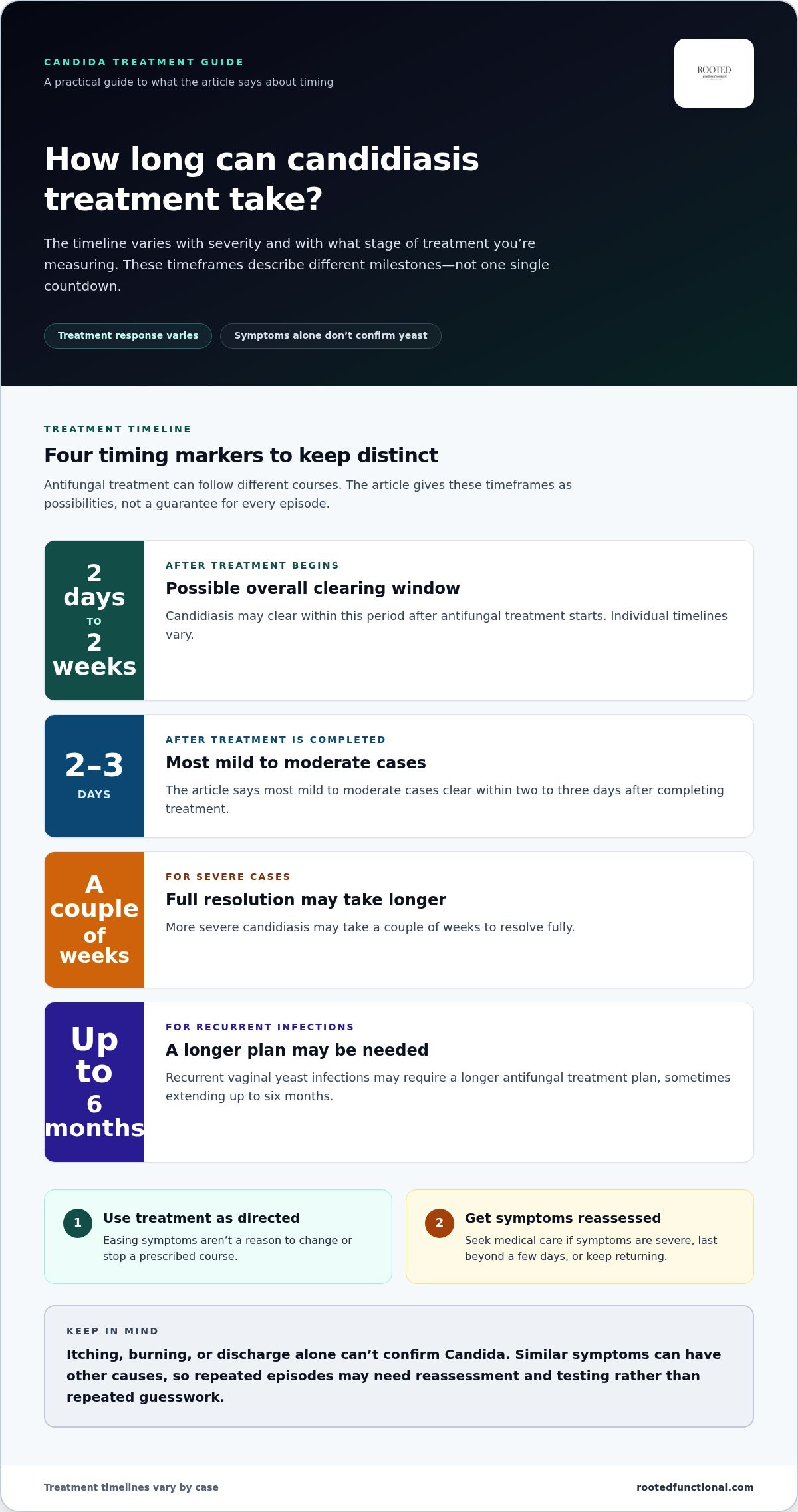
Treatment timelines vary. Candidiasis may clear within two days to two weeks after antifungal treatment begins. Most mild to moderate cases clear within two to three days after treatment is completed, while more severe cases may take a couple of weeks to resolve fully. These timelines describe different stages; easing symptoms aren’t a reason to change or stop a prescribed course.
Seek medical care if symptoms are severe, last beyond a few days, or keep returning. Recurrent vaginal yeast infections may require a longer antifungal treatment plan, sometimes extending up to six months. Repeated episodes call for reassessment rather than treating every flare as confirmed yeast. A culture test can help identify the infection and guide treatment.
Antifungal medications don’t treat every symptom attributed to Candida. Bloating, gas, diarrhea, and constipation can have many causes; vaginal antifungal products neither establish nor treat an intestinal Candida diagnosis. A weakened immune system can increase susceptibility to infection, so mention relevant medical conditions and medications during an assessment. Discuss home remedies for vaginal symptoms with a healthcare provider before trying them.
Resistance to some antifungal medications is spreading, and treatment doesn’t always work. If symptoms remain after you’ve used a medicine as directed, or return soon afterward, avoid repeating doses without guidance. The next useful step is confirming the cause and reviewing your treatment history. For recurring symptoms alongside broader health concerns, you can discuss recurring symptoms and root causes.
Candida diagnosis and testing
Symptoms alone can’t confirm candidiasis. A doctor considers the affected area, symptom pattern, medical history, and test results. This matters because irritation, digestive symptoms, and changes in discharge can have causes unrelated to Candida, including other infections or shifts in bacteria.
For a suspected vaginal infection, diagnosis may start with an examination and questions about your symptoms and health history. A clinician may collect a sample for a culture test to help identify the infection and guide treatment. Mention when symptoms began, whether they recur, and any recent treatment. These details help interpret test results alongside physical findings.
Testing depends on where symptoms occur. A vaginal sample can help investigate vaginal candidiasis, while mouth or throat symptoms are assessed in those areas. Candida symptoms vary by infection site, so a single test or symptom list can’t answer every diagnostic question. If symptoms persist after treatment, reassessment can help determine whether Candida remains the cause or another condition needs attention.
Blood and stool tests require careful interpretation. Blood tests for Candida look for specific antibodies. A stool test can identify whether Candida is present in the intestines or colon, but finding yeast there doesn’t establish that it is causing digestive symptoms. Bloating, gas, constipation, and diarrhea can result from many conditions, so interpret test results alongside symptoms and clinical history.
There isn’t one definitive laboratory test for the broad idea of Candida overgrowth throughout the body. Assessment relies on clinical history, symptom patterns, and ruling out other causes. The diagnosis sometimes called “yeast syndrome” has little supporting evidence. Fatigue, headache, or poor memory alone can’t establish Candida overgrowth; these symptoms may have other explanations.
Invasive infection requires separate context. Invasive candidiasis is uncommon in otherwise healthy people, and those who develop it are often already seriously ill. Common signs include fever and chills that don’t improve after antibiotic treatment for a suspected bacterial infection. Because other medical conditions can make symptoms difficult to interpret, suspected invasive infection requires urgent medical evaluation, not self-testing or a Candida cleanse.
Bring a clear symptom history to your appointment: where symptoms occur, what has changed, and which treatments you’ve tried. This practical record gives your doctor useful information and helps prevent a test result from being treated without considering the whole picture.
Candida Overgrowth Signs and Diet: Can Food Help?
Bloating, gas, constipation, and diarrhea can accompany digestive concerns, but they don’t identify Candida as the cause. Invasive candidiasis is different: it spreads into the bloodstream or organs, and people with weakened immune systems face greater risk.
Digestive Symptoms
Digestive symptoms include bloating, gas, constipation, and diarrhea. These common symptoms can develop for many reasons, not just Candida, and their presence alone isn’t evidence of intestinal candidiasis. Food patterns, medications, or a digestive condition may also help explain them, so note when symptoms arise and what else changes.
Candida can worsen existing digestive diseases, including Crohn’s disease and ulcerative colitis. Antibiotics may also disrupt the body’s microbial balance, but digestive discomfort after antibiotics doesn’t prove yeast overgrowth. Mouth or throat thrush is a distinct form of candidiasis, with signs such as white patches or soreness, not a diagnosis based on gas or bloating.
Other Possible Overgrowth Symptoms
Fatigue, headache, and poor memory are sometimes attributed to intestinal Candida, but evidence for “yeast syndrome” is limited. These symptoms alone can’t establish a Candida infection. Skin complaints don’t confirm overgrowth either; the affected area and its specific signs matter when assessing an infection.
Invasive candidiasis isn’t the same as digestive symptoms or vaginal candidiasis. It occurs when Candida spreads through the bloodstream or reaches other body sites. Most people aren’t at risk, and widespread Candida infection is rare in otherwise healthy individuals. People with weakened immune systems, including those affected by serious medical conditions, face higher risk.
Food can support general nutrition, but strict Candida diets have limited scientific support. A typical cleanse removes sugar, white flour, yeast, and cheese, based on the theory that these foods cause overgrowth. No clinical trials show that a Candida cleanse diet treats a known medical condition. Feeling better after changing your diet may reflect broader dietary changes, rather than reduced yeast in the digestive system.
Diet alone doesn’t cure an active vaginal yeast infection. Cutting out broad food groups can make it harder to maintain balanced nutrition, so discuss major changes with a medical and nutrition team. Replacing processed foods with fresh foods and white flour with whole grains may help you feel better generally within a few weeks, but that isn’t proof of antifungal treatment.
Keep a simple food and symptom record. Note meals, bowel changes, medication use, and when discomfort begins. This can help distinguish a repeated food-related pattern from symptoms that persist regardless of meals. Don’t treat digestive symptoms as proof of Candida, and don’t let a restrictive diet delay assessment of ongoing or worsening concerns.
Causes and triggers of Candida overgrowth
Candida can live in the body without causing infection. Overgrowth becomes more likely when changes in the vaginal microbiome, acidity, or hormonal balance create conditions that favor yeast. Pregnancy, menopause, menstrual-cycle changes, and birth control pills can all shift hormone levels. These triggers help explain why symptoms can appear during a life change, even without a single obvious cause.
Medications can affect the balance of helpful microbes. Antibiotics may disrupt healthy vaginal bacteria that usually keep yeast in check. Steroids, oral contraceptives, and acid-blocking medications are also associated with Candida overgrowth. Don’t stop a prescribed medication on your own. Instead, note the medication and when symptoms began, then discuss the pattern during a medical assessment.
Blood sugar and immune health matter, too. Persistently high blood sugar linked with uncontrolled diabetes can promote yeast growth. Diabetes, cancer, and HIV/AIDS are among the conditions associated with candidiasis. A weakened immune system, whether related to illness or medication, can increase susceptibility to vaginal yeast infections. These factors can affect risk but don’t prove that a particular symptom is Candida.
Stress and food patterns may also affect microbial balance. Several independent sources identify diets high in sugars and refined carbohydrates as a factor that may make Candida overgrowth more likely. They don’t establish a diagnosis, and strict food rules can’t identify the cause of an infection. Consider the wider pattern, including hormonal changes, antibiotics, and blood sugar, rather than focusing on one meal or craving.
Vaginal candidiasis isn’t officially classified as a sexually transmitted infection, although sexual activity can contribute to its development. Changes in vaginal acidity and the natural microbiome can also create favorable conditions. Scented or harsh personal-care products can irritate sensitive tissue, so gentler products may help reduce irritation. These details matter because irritation alone doesn’t reveal the trigger.
Look for connections across time. For example, note whether symptoms followed antibiotics, began during pregnancy, or returned alongside changes in diabetes management. That record gives a healthcare professional practical context for considering possible causes and other explanations. If recurring symptoms coincide with broader health concerns, a consultation to discuss possible contributing factors can help you explore those patterns.
Hormonal changes may contribute to Candida overgrowth. Pregnancy, menopause, menstrual-cycle changes, and birth control pills can affect yeast infection risk through hormonal fluctuations. Antibiotics, acid-blocking medications, steroids, hormones, chronic stress, and high-sugar diets can disrupt microbial balance, allowing Candida to grow.
Rooted Functional Medicine: Healing Neuropathy Webinar
Rooted Functional Medicine offers the Healing Neuropathy Webinar, which focuses on neuropathy, not candidiasis. For recurring vaginal symptoms, medical evaluation can help identify the cause and guide appropriate treatment. If you’re also exploring broader, persistent health concerns, a Root Cause Consultation offers an opportunity to discuss patterns and possible contributing factors through a functional medicine lens. It doesn’t replace evaluation or treatment for an active vaginal infection. Choose your next step based on your concern: seek medical assessment for vaginal symptoms, or book a Root Cause Consultation for broader health questions.
Choose a Next Step That Fits Your Needs
Understanding candida overgrowth symptoms in women can help you describe what’s happening, but your next step should match the concern you want addressed. For vaginal symptoms, seek medical evaluation and follow the diagnostic and treatment guidance suited to your situation. For broader questions about contributing health patterns, book a Root Cause Consultation with Rooted Functional Medicine.
Rooted Functional Medicine also offers the Autoimmune Solutions Program for people seeking support with autoimmune concerns. The Healing Neuropathy Webinar focuses on neuropathy, not Candida, so it isn’t a treatment for vaginal yeast infections. Choosing support that matches your needs keeps the path forward clear and focused on the right concern.
Explore a Root Cause Consultation and take a thoughtful next step toward understanding your health.
Frequently Asked Questions
What Is Candidiasis?
Candidiasis is an infection caused by Candida yeast growing out of control. Candida can normally live in parts of the body without causing illness. Its effects depend on where it develops: vaginal candidiasis affects the vagina and vulva, while mouth or throat candidiasis can cause white patches and soreness. An infection affecting the bloodstream is a distinct, invasive condition and is rare in otherwise healthy people.
When should I see my healthcare provider?
Arrange medical care if vaginal symptoms are severe, last beyond a few days, or keep returning. Recurrent infections, especially 4 or more in a year, need evaluation rather than repeated guesswork. Seek prompt medical attention for fever and chills that don’t improve after antibiotic treatment for a suspected bacterial infection. This can signal invasive candidiasis, a serious condition that requires assessment, particularly for people with weakened immune systems.
What are common symptoms of vaginal yeast infection in women?
Common candida overgrowth symptoms in women include vaginal itching, burning, vulvar redness, soreness, and changes in discharge. Some women also notice thick, white discharge, pain during sex, or discomfort when urinating. These signs help describe what’s happening, but symptoms alone can’t confirm yeast. New discharge with irritation, for example, may have another cause, so don’t treat a symptom pattern as a diagnosis.
What causes vaginal Candida overgrowth, and what are common risk factors?
Factors behind candida overgrowth symptoms in women may include hormonal shifts, changes in vaginal bacteria, or disruption of the body’s natural microbial balance. Pregnancy, menstrual-cycle changes, and birth control pills can affect hormone levels. Antibiotics may disrupt bacteria that help keep yeast in check. Persistently high blood sugar linked with uncontrolled diabetes and a weakened immune system can also increase risk, though neither proves infection.
How is a vaginal yeast infection diagnosed, and when should you see a doctor?
A healthcare provider may examine the affected area, ask about your symptoms and medical history, and take a sample for culture. Testing can help distinguish yeast from bacterial vaginosis, sexually transmitted infections, or other causes of irritation. Seek assessment for severe or persistent symptoms, or if they recur. Before your visit, note when symptoms began, whether they have happened before, and which treatments you’ve used.
When are prescription antifungal medicines needed, and what are their risks?
Prescription antifungal medicine may be used for vaginal yeast infections, with treatment given topically or orally. A provider may recommend it when symptoms are severe, persist, recur, or need a confirmed diagnosis. Some infections clear with a single dose, while recurring infections may need longer treatment. Resistance to some antifungal medicines is spreading, and treatment doesn’t always work, so ongoing symptoms call for reassessment.
What symptoms suggest a complicated or recurrent yeast infection?
Marked redness, swelling, or cracks in the vaginal wall can indicate a severe infection. Symptoms that continue beyond a few days or return repeatedly also deserve medical evaluation. Yeast infections occurring 4 or more times per year are a reason to speak with a doctor. These patterns may call for testing and a treatment plan suited to the infection, rather than another assumption based on familiar symptoms.