Natural anti-candida diet plan: What to eat and what evidence says
A strict Candida menu isn’t the same as a proven treatment. Candida is a yeast that normally lives in the body. A natural anti-candida diet plan typically limits added sugar, white flour, yeast, and cheese while emphasizing vegetables, protein, and healthy fats. Clinical trials have not shown that a Candida cleanse diet treats a known medical condition.
It’s understandable to consider food changes when symptoms persist and you want to explore possible contributors. But restrictive diets can be difficult to maintain, and symptoms alone can’t establish that Candida is the cause.
This guide explains what Candida is, which symptoms are often attributed to an infection, and what the evidence says about diet-based approaches. It also compares the Candida diet with autoimmune paleo, so you can understand how their food rules differ and what to consider before changing your meals.
Table of Contents
1. Does the candida cleanse diet works?
Clinical trials have not shown that a Candida cleanse diet treats a known medical condition. The diet is based on the theory that sugar, white flour, yeast, and cheese cause Candida overgrowth, but that theory does not establish the diet as treatment for an infection.
For a budget-conscious grocery list in the United States, build meals around eggs, canned fish, dried lentils, and frozen non-starchy vegetables such as broccoli. Choose store-brand staples, compare unit prices, and reuse ingredients across meals to reduce waste.
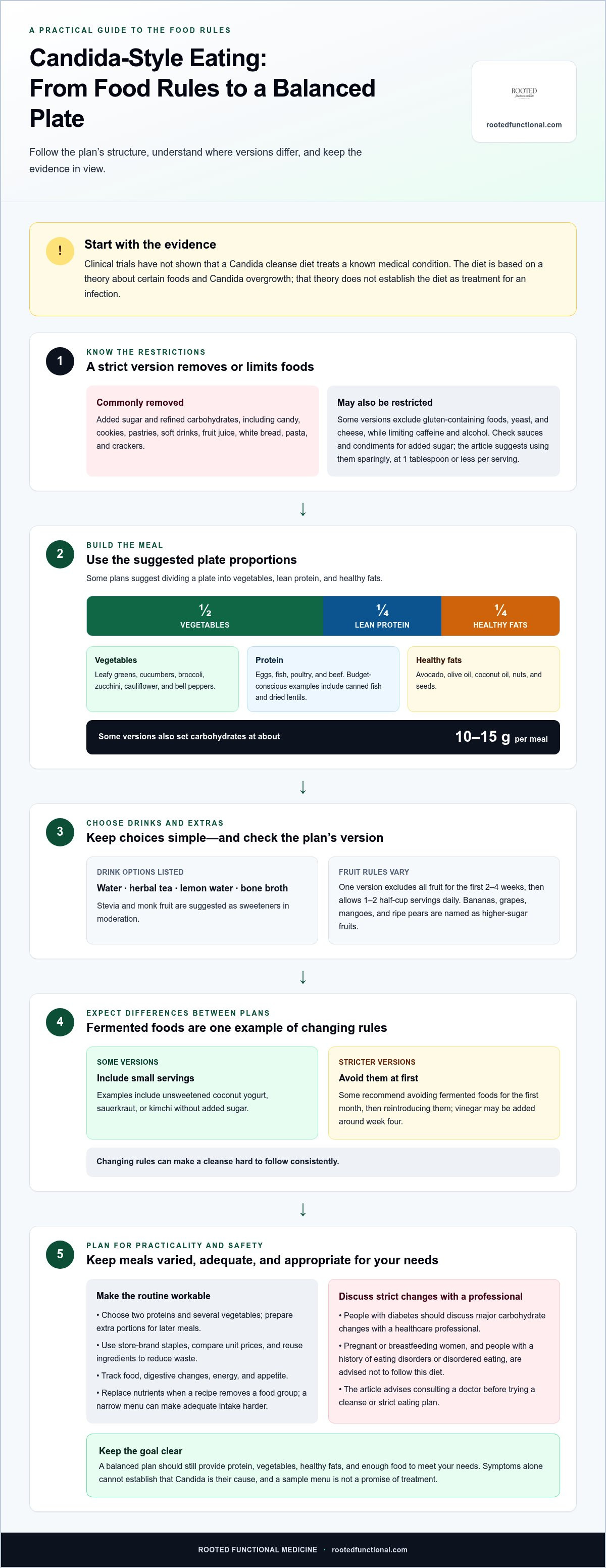
The strict version removes added sugars and refined carbohydrates, including candy, cookies, pastries, soft drinks, and fruit juice. It also avoids white bread, pasta, crackers, and pastries made with refined flour. Some versions exclude gluten-containing foods, yeast, and cheese, while limiting caffeine and alcohol. Check sauces and condiments for added sugar, and use condiments sparingly, at 1 tablespoon or less per serving.
Build meals with vegetables: Leafy greens, cucumbers, broccoli, zucchini, cauliflower, and bell peppers are listed as non-starchy options.
Add protein: Eggs, fish, poultry, and beef provide examples of a protein source for each meal.
Include healthy fats: Avocado, olive oil, coconut oil, nuts, and seeds are suggested choices.
Choose drinks carefully: Water, herbal tea, lemon water, and bone broth are options; stevia and monk fruit are suggested sweeteners in moderation.
Some plans suggest filling half the plate with vegetables, one-quarter with lean protein, and one-quarter with healthy fats such as nuts or seeds. They may set carbohydrates at about 10–15 grams per meal. Fruit rules vary: one version excludes all fruit for the first 2–4 weeks, then allows 1–2 half-cup servings daily. Bananas, grapes, mangoes, and ripe pears are named as higher-sugar fruits.
Advice about fermented foods varies, too. Some versions include unsweetened coconut yogurt, sauerkraut, or kimchi without added sugar, starting with small servings. Stricter versions recommend avoiding fermented foods for the first month, then reintroducing them, sometimes adding vinegar around week four. Such changing rules can make a cleanse hard to follow consistently.
Before changing your eating routine, consider how the restrictions might affect your energy, food variety, and daily meals. Replacing processed foods with fresh options may support general wellbeing, but that alone doesn’t show Candida caused bloating or another symptom. A balanced plan should still provide protein, vegetables, and enough food to meet your needs.
2. A Final Word on the Candida Diet: Should You Try This Plan?
A strict eating plan should have a clear purpose, not just a long list of forbidden foods. Some Candida diet guidance recommends following the plan for at least four weeks under the supervision of a qualified healthcare professional experienced in this area. Make sure meals still provide enough protein, vegetables, healthy fats, and other nutrients.
A practical seven-day sample menu can rotate familiar ingredients. For breakfast, try eggs with spinach, or unsweetened coconut yogurt with seeds if fermented foods suit your plan. Lunch could be chicken and cucumber salad or lentil soup with leafy greens. For dinner, serve baked fish with broccoli, turkey-stuffed bell peppers, or beef with zucchini. Snacks might include sliced cucumber, a boiled egg, or a small portion of seeds.
For easier meal planning, choose two proteins and several vegetables, then prepare extra portions for later meals. Roast chicken and broccoli together, for example, and use the leftovers in a lunch salad. Keep recipes simple enough to repeat. Drink water, avoid alcohol during the restrictive phase, and skip sweetened sauces. If fermented foods are excluded initially, save sauerkraut or kimchi for gradual reintroduction rather than adding them automatically.
A seven-day plan can provide structure, but it shouldn’t be treated as a promise of treatment. Track what you eat and how you feel, including digestive changes, energy, and appetite. If a recipe removes a food group, replace its nutrients with suitable alternatives rather than simply eating less. A narrow menu can make adequate nutrient intake harder and may contribute to unwanted weight changes.
People with diabetes should discuss major carbohydrate changes with a healthcare professional, since food changes can affect blood glucose management. Pregnant or breastfeeding women, and people with a history of eating disorders or disordered eating, are advised not to follow this diet. Consult a doctor before trying a cleanse or strict eating plan.
Choose the plan only if its restrictions fit your health needs and can be followed without compromising balanced eating. If symptoms persist or several food rules feel difficult to manage, a Root Cause Consultation can help you discuss your health concerns and next steps.
3. What Are the Main Symptoms of a Candida Infection?
Fatigue, headache, and poor memory are symptoms some people attribute to Candida overgrowth. “Yeast syndrome” is sometimes used as a label for this proposed pattern. These experiences can be real and disruptive, but the symptoms alone don’t establish Candida as their cause. An online symptom list cannot confirm an infection or identify the Candida species involved.
That distinction matters because Candida is common in the human digestive system, and the body can contain it without an infection. More than 150 Candida species are known, yet only 15 can cause infection. Candida albicans accounts for over half of Candida infection cases. These figures describe different things: the number of identified species, the subset capable of causing infection, and the share attributed to one species.
“Candida overgrowth” is often used broadly, but fatigue, headache, or memory concerns alone do not establish a diagnosis. These symptoms are sometimes grouped under “yeast syndrome,” a term for a supposed Candida-related condition. A symptom diary can clarify the pattern: record what you feel, when it occurs, and whether it changes with meals, sleep, or other routines. This record can support a focused conversation, not a self-diagnosis.
Diagnosing a Candida infection depends on the affected area and clinical findings. The description of digestive yeast overgrowth here names endoscopy and biopsy of the stomach lining as diagnostic methods. That differs from concluding that general symptoms prove Candida is present. Healthcare providers usually prescribe antifungal medicines for yeast overgrowth. A restrictive diet, coconut products, or healthy fats cannot replace an evaluation for a suspected infection.
Keep the distinction practical. If fatigue or poor memory is your concern, note the symptom and how it affects everyday tasks. If headaches recur, record when they begin and what else is happening then. Share those details during a healthcare visit instead of assuming “yeast syndrome” explains them. The same applies to digestive complaints: bloating alone cannot identify a Candida species or confirm an infection.
Separate food reactions from claims about infection, too. Feeling different after eating coconut, fermented foods, or another ingredient doesn’t prove Candida caused the change. Symptoms attributed to Candida overgrowth are broad, while information about species describes organisms, not an individual diagnosis. Keeping these ideas distinct can help you avoid unnecessary restrictions and focus on specific symptoms, clinical assessment, and appropriate treatment.
4. Evidence and claims about the Candida diet
Claims about the Candida diet go beyond the clinical evidence. Clinical trials have not shown that a Candida cleanse diet treats a known medical condition. A change in symptoms or food intake does not, by itself, prove that a diet cleared a fungal infection. When reviewing a study, ask what it measured: yeast counts, symptoms, or a confirmed clinical outcome.
One three-month study of 120 people with intestinal Candida overgrowth found that dietary changes significantly reduced Candida yeast counts in stool compared with no dietary change. That finding concerns stool counts. It doesn’t establish that a cleanse treats an infection or improves its effects. A separate pilot study reported normalized Candida levels three months after treatment among more patients receiving antifungal medication plus a specified diet than among patients receiving medication alone.
The pilot study tested a particular combination, not diet as a standalone treatment. Its specified diet excluded simple sugars, alcohol, cured and fatty meats, and dairy during and after antifungal treatment. That matters: results from a diet used alongside medication cannot show that removing those foods alone caused the change. Nor do they prove that the same approach works for oral, vaginal, or invasive candidiasis.
For oral, vaginal, or invasive candidiasis, dietary changes are not a substitute for antifungal medication. Healthcare providers usually prescribe antifungals for yeast overgrowth, and clinical trials have not shown that a Candida diet treats these infections. A suspected infection calls for clinical assessment, not a recipe plan alone.
Everyday recipes can still support balanced eating. For lunch, combine chicken, leafy greens, cucumber, and olive oil. For a snack, add berries if they fit your food plan. These meals may replace highly processed choices, but they are not evidence-based antifungal treatments. Similarly, reducing added sugar or refined foods can improve overall diet quality without proving Candida caused someone’s symptoms.
Interpret the evidence step by step. First, find out whether a study included antifungal treatment. Next, check whether it measured stool yeast counts or patient symptoms. Then ask whether the results apply to the specific infection being discussed. A lower count on one measure is not the same as proving a cure, and the pilot’s combined treatment does not isolate the diet’s contribution.
Proponents say some people may need many months to see a positive effect. That claim does not prove effectiveness and can make an unhelpful restrictive plan seem difficult to evaluate. Keep food changes proportionate: meals with vegetables, protein, and olive oil can be nourishing, but restrictions should not replace diagnosis or indicated treatment. The available findings point to a research question, not a confirmed diet-based treatment for fungal infection.
5. Candida diet and autoimmune paleo diet
The Candida diet and autoimmune paleo (AIP) are different plans. The Candida approach focuses on foods it claims may encourage Candida, including added sugar and refined carbohydrates. AIP is framed around autoimmune concerns. Compare the actual food rules rather than assuming the plans address the same symptoms or serve the same purpose.
For a practical comparison, list each plan’s exclusions side by side. The Candida plan may remove added sugar, white flour, gluten-containing foods, yeast, and cheese; some versions also limit fruit, caffeine, and alcohol. Then review the specific AIP plan you’re considering and note its restricted foods. Overlapping exclusions matter, as do foods removed by only one plan.
Use familiar ingredients to see how the rules affect meals. Chicken, broccoli, and olive oil can make a Candida-style meal. Check whether the same combination fits the specific AIP rules you’re following. Starchy vegetables offer another point of comparison: Candida guidance may limit them, while the rules of a particular AIP plan determine whether they remain on your menu. Don’t assume a food’s status from the diet’s name.
Restrictions can add up quickly. If one plan removes fruit and another excludes more foods, meal variety may shrink. Fatigue or difficulty planning meals can make a complicated regimen harder to maintain. Before starting, list your usual breakfasts, lunches, and dinners, then identify practical replacements for restricted ingredients. If a recipe relies on a food you plan to remove, find a suitable alternative before changing your routine.
Keep the purpose clear. Clinical trials have not shown that the Candida diet treats a known medical condition. Food restrictions alone also cannot establish the cause of autoimmune symptoms. A shared exclusion, such as gluten-containing foods, does not prove that both diets work through the same mechanism. A symptom log can record meals and changes, but it cannot diagnose Candida or explain an immune condition.
A grounded comparison comes down to three steps: define the reason for considering a diet, check its full food list, and plan balanced replacements. Include protein, vegetables, and healthy fats where the chosen rules allow them. If you’re weighing dietary changes alongside autoimmune concerns, the Autoimmune Solutions Program offers a next step for discussing root causes and personalized support. Book a Root Cause Consultation to discuss which questions and health factors should guide your next steps.
Rooted Functional Medicine: Healing Neuropathy Webinar
Rooted Functional Medicine’s Healing Neuropathy Webinar offers education for people seeking to understand neuropathy and its possible root causes. Symptoms associated with Candida do not confirm an infection, and a restrictive diet is not a substitute for diagnosis or appropriate treatment.
If ongoing health concerns leave you unsure what to address next, a Root Cause Consultation can help explore contributing factors. For questions about autoimmune health, the Autoimmune Solutions Program may be a relevant next step. These options support a broader conversation about your health rather than treating a Candida diet as a proven cure.
To explore educational or personalized support, book a Root Cause Consultation through Rooted Functional Medicine’s online calendar.
Choose a Next Step That Fits Your Health Goals
Food choices can be one part of caring for your health, but they don’t have to become a search for a single explanation. If you’re considering a natural anti-candida diet plan, focus next on the questions it raises: what symptoms need attention, what changes are sustainable, and what support would help you move forward thoughtfully.
Rooted Functional Medicine offers a Root Cause Consultation for exploring health concerns and an Autoimmune Solutions Program for people seeking support with autoimmune health. The Healing Neuropathy Webinar is an educational option for learning more about neuropathy. Each serves a different need, so choose based on the health question you want to address.
You deserve a path shaped around your concerns, not a longer list of restrictions. Book a Root Cause Consultation to discuss your next step. Keep asking informed questions and move forward with care.
Frequently Asked Questions
What is candida?
Candida is a type of yeast that can live naturally in the body, including the digestive system. Its presence alone doesn’t mean you have an infection. The term includes many species, and only some can cause infections. The key distinction is whether Candida is simply present or associated with a diagnosed infection. That matters before attributing symptoms to it or changing your diet.
A Final Word on the Candida Diet: Should You Try This Plan?
Weigh the plan’s restrictions against your health needs, daily meals, and ability to maintain a varied diet. Some guidance recommends following it for at least four weeks under the supervision of a qualified healthcare professional experienced in this area. Pregnant or breastfeeding women, and people with a history of eating disorders or disordered eating, are advised not to follow it. Discuss restrictive plans with a doctor before starting.
Does the candida cleanse diet works?
A Candida cleanse diet hasn’t been shown in clinical trials to treat a known medical condition. Replacing highly processed food with more whole foods may support general wellbeing, but that doesn’t establish a cleanse as Candida treatment. Before adopting strict rules, identify what you hope to change and consider whether the plan keeps meals balanced. Don’t use a cleanse as a replacement for care for a diagnosed infection.
How Do You Know If You Have Yeast Overgrowth?
General symptoms alone cannot establish yeast overgrowth. The described diagnostic approach for digestive yeast overgrowth includes endoscopy and biopsy of the stomach lining. If you’re concerned, record your symptoms, when they occur, and how they affect daily life, then bring that information to a healthcare visit. It can help focus the discussion, but it is not a diagnosis or a reason to self-treat.
What Are the Main Symptoms of a Candida Infection?
Fatigue, headache, and poor memory are symptoms some people attribute to Candida overgrowth; “yeast syndrome” is sometimes used for this supposed pattern. These symptoms do not confirm an infection or identify its cause. Note when each occurs and what changes alongside it, such as sleep or meals. A healthcare professional can assess the concern rather than relying on a symptom list.
What is a natural anti-Candida diet, and what foods does it include?
A natural anti-candida diet plan is a restrictive way of eating that emphasizes whole foods while limiting items its advocates believe contribute to Candida overgrowth. A sample meal might pair eggs with spinach or fish with cauliflower and avocado. Recipes vary, so check the ingredients before following a menu. The food choices do not establish an infection or replace treatment when Candida has been diagnosed.
Which foods should you avoid on a Candida diet, such as sugar, refined carbs, alcohol, and fermented foods?
Common restrictions include added sugar, candy, soft drinks, white bread, and refined-flour pastries. Some versions also avoid gluten, caffeine, and alcohol. Rules for fermented foods vary: one approach includes small servings, while another avoids them for the first month before reintroducing them. Check the rules of the specific plan you’re considering; Candida diets do not all use the same exclusions.
Is there scientific evidence that a Candida diet treats candidiasis or yeast overgrowth?
Evidence does not establish the diet as a treatment for candidiasis. A three-month study involving 120 people with intestinal Candida overgrowth reported lower stool yeast counts after dietary changes, but stool counts aren’t the same as proving infection treatment. A pilot study combined diet with antifungal medication, so it couldn’t isolate diet’s effect. These findings don’t show that diet alone treats infection.