How to Balance Hormones Naturally: Evidence-Based Steps for 2026
What if the goal isn’t to “fix” your hormones with a perfect diet or a trending supplement, but to support the everyday systems that influence hormone health? If changes in your energy, sleep, mood, or menstrual cycle have left you searching for how to balance hormones naturally, it’s understandable to want clear answers. Online advice can make it difficult to separate sensible habits from claims that promise too much.
Lifestyle choices can support overall health, but they can’t diagnose or treat every cause of persistent symptoms. You deserve practical guidance, not a list of rules that leaves you wondering whether you’re doing enough. This article covers sustainable habits that may support hormone health, why “natural” products aren’t automatically safe or effective, and when symptoms call for an individualized evaluation. It also explains how to prepare useful observations and questions for a clinician, so your next step is based on your situation rather than guesswork.
Table of Contents
What Does It Mean to Balance Hormones Naturally?
Lingering fatigue, mood shifts that feel unlike you, or changes in your menstrual cycle can be unsettling. These symptoms deserve attention, but they don’t prove that a particular hormone is “out of balance.” Hormones are chemical messengers that help coordinate processes throughout the body. Their levels vary by hormone, person, time of day, and life stage. Neither a result outside a reference range nor a symptom on an online checklist tells the whole story.
Natural hormone support means encouraging overall health, not forcing every hormone to a single ideal level. Normal fluctuations are part of how the body adapts; an endocrine disorder is a medical condition that requires individual evaluation. This distinction matters when exploring how to balance hormones naturally. The goal isn’t to chase a perfect number or promise a reset. It’s to understand what’s typical for you, build sustainable habits, and seek assessment when concerns are significant or persistent.
Which hormones and body systems are often discussed?
Hormones work across connected systems. Thyroid hormones help regulate how the body uses energy. Insulin helps move glucose from the bloodstream into cells. Cortisol helps the body respond to demands and follows daily patterns. Estrogen and progesterone participate in menstrual-cycle regulation and reproductive functions. For foundational background, see What are hormones?
These examples are not a diagnostic checklist. Sleep, appetite, energy, and mood can be influenced by multiple hormones and by factors beyond hormones. One symptom rarely identifies one cause. For example, fatigue could relate to thyroid function, sleep, stress, nutrition, another health condition, or several factors at once. A useful assessment considers the wider picture rather than relying on a single symptom or isolated lab result.
When are hormone changes a normal part of life?
Hormone patterns shift during puberty, across menstrual cycles, in pregnancy and postpartum, and through menopause. Some changes are expected at these stages, but what’s typical varies between people and over time. A change that feels new for you deserves context, especially if it is severe, persistent, or disrupting daily life.
Notice patterns without trying to diagnose yourself. Record when a symptom occurs, how long it lasts, and whether it lines up with your cycle, a life-stage transition, or a change in sleep or routine. A checklist cannot confirm an imbalance, and one symptom cannot establish a diagnosis. If a concern continues or feels significant, share your observations with a qualified clinician. Lifestyle habits can support health while you seek an assessment; they are not a substitute for evaluating a possible health condition.
How to Support Hormone Health Naturally Through Daily Habits
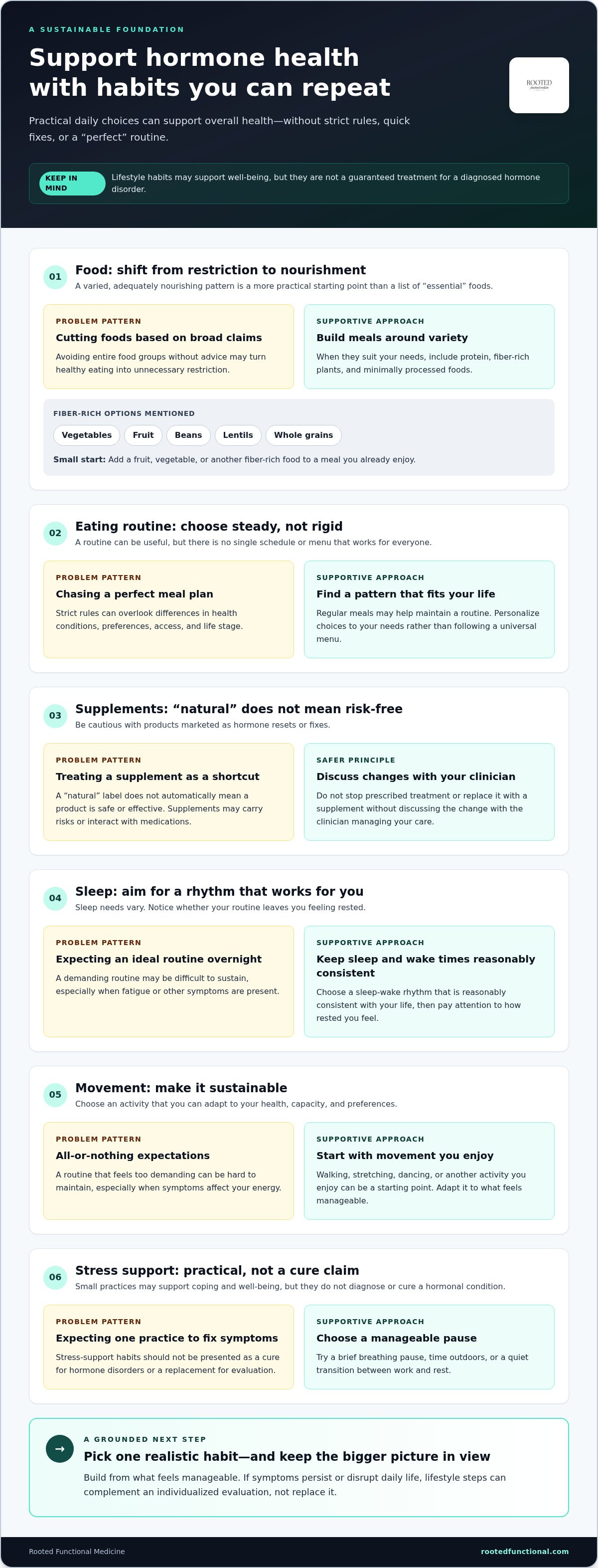
Daily habits can support overall health, but they aren’t a guaranteed treatment for a diagnosed hormone disorder. You don’t need a perfect routine or a strict “hormone-balancing” diet to make a useful start. Choose small changes you can repeat, then notice how they fit your energy, sleep, and daily life. A steady foundation is more practical than chasing a quick reset.
What eating patterns support general hormone health?
A varied, adequately nourishing way of eating is a better starting point than a list of supposedly essential foods. When they suit your needs, build meals around a source of protein, fiber-rich plants, and minimally processed foods. Fiber-rich options include vegetables, fruit, beans, lentils, and whole grains. Regular meals may help you maintain a routine, but there’s no single schedule or menu that works for everyone.
Include nourishment, not just restrictions. Avoid cutting out entire food groups based on broad online claims unless a qualified clinician has advised it for your situation.
Add variety gradually. Try adding a fruit, vegetable, or other fiber-rich food to a meal you already enjoy.
Personalize your choices. Food needs vary with health conditions, preferences, access, and life stage. Food alone may not address an underlying medical condition.
Be cautious with supplements marketed as hormone resets or fixes. “Natural” doesn’t automatically mean safe, and supplements may carry risks or interact with medications. Don’t stop prescribed treatment or replace it with a supplement without discussing the change with the clinician who manages that care.
How do sleep, movement, and stress fit in?
These habits support general well-being, but they shouldn’t be presented as cures for hormone disorders. Start with what feels manageable, especially if fatigue or other symptoms make big changes difficult. Consistency matters more than building an ideal routine overnight.
Protect a regular sleep-wake rhythm. Aim for bedtime and wake times that are reasonably consistent with your life. Sleep needs vary, so pay attention to whether your routine leaves you rested.
Choose movement you can sustain. Walking, stretching, dancing, or another activity you enjoy can be a starting point. Adapt it to your health, capacity, and preferences.
Make stress support practical. Try a brief breathing pause, time outdoors, or a quiet transition between work and rest. These practices may support coping and well-being, but they don’t diagnose or cure a hormonal condition.
For a manageable plan, pick one realistic habit and build from there. If symptoms persist or disrupt daily life, lifestyle steps can complement an individualized evaluation, not replace it. A Root Cause Consultation gives you a way to discuss persistent concerns and explore possible underlying contributors.
Can Natural Hormone-Balancing Tips Address the Real Cause?
Healthy routines can support your well-being, but they can’t reliably address every cause of ongoing symptoms. A nutrition change or new sleep routine may be worthwhile, yet it can’t establish whether symptoms relate to an endocrine condition, a medication effect, a life-stage transition, or something else. Searching for how to balance hormones naturally can offer practical ideas, but online advice can’t replace an assessment tailored to your health history.
Symptom patterns can guide a conversation, but they cannot diagnose a hormone condition. Fatigue, weight changes, low mood, and difficulty sleeping can occur for many reasons. Even symptoms often associated with hormones don’t point to one cause on their own. The pattern, timing, severity, health history, and other changes all matter. Daily habits may support health while a clinician investigates concerns that don’t improve or have no clear explanation.
Which symptoms deserve a clinician’s attention?
Consider arranging an evaluation if a change is persistent, worsening, severe, or concerning to you. This might include menstrual changes that continue or differ substantially from your usual pattern, symptoms that steadily progress without a clear explanation, or a marked decline in your energy or overall well-being. You don’t need to prove that hormones are involved before raising a concern.
Seek prompt medical care for severe or sudden symptoms. If symptoms seem like an emergency, contact local emergency services or go to emergency care. Not every common change signals a hormone problem, and waiting for a lifestyle routine to work shouldn’t delay care when symptoms are serious.
Why should you avoid self-diagnosis and unverified supplements?
Similar symptoms can have different explanations. A shift in energy or weight, for example, may relate to sleep, a health condition, medication, or a life-stage change, among other possibilities. A symptom checklist may help you describe what you’re experiencing, but it can’t distinguish these causes. A qualified clinician can consider your full context and decide whether further assessment is appropriate.
Be cautious of supplements promoted as a universal hormone fix. Products can carry risks, vary in what they contain, and interact with medications. “Natural” doesn’t automatically mean safe for you. Before starting a supplement, share its name and ingredients with a qualified clinician, especially if you take medication or have a health condition. Don’t stop, reduce, or replace prescribed treatment without guidance from the clinician who prescribed it.
Keep a simple record of what changed, when it began, and whether it’s getting better or worse. This makes the conversation more specific and can help you decide on a sensible next step. Lifestyle support has a place, but persistent or significant symptoms deserve individualized attention rather than guesswork.
How to Prepare for a More Useful Hormone Health Evaluation
You don’t need to arrive with a diagnosis or a perfect record. A few clear observations can turn “I haven’t felt like myself” into a more focused conversation. The aim is to share what has changed, understand what might need attention, and decide together whether further evaluation or testing makes sense.
Use this simple preparation sequence:
Record the symptoms. Note what you’re experiencing, when it began, and whether it is improving, staying the same, or worsening.
Look for timing patterns. If relevant, note cycle changes, sleep patterns, or whether symptoms vary at particular times.
Review recent changes. Write down changes in medications, supplements, eating patterns, or daily routine. A change may be useful context, but it doesn’t prove a cause.
Prepare your questions. Choose the concerns you most want to understand so they don’t get lost during the appointment.
What should you track before an appointment?
Keep the record simple enough to maintain. A few notes about symptom timing, cycle patterns where relevant, sleep, energy, and changes over time may be more useful than a detailed log that becomes a burden. Include medications and supplements, along with recent diet or routine changes. Share life-stage context, such as postpartum changes or menopause, if it applies. These observations support clinical assessment; they don’t replace it.
You can also bring a list of current medications and supplements, or the product labels if you have them. Be candid about what you take and how often. This gives the clinician context to consider rather than focusing on one symptom or test result in isolation.
What questions can help guide the conversation?
It’s reasonable to ask for a clear explanation of the next step. For example:
Which possible causes fit my symptom history, and what else should be considered?
Do my symptoms suggest that testing is appropriate? What could the results clarify?
How would a test result affect the plan, and what are its limits?
Which symptoms should prompt follow-up or more urgent care?
Testing isn’t one-size-fits-all. Hormone levels can vary with the hormone being measured, timing, and life stage, so a broad panel may not answer the question you actually have. Testing decisions should be guided by your symptoms, history, and clinical context. If you’re experiencing persistent weight changes, ask how they fit into the wider picture rather than assuming hormones are the cause.
A prepared conversation can help you understand what is known, what remains uncertain, and what options make sense. If persistent concerns would benefit from an individualized review of your history and appropriate lab work, you can book a Root Cause Consultation with Dr. Adrienne Guthrie. This evaluation can complement routine medical care; it isn’t a substitute for urgent or primary care.
How Rooted Functional Medicine Approaches Persistent Hormone Concerns
If symptoms continue despite thoughtful lifestyle changes, you don’t have to keep guessing or assume you’ve failed to find the right diet. Rooted Functional Medicine offers personalized evaluations for people with persistent health concerns. The focus is on understanding your history and investigating possible contributors, not promising a specific diagnosis or outcome. Learning how to balance hormones naturally can include supportive daily habits, while individualized care can help explore questions those habits can’t answer.
What happens in a Root Cause Consultation?
A Root Cause Consultation with Dr. Adrienne Guthrie, PhD, DNM, is an entry point for discussing chronic concerns and the context around them. You can share your symptoms, relevant history, and changes you’ve noticed. When appropriate, Dr. Guthrie may order and interpret advanced functional lab work to investigate possible underlying drivers. The process is guided by your individual concerns rather than a universal hormone panel or one-size-fits-all plan.
Lab work is one part of the picture, not a promise that a specific cause will be found. Whether testing is appropriate, how findings are interpreted, and what next steps may make sense depend on your history and clinical context. A consultation can help examine possible contributors, but it can’t guarantee hormone correction or symptom relief. Bring your questions and existing health information to keep the discussion grounded in what’s relevant to you.
This individualized approach can complement safe lifestyle habits and appropriate medical care. It isn’t a substitute for routine primary care, prescribed treatment, or urgent evaluation. If you’re experiencing symptoms that may require urgent attention, seek appropriate urgent or emergency care rather than waiting for a consultation.
How can telehealth make personalized care accessible?
Rooted Functional Medicine offers secure telehealth appointments nationwide, so patients can consult with the practice without traveling to an office. Telehealth supports a conversation about health history, ongoing concerns, and whether further investigation may be appropriate. It isn’t an emergency service or a replacement for primary care. Your needs and the nature of your concern guide suitable next steps.
When symptoms affect daily life, general advice may not answer your questions. A Root Cause Consultation provides space to discuss your concerns and consider possible underlying contributors through a personalized, lab-guided approach. It does not guarantee a diagnosis, a particular treatment plan, or a specific clinical result. If you’re ready for an individualized discussion, you can book a Root Cause Consultation with Dr. Guthrie.
Take the Next Step With Confidence
You don’t need to make every change at once or decode every symptom on your own. Let the question of how to balance hormones naturally lead to a steadier approach: choose habits that feel sustainable, notice what your body is telling you, and avoid treating any single change as proof of a diagnosis. Progress isn’t a test you have to pass.
If symptoms continue to affect your daily life, asking for individualized guidance is a practical next step, not a sign that you’ve failed at self-care. Bring your concerns, questions, and observations into a conversation focused on your needs. The aim is to understand what may be contributing and what next steps are appropriate for you, without assuming there is one answer for everyone.
If you’re ready to explore your concerns with Rooted Functional Medicine, book a Root Cause Consultation with Dr. Adrienne Guthrie.
Frequently Asked Questions
Is it possible to balance hormones naturally?
Healthy routines are one part of how to balance hormones naturally. They can support overall health, but they can’t guarantee correction of a diagnosed condition. What may help depends on the underlying cause, life stage, and individual health. A steady sleep or meal routine may support general well-being without treating a medical disorder. If symptoms persist or concern you, seek evaluation. Don’t replace prescribed care with unverified remedies.
Can certain foods balance hormones?
No single food reliably balances every hormone. A varied eating pattern can support general health, but individual needs differ with health history, preferences, and life stage. Adding beans or vegetables to meals may increase variety, for example, but shouldn’t be treated as a treatment for thyroid, insulin, or reproductive hormone disorders. If you’re considering a major dietary change, especially with a diagnosed condition or ongoing symptoms, discuss it with a qualified clinician.
How long does it take to balance hormones naturally?
There isn’t a universal timeline for hormone-related symptoms to change. The pace depends on the cause, life stage, and whether lifestyle changes are relevant to the concern. Avoid judging progress by a fixed number of days or adding supplements when nothing changes. Note what you adjust and what follows. If symptoms persist, worsen, or disrupt daily activities, arrange a clinical assessment rather than waiting for a guaranteed result.
What happens if hormone symptoms continue despite lifestyle changes?
Arrange a clinical evaluation rather than assuming you need a stricter routine. Bring a brief symptom timeline, a medication and supplement list, and notes about relevant changes, such as a shift in sleep schedule or cycle pattern. Similar symptoms can have different causes, so a clinician can review your context and decide whether testing is useful. Continue safe habits that work for you, and don’t change prescribed medication without guidance.
Can stress cause hormone imbalance?
Stress can affect body systems and influence sleep, mood, and overall well-being, but it isn’t the only possible explanation for symptoms. A demanding period may coincide with changes, yet timing alone doesn’t prove stress caused a hormone disorder. Try a manageable practice, such as a brief breathing pause or a regular wind-down routine. If symptoms are severe, persistent, or accompanied by other concerning changes, seek clinical guidance too.
Do I need hormone testing if I feel tired or have mood changes?
Not necessarily. Fatigue and mood changes are nonspecific, and they don’t automatically indicate a hormone problem or mean a broad panel is needed. A clinician can consider when symptoms began, your health history, medications, and other changes before deciding whether testing could answer a useful question. If you already have results, ask what a measured marker can and can’t show in your situation rather than interpreting a number alone.