Does Sugar Make Neuropathy Worse? What the Evidence Says
What if one sweet snack isn’t the same as months or years of high blood sugar? If you’re wondering, “does sugar make neuropathy worse,” the answer is more nuanced than a simple yes or no. Persistently elevated blood glucose can contribute to nerve damage, but one food or short-term glucose rise doesn’t automatically explain a change in symptoms.
It’s understandable to feel uncertain when advice about sugar and carbohydrates seems to conflict, especially when you’re worried about symptoms progressing. Food choices can be part of the bigger picture, but they don’t tell the whole story. Having neuropathy is not a reason to blame yourself.
This article explains how long-term glucose patterns differ from short-term changes, how diabetes and other health factors may relate to nerve health, and what information may help you discuss your concerns with a healthcare professional. You’ll also learn how measures such as A1C and glucose readings may support that conversation. The goal is to help you identify a useful next step, not to encourage you to change or stop prescribed care on your own.
Table of Contents
Does sugar make neuropathy worse? The direct, nuanced answer
If you’re asking whether sugar could be connected to your nerve symptoms, that’s a reasonable question. It doesn’t mean you caused them. Chronically elevated blood glucose is a major risk factor for diabetic neuropathy, but one sweet food doesn’t instantly damage nerves, and blood sugar isn’t the explanation for every person’s neuropathy.
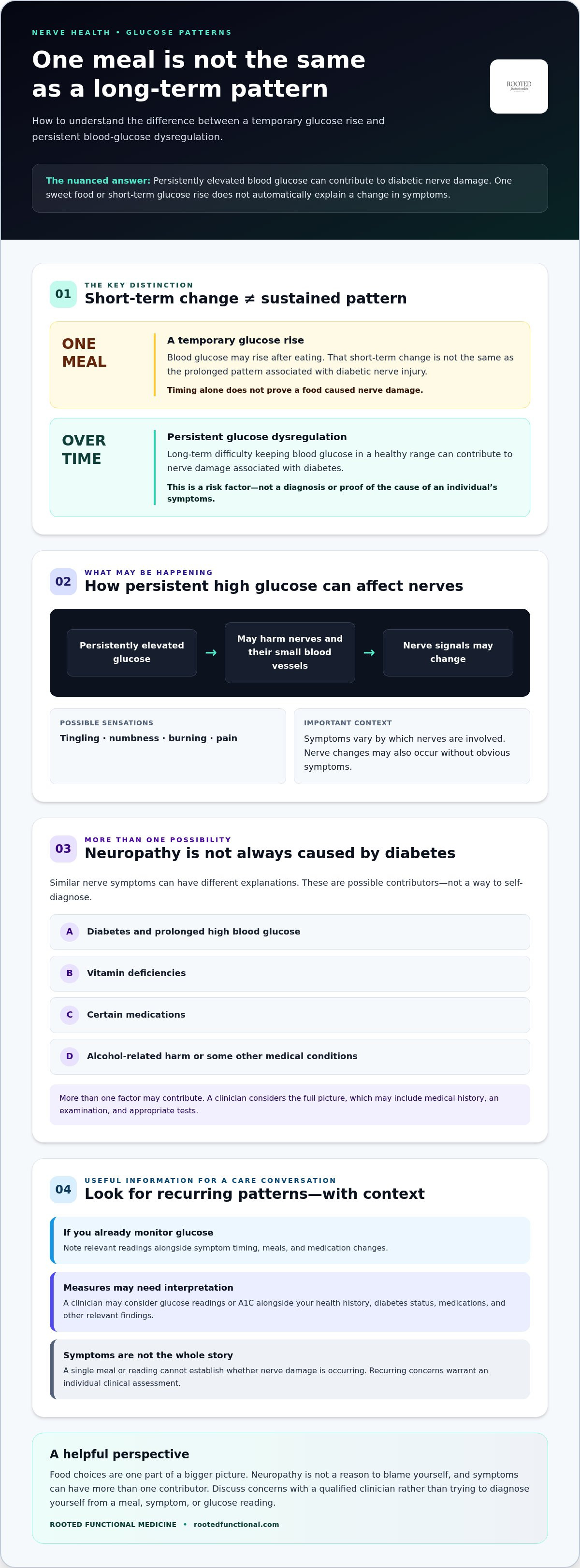
In short: Long-term difficulty keeping blood glucose in a healthy range can contribute to nerve damage associated with diabetes. A temporary rise after a meal is different from the persistent glucose dysregulation linked to diabetic neuropathy. Symptoms and causes vary, so recurring concerns warrant an individual clinical assessment.
What does the sugar-and-neuropathy connection actually mean?
Blood glucose is the sugar circulating in your bloodstream. In diabetes-related neuropathy, the concern is a prolonged pattern of elevated glucose and disrupted glucose regulation, not a single meal or dessert. Over time, this pattern is associated with harm to nerves and the small blood vessels that help supply them. The Diabetic neuropathy overview describes nerve problems linked with diabetes, which can affect different nerves and cause different symptoms.
That connection matters, but it isn’t the whole story. Neuropathy can occur for reasons other than diabetes, and more than one factor may contribute. Even if you eat little added sugar or don’t have a diabetes diagnosis, persistent tingling, numbness, burning, or pain still deserves attention. This root-cause guide to neuropathy explains why it can be useful to look beyond one possible factor.
Does one sugary meal immediately damage nerves?
No single meal can establish that nerve damage has occurred. Blood glucose may rise temporarily after eating, but that short-term change is not the same as the longer-term pattern associated with diabetic nerve injury. If symptoms feel worse after a particular meal, the timing alone doesn’t prove the food caused nerve damage. Symptoms can fluctuate for many reasons.
Rather than blaming yourself or removing whole food groups after one difficult day, look for recurring patterns and discuss them with a qualified clinician. If symptoms return, note when they happen and any relevant meals or glucose readings, if you already monitor them. Your healthcare team can interpret that information alongside your health history and consider whether diabetes, another cause, or a combination of factors may be involved.
How chronic high blood glucose can affect peripheral nerves
Peripheral nerves carry messages between your brain, spinal cord, and the rest of your body. With diabetes, persistently elevated blood glucose can harm nerves and the small blood vessels that supply them. The National Institute of Diabetes and Digestive and Kidney Diseases explains this connection in its overview of Diabetic Neuropathies.
One way to understand the process is that ongoing glucose dysregulation can affect nerve tissue and its blood supply. Affected nerves may then send signals differently, and a person may experience tingling, numbness, burning, or pain. Symptoms vary depending on which nerves are involved. Nerve changes may also be present without obvious symptoms, so how you feel alone may not tell the whole story.
Diabetes and prolonged high blood glucose are established risk factors for diabetic neuropathy, but that risk factor alone doesn’t diagnose diabetes or prove the cause of one person’s symptoms. A clinician considers the full picture, which may include medical history, an examination, and appropriate tests.
Why long-term glucose patterns matter more than one food
A glucose rise after eating is a short-term change. Sustained blood-glucose dysregulation is a broader pattern that may place ongoing stress on nerves and their supporting blood vessels. These are not the same thing. One reading or meal cannot establish whether nerve damage is occurring.
Glucose measurements need context. A clinician may interpret them alongside your health history, diabetes status, medications, and other relevant findings. If you already monitor glucose, bring your readings to your care team rather than trying to diagnose yourself from them.
Why neuropathy is not always caused by diabetes
Peripheral neuropathy has multiple possible causes. Diabetes is one important possibility, but others can include vitamin deficiencies, certain medications, alcohol-related harm, and some other medical conditions. These examples aren’t a way to self-diagnose. They’re a reminder that similar sensations can have different explanations, and more than one factor may be relevant.
So, does sugar make neuropathy worse? Long-term glucose problems can contribute to diabetes-related nerve damage, but they don’t explain every case or predict exactly how symptoms will change. If you’re concerned about glucose patterns or recurring symptoms, discuss both with a qualified clinician. A Root Cause Consultation with Rooted Functional Medicine offers an opportunity to discuss your health context and possible contributors.
Sugar, carbohydrates, and neuropathy: what the evidence does, and does not, show
It’s easy to hear “cut sugar” and wonder whether every carbohydrate is harmful to your nerves. The evidence is more specific: managing blood glucose is important for diabetes care and nerve-health risk, but that doesn’t mean one food causes neuropathy or that a particular diet repairs established nerve damage.
Is added sugar different from all carbohydrates?
Sugar is one type of carbohydrate, but carbohydrate-containing foods aren’t nutritionally identical. Sweetened drinks and desserts may contain added sugars. Fruit, beans, and grains also contain carbohydrates, along with varying amounts of fiber and other nutrients. How a food affects blood glucose can depend on the food, portion, what else you eat with it, and your individual response.
This is why broad food rules can be misleading. If you have diabetes or use glucose-lowering medication, discuss nutrition changes with your healthcare team. Your needs, medications, and glucose readings matter. Don’t make a major change to your eating pattern or medication plan based on a symptom flare or a general online rule.
Can blood sugar changes make symptoms feel worse?
Nerve symptoms can vary from day to day, but a flare after eating doesn’t prove that a particular food caused nerve injury. Short-term glucose changes and long-term nerve damage are different questions. A food diary may help you notice timing or recurring patterns, but it can’t diagnose the cause on its own.
If you already monitor glucose, bring relevant readings to your clinician alongside notes about symptoms, meals, and medication changes. Together, you can consider whether the pattern matters in your health context.
So, does sugar make neuropathy worse? Sustained blood-glucose problems can be important to diabetes management and nerve-health risk, but that doesn’t mean avoiding one food treats established neuropathy. Focus on an individualized plan and get guidance before making significant changes.
Managing Neuropathy and Sugar Concerns
Uncertainty can make it tempting to change your diet or medication quickly. A steadier approach is to record what’s happening, review relevant information with a clinician, and agree on what to do next. This makes the conversation more specific without assuming a meal caused your symptoms.
What information should you bring to a clinician?
Before your appointment, jot down details that may help explain the pattern. You don’t need a perfect record. A few clear notes can guide the discussion.
Where you feel symptoms, when they began, and whether they’re changing.
How symptoms affect daily activities, such as walking, sleeping, or using your hands.
Relevant meals or symptom timing, medication changes, and glucose readings if you already monitor them.
Existing glucose or laboratory records, plus an up-to-date list of medications and supplements.
You might ask: “Could diabetes or my glucose patterns be relevant to my symptoms? What other possible causes fit my history? What follow-up makes sense?” Your clinician can interpret readings and records in context rather than relying on one symptom or measurement alone.
When should neuropathy symptoms be assessed promptly?
Arrange a clinical assessment for new or worsening numbness, pain, weakness, or balance problems. Don’t wait to see whether a diet change resolves symptoms before raising them. If symptoms are sudden or severe, or you believe you may be having a medical emergency, contact emergency services or seek emergency care.
Don’t stop or change prescribed medication based on this article. Talk with the clinician who manages your treatment before making medication changes. Food choices may be part of a broader health conversation, but they aren’t a substitute for diagnosis or medical care.
If you’re asking, “does sugar make neuropathy worse,” bring that concern to your healthcare team along with relevant notes or readings. You can also discuss your symptoms and health history in a Root Cause Consultation with Rooted Functional Medicine.
For general information about neuropathy, you can also review a neuropathy information resource.
A personalized path forward when sugar may be part of the neuropathy picture
There isn’t one food rule that explains everyone’s nerve symptoms. A useful next step is to bring your questions and health history together, then consider what they may mean in your individual context. Sugar could be relevant for some people, but it shouldn’t be assumed to be the cause or treated as a personal failing.
What individualized neuropathy support can explore
A personalized review may consider where and when symptoms occur, how they’ve changed, your medical history, existing test results, and any glucose information you already track. Looking at these details together can help identify questions and possible contributing factors to discuss. Any further testing or care plan should be based on your circumstances, not a one-size-fits-all protocol.
This exploration can complement, not replace, care from your existing healthcare professionals. Share relevant recommendations and records, and keep coordinating about diagnosis, medications, and follow-up. Don’t stop prescribed treatment or delay urgent assessment while pursuing an educational or functional-medicine approach.
How to take the next step without feeling blamed
Neuropathy can have multiple contributing factors. A symptom flare after a particular meal doesn’t prove you caused nerve damage, and you don’t need to make drastic food changes to deserve help. Bring your questions and relevant health information to a clinical conversation.
If you’re still asking, “does sugar make neuropathy worse,” Rooted Functional Medicine’s Healing Neuropathy Webinar offers an educational next step for learning more about neuropathy. The webinar is for education, not diagnosis or urgent care, and it does not promise a particular outcome.
If you’d like to discuss your health context and possible next steps, you can book a conversation. Start with what you’ve noticed and what you’d like to understand.
Take a clearer next step for your nerve health
So, does sugar make neuropathy worse? Sustained high blood glucose can contribute to diabetic nerve damage, but one sweet food doesn’t tell the whole story. Carbohydrate foods affect people differently, and neuropathy can have causes beyond diabetes. Your symptoms and health history deserve individual attention, not blame.
Bring your questions, symptom notes, and any glucose information you already track to a conversation with your healthcare team. Don’t stop prescribed care or make major medication changes based on food advice alone. A thoughtful review can help you understand which factors may be relevant and what follow-up makes sense.
Rooted Functional Medicine offers a Healing Neuropathy Webinar for people seeking educational information about neuropathy. Led by Dr. Adrienne Guthrie, PhD, DNM, the practice also provides care through secure telehealth nationwide. Education and individualized discussion can help you explore your questions without promising a particular result.
To discuss your health context and possible next steps, book a Root Cause Consultation. Start with one question and take the next step with support.
Frequently Asked Questions
Does eating sugar make neuropathy worse?
Eating one sugary food doesn’t automatically worsen nerve damage, but persistently high blood glucose can contribute to diabetic neuropathy. The answer to “does sugar make neuropathy worse” depends on the broader pattern and your health context, not one meal alone. If you have diabetes or recurring nerve symptoms, discuss glucose management and your symptoms with a clinician rather than blaming yourself or making drastic diet changes.
Can cutting out sugar reverse neuropathy?
No. Cutting out sugar can’t be relied on to reverse neuropathy, and there’s no single food change that guarantees nerve repair. Managing blood glucose may be part of reducing further risk for people with diabetes, but established nerve symptoms need individualized medical assessment. Before making major dietary changes, especially if you take glucose-lowering medication, discuss a safe and sustainable plan with your healthcare team.
Can high blood sugar cause tingling or numbness?
Yes. Over time, high blood glucose associated with diabetes can contribute to nerve damage, which may cause tingling, numbness, burning, or pain. These symptoms can also have other causes, so they don’t confirm diabetes or prove glucose is responsible. If numbness or tingling is new, recurring, or worsening, arrange a clinical assessment and share any glucose information you already track.
Are carbohydrates bad for people with neuropathy?
No. Carbohydrates aren’t universally harmful for people with neuropathy. Foods such as fruit, beans, grains, and sweetened drinks differ in their nutrients and how they affect blood glucose. The food, portion, and individual response all matter. If you have diabetes or use glucose-lowering medication, ask your healthcare team how to make nutrition changes safely. Avoid restrictive rules based on the idea that all carbohydrates damage nerves.
Can blood sugar spikes cause a neuropathy flare?
A symptom flare after a glucose rise or meal doesn’t prove that the change caused nerve injury. Nerve symptoms can fluctuate, and timing alone can’t identify the cause. If you notice a recurring pattern, record when symptoms occur and note relevant meals, medication changes, and glucose readings if you already monitor them. Bring those notes to a clinician rather than trying to diagnose the flare yourself.
What should I do if I have neuropathy and diabetes?
Discuss your nerve symptoms and glucose management with your healthcare team. Bring existing glucose or laboratory records, a current medication and supplement list, and notes about symptom location, changes, and effects on daily activities. Ask what follow-up is appropriate and whether other factors may be relevant. Don’t stop or change prescribed medication based on food advice or this article. Seek prompt assessment for new or worsening symptoms.
Does neuropathy always mean I have diabetes?
No. Neuropathy has multiple possible causes, and tingling, numbness, or pain doesn’t by itself mean you have diabetes. Other potential contributors can include vitamin deficiencies, certain medications, alcohol-related harm, or other medical conditions. A clinician can assess your symptoms and history and decide whether glucose testing or another evaluation is appropriate. Don’t assume the cause from symptoms alone.