Functional Medicine Hormone Doctor: What to Expect
Updated: 7 days ago
What if hormone symptoms need more context, not just another lab result? If low energy, disrupted sleep, mood changes, or weight shifts are affecting daily life, it can feel discouraging when initial tests don’t explain how you feel. Searching for a functional medicine hormone doctor may be your way of looking for someone who will take the whole picture seriously.
Your symptoms and health history matter, but they don’t point to one guaranteed diagnosis or treatment. A thoughtful evaluation connects what you’re experiencing with relevant health details and interprets lab results in context, rather than treating a number as the whole story.
In this article, you’ll learn what a root-cause hormone evaluation may involve, what information and questions to bring, and how to think about a useful next step. Rooted Functional Medicine’s Root Cause Consultation offers a structured first conversation about persistent symptoms and health history, with personalized, lab-guided care led by Dr. Adrienne Guthrie, PhD, DNM. The goal is clarity and a more informed conversation about your health, not a promised outcome.
Table of Contents
What Does a Functional Medicine Hormone Doctor Do?
Sleep that no longer feels restorative. Energy that dips without a clear explanation. Changes in mood, weight, or menstrual patterns. These experiences can be frustrating, especially if earlier results haven’t answered your questions. They deserve attention, but they don’t automatically mean a hormone imbalance is the cause. Stress, medications, other health factors, and life changes may also contribute.
A functional medicine hormone evaluation considers symptoms, health history, and relevant findings together to guide an individualized discussion of possible next steps. It is an assessment, not a diagnosis by itself or an automatic recommendation for hormone treatment. For someone searching for a functional medicine hormone doctor Sacramento, the useful question is whether the care makes room for the full health picture rather than focusing on one symptom or lab result.
Which symptoms can prompt a hormone-related conversation?
Changes in sleep, energy, mood, weight, or menstrual patterns can be worth discussing, particularly when they persist or affect everyday life. The timing and pattern can help give those symptoms context. For example, note when a change began, whether it comes and goes, and whether it seems connected to a life or medication change.
These signs have multiple possible contributors, so a symptom list alone can’t confirm a hormone problem. An individualized assessment can help organize what you’re experiencing and determine what questions deserve further attention. Avoid trying to diagnose yourself from a single symptom or an isolated test result.
How does functional hormone care differ from a treatment-first approach?
A thoughtful assessment starts with your experience and history. It considers symptom patterns and relevant clinical context before deciding whether testing may be useful. If labs are part of the evaluation, their meaning depends on the broader picture; a result should not be treated as a stand-alone explanation. Testing and treatment decisions should be individualized, and hormone therapy isn’t the default answer to every concern.
Functional medicine is often discussed within the broader category of alternative medicine, a category that includes varied approaches and attracts critical scrutiny from scientific and medical communities. That makes clear explanations especially valuable: you should be able to understand what an assessment can and cannot establish, and why a suggested next step fits your circumstances.
Rooted Functional Medicine’s personalized, lab-guided approach begins with a Root Cause Consultation, a structured opportunity to discuss persistent symptoms and relevant health history. Led by Dr. Adrienne Guthrie, PhD, DNM, the consultation can help clarify which concerns to explore and what a reasonable next step may be. It doesn’t promise a particular diagnosis or outcome.
How a Root-Cause Hormone Evaluation Connects Symptoms and Lab Findings
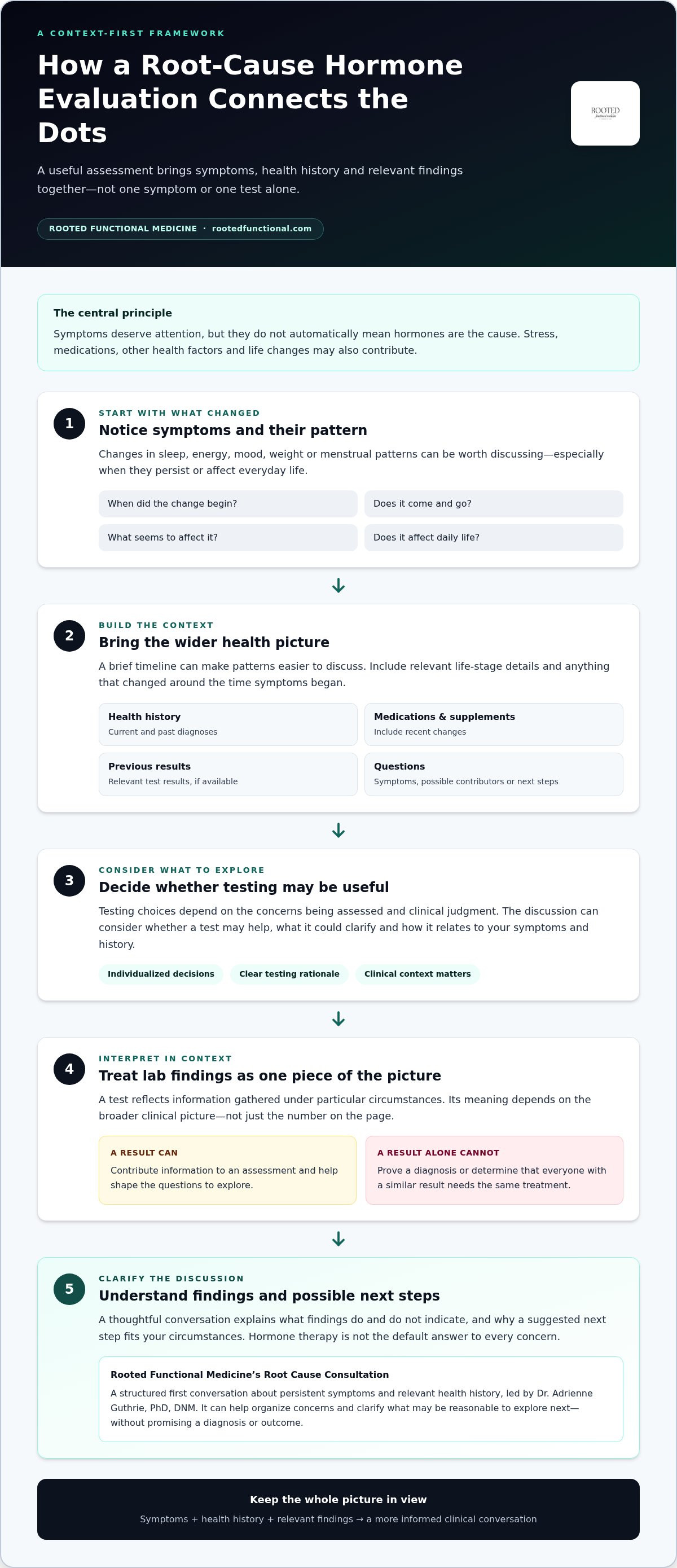
A useful evaluation builds a clearer picture from several pieces of information, not one symptom or one test. The timing of a change, your health history, medications, and relevant clinical findings can all shape what questions to explore. This context helps keep the conversation focused on your experience rather than jumping to a conclusion.
A lab result is one piece of the clinical picture, not a diagnosis or treatment decision on its own. That distinction matters if earlier testing left you with more questions than answers.
What information may help make sense of hormone-related symptoms?
Before an appointment, note when symptoms began, how they’ve changed, and whether anything seems to affect them. A brief timeline can reveal patterns that are hard to recall in the moment. Include relevant life-stage details, since individual circumstances and health history can shape the discussion.
It may also help to gather:
Current and past diagnoses
Medications and supplements, including recent changes
Previous relevant test results, if available
Questions about symptoms, possible contributors, or next steps
These details don’t establish a cause by themselves. They help a clinician understand what’s changed and consider which factors may be relevant.
What can hormone lab results, and their limits, tell you?
Testing choices depend on the concerns being assessed and clinical judgment. A clinician may consider whether testing is useful, what a result could clarify, and how it fits with your symptoms and history. Hormones are part of the endocrine system; the National Cancer Institute describes endocrinology as the study and treatment of disorders of the endocrine system.
A test reflects information gathered under particular circumstances. It can contribute to an assessment, but a single result doesn’t prove a diagnosis or mean everyone with a similar result needs the same treatment. The meaning depends on the broader clinical picture, and results should be explained with appropriate follow-up, including what they do and don’t indicate.
Rooted Functional Medicine’s personalized, lab-guided approach considers findings alongside your health history and concerns. If you’re ready to organize persistent symptoms into a more focused conversation, a Root Cause Consultation can be a structured first step toward discussing appropriate next steps.
How to Compare Hormone Care Without Assuming Every Symptom Needs Hormones
Hormone-related symptoms can raise the question of treatment, but symptoms alone don’t establish that hormones are the cause or that hormone therapy is the right next step. A careful approach makes room for assessment first, then a clear discussion of options. For anyone looking for a functional medicine hormone doctor Sacramento, the quality of that process matters as much as the treatment being considered.
Use these points to understand what a thoughtful evaluation should make clear:
What questions help you assess a hormone care approach?
Listen for clear reasoning, not pressure toward a predetermined plan. You should be able to understand how your symptoms and history shape testing decisions, what the findings can and can’t establish, and what options may be considered. If something is uncertain, that should be explained plainly. Ask how follow-up will work and how information from your existing care can be taken into account.
Why is a personalized plan different from a standard hormone protocol?
People can share a symptom, such as disrupted sleep or low energy, while having different health histories and possible contributing factors. Personalization means the assessment and next steps reflect those differences. It doesn’t mean one particular therapy is suitable for everyone, or that a broader evaluation will necessarily lead to hormone treatment.
How to Prepare for Your First Functional Medicine Hormone Appointment
If you’ve felt rushed or unsure how to describe what’s been happening, a little preparation can help you make the most of the conversation. You don’t need to arrive with a diagnosis. Bring the details that help explain your experience, and be clear about what you hope to understand. If you’re searching for a functional medicine hormone doctor Sacramento, these steps can help you prepare for a more focused discussion.
What should you bring to a hormone-related consultation?
Use this checklist before scheduling or attending an appointment:
Write a symptom timeline. Note when each concern began, how often it occurs, how severe it feels, and how it affects daily life. Include patterns or changes you’ve noticed.
Gather relevant records. Bring previous test reports and a current list of medications and supplements. Include the dose if you know it, and note any recent changes.
Choose your main goals. Write down what you most want help clarifying, such as a persistent symptom pattern or what prior findings mean to you.
Prepare a few questions. Note what you want to understand about evaluation, possible next steps, and follow-up so you don’t have to rely on memory during the visit.
A concise list is enough. You’re not expected to solve the puzzle before you arrive. The goal is to give the clinician a useful starting point.
What questions should you ask during the appointment?
Questions can help you understand the reasoning behind an evaluation and make the conversation collaborative. Consider asking:
How will my symptoms and health history shape any testing recommendations?
What can a result clarify, and what can’t it establish on its own?
How will we discuss possible next steps and follow-up?
How can proposed care fit with my existing clinicians or prescribed treatment?
It’s reasonable to want clear explanations. You should understand why a test or next step is being considered, and have space to discuss uncertainty and how the plan relates to your current care.
Rooted Functional Medicine’s Root Cause Consultation information outlines a structured first conversation for discussing persistent concerns and relevant health history. If you’re ready to take that step, book a Root Cause Consultation and bring your notes, records, and questions.
Rooted Functional Medicine’s Root-Cause Approach to Hormone Concerns
It can be discouraging to leave a health conversation still unsure what your symptoms mean. Rooted Functional Medicine’s Root Cause Consultation provides a structured starting point to discuss hormone-related concerns alongside your broader health history and goals. Care is personalized and lab-guided, led by Dr. Adrienne Guthrie, PhD, DNM. The focus is on understanding your individual picture and considering appropriate next steps, not promising a particular diagnosis or outcome.
What can patients expect from a Root Cause Consultation?
The consultation creates space to explain what you’ve been experiencing, when concerns began, and what you hope to clarify. Relevant health history and goals help shape the discussion. You can bring prior results and questions so they can be considered as part of the conversation.
Lab information may contribute to an individualized assessment when appropriate. Any relevant functional lab work and its interpretation depend on the clinical picture and clinical judgment. A lab result is not a stand-alone diagnosis, and the consultation doesn’t guarantee specific testing, treatment, or a particular explanation for symptoms.
Appointments are available in person and through secure telehealth nationwide, subject to applicable requirements for clinical care. This gives patients an access option while keeping the focus on an individual discussion of their concerns.
How can a consultation support a clearer next step?
A first conversation may help organize what is known, identify questions that need more attention, and clarify possible contributors to symptoms. Recommendations depend on your circumstances and the information available. That may mean discussing relevant findings, considering whether further assessment is appropriate, or outlining another reasonable next step. There’s no assumption that hormone therapy is automatically needed.
You deserve to have your concerns heard and the reasoning behind next steps explained in a way you can understand. Bring the questions that matter most to you, and be open about what you want the conversation to help clarify. The aim is a more informed path forward, not a guaranteed answer in one visit.
If you’re ready to discuss your concerns and explore an individualized next step, you can book a Root Cause Consultation.
Take a Clearer Next Step for Your Health
Persistent changes in energy, sleep, mood, weight, or menstrual patterns can be difficult to make sense of, especially when initial results haven’t answered your questions. A thoughtful hormone-related evaluation considers symptoms and health history together, with lab findings interpreted in context. And symptoms don’t automatically mean hormone therapy is the answer. Testing and next steps should reflect your individual situation.
If you’re looking for a functional medicine hormone doctor Sacramento, Rooted Functional Medicine offers a personalized Root Cause Consultation led by Dr. Adrienne Guthrie, PhD, DNM. It creates space to discuss your concerns, history, and goals, then consider appropriate next steps. Lab-guided care is available through secure telehealth nationwide, as well as in person. The consultation is a starting point for a clearer conversation, not a promise of a particular diagnosis or outcome.
You deserve to have your concerns heard and understand the reasoning behind your next step. Bring your questions, share what’s been affecting daily life, and begin with a conversation focused on your health. Book a Root Cause Consultation when you’re ready to explore a more personalized path forward.
Frequently Asked Questions
Can hormone imbalance cause fatigue, mood changes, or weight changes?
Hormone changes can be one possible contributor to fatigue, mood changes, or shifts in weight, but these symptoms can have other explanations too. Sleep patterns, medications, other health conditions, and life circumstances may all be relevant. Rather than trying to identify a hormone based on one symptom, note when the change began and how it has evolved. A practitioner can review that pattern alongside your health history.
What tests does a functional medicine hormone doctor run?
Testing depends on your symptoms, history, and clinical context. A practitioner may review existing results or consider additional lab work if it could help assess your concerns. There isn’t one test panel that fits everyone, and testing isn’t automatically necessary for every symptom. Ask what a proposed test is meant to clarify, how its findings will be interpreted, and whether the results could affect possible next steps.
Do I need hormone therapy if my hormone levels are abnormal?
No, an abnormal result doesn’t automatically mean hormone therapy is needed. The finding should be interpreted alongside your symptoms, history, and other relevant information. A practitioner can explain what the result may indicate, what remains uncertain, and whether options are appropriate to discuss, including potential benefits, risks, and alternatives. Don’t start, stop, or change prescribed hormone medication without discussing it with the clinician who prescribed it.
How should I prepare for a hormone appointment?
Write down your main concerns and when they began, including how they’ve changed and affected daily life. Bring a current medication and supplement list, relevant previous test results, and questions about evaluation and follow-up. You might note whether symptoms affect sleep, energy, mood, or everyday activities. A brief timeline can help you explain patterns clearly, especially if it’s difficult to recall details during an appointment.
Can I see a functional medicine practitioner through telehealth?
Yes, Rooted Functional Medicine offers secure telehealth appointments nationwide, subject to applicable requirements for clinical care. A telehealth consultation can provide space to discuss symptoms, health history, and possible next steps. Recommendations remain individualized, and the appointment isn’t a substitute for emergency or urgent medical services. Bringing relevant records and questions can help make a remote conversation focused and useful.
What should I look for when choosing a hormone doctor?
Look for an approach that takes your concerns seriously, explains why testing may be useful, and clarifies what findings can and can’t establish. You should be able to discuss uncertainty, possible options, and follow-up without being told one treatment suits everyone. It also helps to understand how recommendations may fit with your existing care. Clear explanations and shared decision-making can make the next step feel more informed.