Root Cause of Brain Fog and Fatigue: How Habits and Health Play a Role
The root cause of brain fog and fatigue differs from person to person. Brain fog describes symptoms, not a diagnosis, and may involve forgetfulness, slower thinking, difficulty concentrating, or mental exhaustion. Sleep problems, dehydration, poor nutrition, alcohol, medications, and health conditions can all contribute.
When your mind feels cloudy and your energy stays low, everyday tasks can take more effort. That doesn’t mean you’re imagining it, or that there’s one simple explanation.
Here, you’ll learn what brain fog can feel like and how habits and health may contribute, including sleep, diet, hydration, alcohol, activity, medications, and underlying conditions. Understanding the possible causes can help you recognize patterns and know when persistent or worsening symptoms deserve medical attention.
Table of Contents
Medication side effects
Yes. Medications, supplements, alcohol, and recreational drugs can contribute to brain fog and fatigue. Their effects may overlap with sleep problems, dehydration, or health conditions, so note when symptoms begin and what changes around that time.
Medication-Related Brain Fog and Fatigue
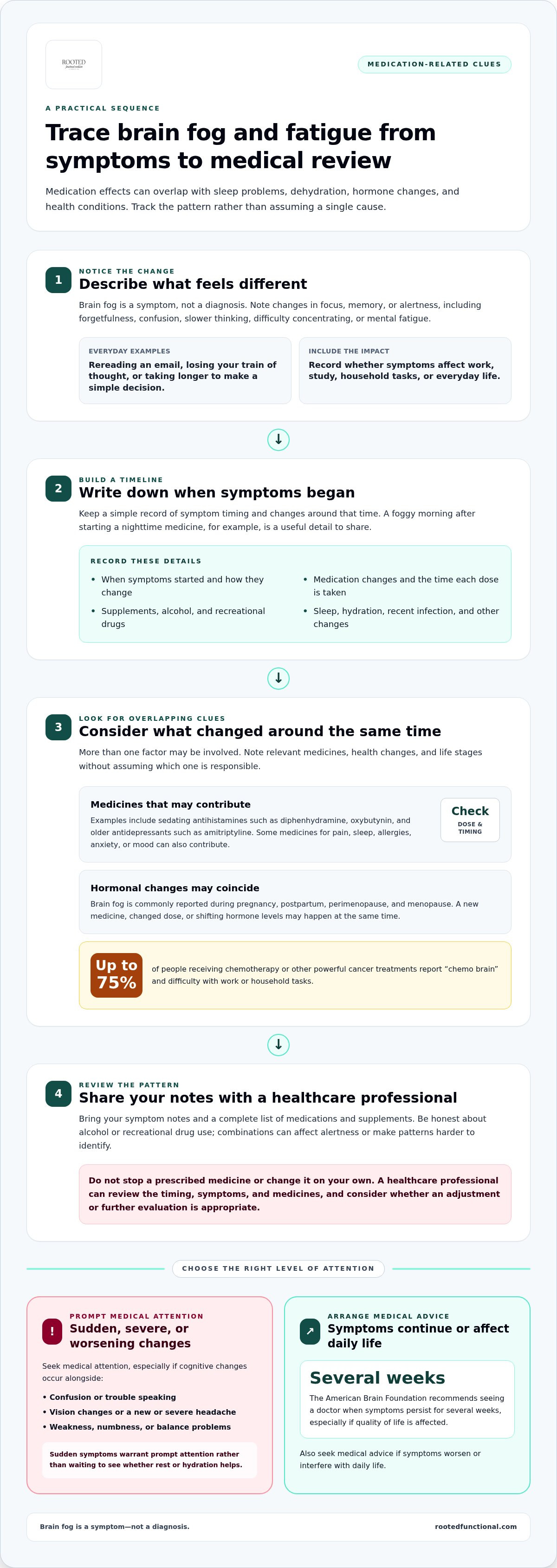
Medication-related brain fog is a change in focus, memory, or alertness that may occur as a side effect. Sedating antihistamines such as diphenhydramine, oxybutynin, and older antidepressants such as amitriptyline are examples associated with cognitive symptoms. Some medicines for pain, sleep, allergies, anxiety, or mood can also contribute. A foggy morning after starting a nighttime medicine, for example, is a useful detail to share.
Cancer treatment can affect thinking, too. Up to 75% of people receiving chemotherapy or other powerful cancer treatments report “chemo brain” and difficulty with work or household tasks. Keep a record of when symptoms began, medication changes, and the time each dose is taken. Include supplements, alcohol, and recreational drugs in that record; combinations can affect alertness or make patterns harder to identify.
Hormonal Changes and Medication Effects
Hormonal changes and medication effects can happen at the same time, making fatigue or mental cloudiness harder to trace to one cause. Brain fog is commonly reported during pregnancy, postpartum, perimenopause, and menopause. A new medication, a changed dose, or shifting hormone levels may also coincide with symptoms. Note when symptoms began and how that timing relates to these changes.
For example, someone who notices fog during menopause and after starting a sedating allergy medicine has two relevant details to report. Don’t assume the symptoms are simply hormonal or stop a prescribed medicine on your own. A healthcare professional can review medications, supplements, timing, and symptoms, then consider whether an adjustment or further evaluation is appropriate.
Recognizing Warning Signs and Seeking Care
Sudden, severe, or worsening cognitive changes are warning signs, especially alongside other neurological symptoms. Seek medical attention for confusion, trouble speaking, vision changes, a new or severe headache, weakness, numbness, or balance problems. Sudden symptoms warrant prompt attention rather than waiting to see whether rest or hydration helps.
If brain fog persists for several weeks, worsens, or interferes with daily life, seek medical advice. The American Brain Foundation recommends seeing a doctor when symptoms persist for several weeks, especially if quality of life is affected. Bring symptom notes and a complete list of medications and supplements. Be honest about alcohol or recreational drug use, as these details may help clarify possible causes.
Brain fog symptoms
Brain fog describes changes in thinking, not a diagnosis or a measure of intelligence. Symptoms can include forgetfulness, confusion, slower thinking, difficulty concentrating, and mental fatigue. More than 28% of adults report experiencing brain fog at some point. The experience varies: one person may lose their train of thought during a conversation, while another struggles to follow a familiar recipe or finish routine work.
Brain fog can affect several mental tasks at once. You might reread an email, forget why you entered a room, or need longer to make a simple decision. Fatigue can intensify the impact, making concentration harder as the day goes on. Brain fog alone doesn’t show that someone is developing a neurological disease, but persistent changes that interfere with daily activities deserve attention.
Management starts with noticing what makes symptoms better or worse. Write down examples, when they happen, and what else is going on, such as poor sleep or a recent infection. Use a calendar, reminders, and written notes to reduce the load on working memory. Cleveland Clinic recommends short breaks of about 30 minutes to help avoid overworking the brain. Psychotherapists trained in cognitive behavioral therapy may also teach strategies for managing symptoms.
After a viral infection, cognitive symptoms can include trouble concentrating, remembering information, or thinking clearly. The CDC lists brain fog as a neurological symptom of long COVID, and post-infection symptoms can last for weeks or months. This can be frustrating when recovery from the infection hasn’t brought your usual energy or focus back. Record changes over time and share them with a doctor, including how symptoms affect work, study, or everyday tasks.
Prevention means reducing avoidable strain, not blaming yourself for symptoms. For example, break a demanding task into smaller parts, write down key details after a conversation, and pause when focus begins to fade. If depression or hormonal changes coincide with cognitive symptoms, include that context in your notes; it may help a doctor assess the full picture. Persistent difficulties are a reasonable reason to discuss ongoing cognitive symptoms with a healthcare professional.
What Chronic Conditions Cause Frequent Brain Fog?
Frequent brain fog can accompany chronic conditions, nutrient deficiencies, and inflammation. The symptom pattern and other changes can help clarify what needs attention.
Chronic Conditions and Cognitive Dysfunction
Cognitive dysfunction means changes in focus, memory, or information processing that can occur alongside ongoing health conditions. Diabetes, thyroid disorders, anemia, high blood pressure, and depression are examples associated with cognitive symptoms. Treating brain fog as an isolated problem may miss a broader health pattern. For instance, difficulty concentrating alongside persistent fatigue may warrant considering both symptoms together.
Keep a simple record of when your mental clarity changes and what else is happening. Note whether symptoms track with a known condition, changes in daily functioning, or other new concerns. A physician may ask about symptom changes over time, activity, medications, supplements, nutritional deficiencies, infections, and inflammatory conditions. This history puts cognitive changes in context instead of assuming a single cause.
Nutrient Deficiencies and Metabolic Conditions
Low iron, vitamin B12, or folate can affect nerve function and oxygen delivery, potentially contributing to brain fog. Vitamin B12 deficiency is a particular consideration for adults over 50. Eating patterns can be one part of the picture, but symptoms alone cannot identify a deficiency. Diabetes and low blood sugar are also possible contributors, making metabolic health relevant when fogginess occurs alongside changes in energy.
For example, note whether difficulty thinking occurs alongside known diabetes symptoms or changes in eating routines. Share the pattern with a healthcare professional, who can consider your history and whether blood tests are appropriate. Thyroid disorders can also affect cognition; thyroid-related brain fog often begins improving within weeks of starting medication. Tracking symptoms alongside treatment changes can help clarify the timeline.
Autoimmune and Inflammatory Conditions
Autoimmune conditions occur when immune activity targets the body’s own tissues, and some are associated with brain fog. Some conditions involving immune system activity may be associated with brain fog. Research suggests immune-related inflammation in the brain may temporarily make information processing more difficult. This possibility is relevant when concentration changes occur alongside symptoms of an established inflammatory or autoimmune condition.
Record cognitive changes alongside other symptoms rather than treating each as unrelated. For example, note whether fogginess changes during a flare of lupus or fibromyalgia symptoms. This timeline can help a clinician understand how the experience varies. It doesn’t establish a diagnosis, but it provides concrete information when evaluating the underlying condition and its possible connection to cognitive function.
Illnesses and Underlying Conditions
Brain fog can accompany infections and other underlying conditions, including long COVID, migraines, Lyme disease, and urinary tract infections. It can also occur with menopause, anxiety, depression, ADHD, and some autistic experiences. A fever during the flu or COVID-19 may coincide with fogginess, while post-infection symptoms can continue after the acute illness.
Consider the full timeline: when an infection began, when cognitive symptoms appeared, and whether they persist or worsen. Long COVID and other ongoing conditions may need evaluation beyond lifestyle changes alone. Based on your history, a physician may consider blood tests, nutritional deficiencies, or inflammatory conditions. Tracking patterns across eating, daily function, and symptoms can help clarify which factors deserve attention.
Sleep, diet, hydration, alcohol, and activity
Daily habits can influence alertness, memory, and mental energy. Sleep, food, fluids, alcohol, and movement can offer useful clues.
Sleep Disruption and Sleep Duration
Sleep disruption and short sleep can leave the brain less able to focus and remember. Most adults need 7 to 9 hours of quality, uninterrupted sleep each night. Consistently getting 5 to 6 hours can produce cumulative cognitive deficits, while one poor night may leave the brain sluggish.
Track sleep alongside daytime energy and concentration. If a short night precedes difficulty completing familiar tasks, note the pattern. Sleep-related brain fog can lift within days, depending on its cause. A regular bedtime and limiting screen use in the hour before bed may support better sleep habits.
Sleep Quality and Sleep Disorders
Time in bed doesn’t always mean the brain has rested well. Insomnia, sleep apnea, and circadian rhythm disorders can prevent the brain from fully resting, contributing to daytime fog and fatigue. Someone who sleeps through the night but wakes unrefreshed may have a different pattern from someone who is repeatedly awakened.
Notice what disrupts rest, including irregular sleep timing or waking often. Cleveland Clinic recommends avoiding caffeine after 2:00 p.m. as part of sleep hygiene. If poor sleep and daytime concentration problems continue together, share both with a healthcare professional instead of focusing on sleep duration alone.
Sleep Disorders and Chronic Illness
Chronic illness and sleep problems can overlap, making it harder to identify what drives fatigue or impaired function. For example, diabetes can coincide with brain fog, while menopause can bring cognitive symptoms and changes that affect sleep. Cancer chemotherapy may also be associated with cognitive difficulties, so sleep is only one part of the health picture.
Record sleep quality alongside changes in symptoms or health. Note whether low energy follows a restless night, occurs during illness, or persists despite adequate rest. That timeline can help distinguish sleep-related patterns from other factors, including an underlying condition or immune-related inflammation.
Nutrition, Hydration, Alcohol, and Activity
The brain relies on a steady supply of energy and fluids to support concentration and memory. It uses nearly 20 percent of the body’s total energy and nutrient supply. The brain is around 75% water, and losing just 1 to 2 percent of body water can measurably impair concentration, short-term memory, and mental agility.
Review eating patterns, fluid intake, and alcohol use alongside periods of fog. Poor nutrition, dehydration, and alcohol use can contribute; even mild dehydration may affect focus. Regular exercise can also help alleviate symptoms. Cleveland Clinic recommends 30 minutes of physical activity each day as a measure that may help with brain fog. Choose a manageable activity, such as a brisk walk, and notice how energy and focus respond.
Common causes of brain fog
Yes. Lack of sleep, chronic stress, anxiety, and depression can contribute to brain fog and fatigue. Cleveland Clinic identifies chronic stress as one possible contributor, though symptoms can also reflect other factors.
Doctors assess symptom patterns, health history, and possible triggers. They may ask about activity, medications, supplements, nutritional deficiencies, infections, inflammation, and changes over time. Evaluation can include blood tests, cognitive function tests, and a neurological exam; an EEG, CT scan, or advanced MRI may also be considered.
Common causes often overlap. Poor sleep can intensify stress, while anxiety or depression can affect concentration and energy. Poor nutrition, dehydration, and alcohol or drug use may also contribute. Feeling foggy after several short nights and a stressful week, for example, gives useful timing details to share, but the pattern alone doesn’t establish the cause.
Illness can create another clue. Brain fog may occur during the flu, COVID-19, or another infection, especially when fever is present. Long COVID, migraines, Lyme disease, and urinary tract infections are also associated with brain fog. Note whether symptoms began during an illness, followed it, or changed as other symptoms improved.
Metabolic and nutrient-related factors deserve attention, too. Diabetes and low blood sugar can contribute, while low vitamin B12, vitamin D, or iron levels are linked with brain fog. Anxiety, depression, hormonal changes during pregnancy or menopause, and thyroid disorders can also play a role. The combination of symptoms and health history helps guide evaluation.
Look for patterns instead of blaming one habit or condition. Record when fogginess appears, what else is happening, and how it affects a specific task, such as following a meeting or managing household finances. Include stress, sleep changes, recent infection, and known chronic disease. This timeline gives a doctor concrete examples and may reveal connections that are easy to miss day to day.
Finding the root cause of brain fog and fatigue means considering several possibilities together, not assuming every case has one explanation. A clinician weighs symptom timing, medical history, medications, and examination findings when deciding which tests are relevant. Blood tests may investigate possible deficiencies or other health factors, while cognitive and neurological assessments help describe the changes.
If ongoing symptoms are disrupting daily life, schedule a root-cause consultation to discuss the patterns and health factors you’ve noticed.
Rooted Functional Medicine: Healing Neuropathy Webinar
Rooted Functional Medicine’s Healing Neuropathy Webinar offers educational support for people exploring neuropathy and its possible root causes. If brain fog or fatigue occurs alongside neuropathy symptoms, the webinar may help you learn more about that related concern. For persistent symptoms with several possible contributing factors, a Root Cause Consultation provides a setting to discuss your health history and patterns. People managing autoimmune conditions or Type 2 diabetes may also explore the Autoimmune Solutions Program or Type 2 Diabetes Reversal Program, respectively. These offerings are not substitutes for urgent medical care, especially when cognitive changes are sudden or severe. If you’d like to discuss which next step fits your concerns, you’re invited to contact Rooted Functional Medicine.
Turn What You’ve Noticed Into a Clear Next Step
You don’t have to figure out every symptom before asking for support. Bring your questions, health history, and observations to a focused conversation. This can help you explore the root cause of brain fog and fatigue without assuming one explanation fits everyone.
Rooted Functional Medicine offers a Root Cause Consultation for people seeking a closer look at contributing health factors. Its Healing Neuropathy Webinar may be relevant if neuropathy is among your concerns, while the Autoimmune Solutions Program offers support for those seeking care around autoimmune health. Each addresses a different need, so begin with the concern that matters most to you.
If persistent symptoms are affecting your daily life, take the next step at your own pace. Contact Rooted Functional Medicine to discuss your concerns. You deserve to feel heard, and a thoughtful conversation can help you move forward with greater clarity.
Frequently Asked Questions
What is brain fog?
Brain fog describes changes in thinking; it isn’t a medical diagnosis. It can make familiar tasks feel less automatic. You might lose track of a conversation, struggle to choose words, or reread a short message several times. Describe the specific change, when it began, and how it differs from your usual thinking. Those details help distinguish mental cloudiness from ordinary tiredness.
How Does Brain Fog Impact Daily Life?
Brain fog can make work, conversations, and home responsibilities harder to manage. You might miss details in a meeting, forget an appointment, or need extra time to finish a routine task. Multitasking may also feel unusually demanding. Note which activities are affected and whether the problem changes throughout the day. Specific examples help explain the impact to people supporting you and to a healthcare professional.
How quickly can brain fog improve once the cause is treated?
Improvement depends on the cause and how it responds to treatment. Sleep-related brain fog can lift within days, while thyroid-related fog often begins improving within weeks of starting medication. Brain fog linked to nutritional deficiencies typically improves over 4 to 12 weeks of supplementation. These timeframes describe different possible causes, not a guaranteed schedule. Track symptoms and treatment changes so you can discuss the response with your healthcare professional.
When should brain fog be treated by a healthcare provider?
Seek medical advice if brain fog persists for several weeks, worsens, or interferes with your quality of life. Get prompt medical attention for sudden or severe cognitive changes, confusion, trouble speaking, vision changes, weakness, numbness, balance problems, or a severe or unusual headache. Don’t wait for a routine appointment when these warning signs appear. A clear account of when symptoms began helps communicate what has changed.
What are the most common causes of brain fog and fatigue?
Common contributors include poor sleep, stress, poor nutrition, dehydration, alcohol or drug use, medication effects, and health conditions. Several factors may be present at once. A demanding week, disrupted sleep, and a new medication, for example, may overlap, making one cause difficult to identify from symptoms alone. A brief daily record of sleep, energy, medication changes, and concentration can reveal patterns to discuss during an evaluation.
Which medical conditions can cause brain fog and fatigue, such as anemia, thyroid disorders, or sleep apnea?
Yes. Anemia, thyroid disorders, diabetes, high blood pressure, autoimmune diseases, and sleep disorders can involve cognitive symptoms. Sleep apnea may interrupt restorative sleep, while thyroid problems can affect energy and thinking. Depression, anxiety, lupus, multiple sclerosis, and fibromyalgia are also associated with brain fog. The combination matters: note whether cognitive changes occur alongside other health changes, and share that timeline during a medical assessment.
Can vitamin B12, iron, or vitamin D deficiencies cause brain fog and fatigue?
Low levels of vitamin B12 or iron can contribute to brain fog; low folate is another possible factor. Vitamin D deficiency is also linked with brain fog. These deficiencies can’t be confirmed by symptoms alone, since fatigue and concentration problems have many possible causes. A healthcare professional can consider your health history and blood tests to assess nutrient levels. Avoid starting high-dose supplements without guidance, especially when you take other medications.
Can long COVID or other infections cause persistent brain fog and fatigue?
Yes. Brain fog can follow COVID-19 and other infections, and post-infection symptoms can last for weeks or months. The CDC lists brain fog as a neurological symptom of long COVID. A timeline can be useful: record when the infection began, when thinking changes appeared, and whether they continue or worsen. Contact a healthcare professional if symptoms persist or disrupt daily activities, and seek prompt attention for sudden or severe changes.