Natural Approach to Psoriasis and Gut Health: What the Evidence Says
Updated: 7 days ago
What if the gut-skin connection is worth exploring, but isn’t the whole explanation for your psoriasis? If recurring plaques, itching, or flares have you searching for answers, conflicting claims about “gut imbalance,” food sensitivities, and supplements can make it hard to know what’s safe or supported. A natural approach to psoriasis and gut health starts with curiosity, not the assumption that the gut causes psoriasis or that one change will clear your skin.
Research is exploring how the gut microbiome and inflammation may relate to psoriasis. But an association isn’t proof of cause, and natural strategies aren’t a replacement for effective psoriasis care. A balanced approach matters, especially if you use prescribed treatment and want to avoid changes or supplements that could interfere.
This article explains what current evidence suggests about the gut-skin connection, which everyday habits may support overall health, and where claims outpace the research. You’ll also learn how to approach food changes and supplements cautiously, when digestive symptoms may call for individualized attention, and how lab-informed functional medicine can help organize questions without treating a test as proof of a psoriasis cause.
Table of Contents
Psoriasis and Gut Health: What Does the Connection Really Mean?
Researchers use the term gut-skin axis for proposed two-way communication between the digestive system and skin through immune activity, microbial signals, and inflammation. It’s a framework for investigation, not a confirmed explanation for every case of psoriasis. A Psoriasis: An Overview can help set the foundation: psoriasis is a complex, immune-mediated inflammatory condition, and its symptoms and course vary.
A gut-skin association may guide research, but it doesn’t prove that gut dysfunction causes psoriasis or that treating the gut will treat someone’s skin.
What researchers mean by the gut-skin axis
The digestive tract contains communities of microbes that interact with the body’s immune system. Researchers are studying whether microbial signals and immune responses may influence skin inflammation, and whether skin inflammation may relate to wider immune activity. These pathways make a gut-skin relationship biologically plausible. They don’t establish a standard diagnosis or show that a particular gut-focused intervention will improve psoriasis for a specific person.
Terms such as dysbiosis and increased intestinal permeability often appear in wellness discussions. They refer to proposed changes in microbial balance or the gut barrier, but shouldn’t be assumed to affect everyone with psoriasis. The label “leaky gut” doesn’t, by itself, explain a person’s plaques, and skin appearance can’t confirm that the gut barrier is impaired.
Why a gut connection does not mean psoriasis is caused by the gut
Psoriasis develops through interacting factors that can include genetic susceptibility, immune activity, and environmental influences. The balance differs from person to person. Digestive symptoms may occur alongside psoriasis, but two conditions occurring together don’t establish that one caused the other. A change in bowel habits, for example, deserves attention on its own terms rather than being automatically attributed to psoriasis or presumed to explain a flare.
Skin symptoms alone cannot diagnose a digestive condition, food sensitivity, dysbiosis, or intestinal permeability. Those conclusions require appropriate clinical assessment and, when useful, testing interpreted in context. Don’t treat an online symptom checklist or a single lab result as proof of a root cause. A careful natural approach to psoriasis and gut health leaves room for investigation while respecting what remains uncertain.
This distinction doesn’t mean digestive health is irrelevant. It means the question should be explored thoughtfully, based on your symptoms and history, rather than answered with a one-size-fits-all claim. The next step is to consider what different natural approaches may support, where psoriasis-specific evidence is limited, and how to weigh safety alongside ongoing psoriasis care.
How Gut Microbes, Immunity, and Inflammation May Interact
To understand why researchers are interested in the microbiome, picture a chain of possible signals, not a proven route from gut imbalance to skin plaques. Microbes in the digestive tract interact with the immune system and produce substances that may affect immune activity. Researchers are exploring whether those signals could influence inflammatory processes involved in psoriasis. The pathway is plausible, but plausibility alone doesn’t show that changing the microbiome improves skin symptoms.
The gut-skin hypothesis helps researchers ask how body systems may communicate. It cannot, by itself, identify the cause of an individual’s psoriasis or prescribe a proven gut-based treatment.
What the microbiome research can tell us
The microbiome is a complex community of microorganisms, shaped by multiple influences. It isn’t a simple score that weighs “good” bacteria against “bad” bacteria. Differences between people may reflect diet, health history, medicines, and other factors. A finding in a group doesn’t automatically explain what is happening in one person.
A 2024 review of integrative therapies includes microbiome-related approaches such as probiotics. The available summary identifies what the review considered, but doesn’t provide enough detail to assess its full findings, limitations, or the quality of individual studies. It would be misleading to use that summary to claim that a particular probiotic, microbiome pattern, or gut protocol is established psoriasis care.
That distinction matters. Even if a study observes differences in gut microbes among people with psoriasis, it may not show whether those differences came before the condition, followed it, or relate to another factor. Microbiome research also doesn’t establish one universal imbalance shared by everyone with psoriasis, or one corrective protocol that works for all.
Why psoriasis symptoms and digestive symptoms do not prove a shared cause
Digestive discomfort and psoriasis can occur in the same person for different reasons. Bloating after a meal, for example, could relate to that food, portion size, or another digestive issue. It doesn’t demonstrate that the meal triggered a skin flare or that a gut problem caused psoriasis. Timing can offer clues, but it can’t confirm cause on its own.
If you notice both skin changes and digestive symptoms, keep a brief record rather than trying to diagnose yourself. Note the date, relevant foods, digestive symptoms, stress or illness, and whether your skin changed. Patterns may help you have a more focused conversation with your care team. Don’t start restrictive diets or supplements based only on a suspected link.
New, severe, or persistent digestive symptoms deserve appropriate clinical evaluation, whether or not psoriasis is present. If you want help organizing questions about your health history and possible contributing factors, a Root Cause Consultation can support individualized exploration without treating a microbiome result as proof of a psoriasis cause.
Comparing Natural Approaches to Psoriasis and Gut Health
Natural strategies can support broader health, but they don’t all serve the same purpose or have the same level of evidence. A nourishing eating pattern may support general wellbeing; a symptom log can help you notice patterns; a supplement may carry risks as well as possible benefits. None should be presented as a guaranteed way to clear psoriasis or as a replacement for prescribed care.
Use this comparison to prepare for a more informed conversation with your care team.
Diet changes: focus on nourishment, not unsupported elimination rules
A balanced, sustainable eating pattern is a more sensible starting point than cutting out multiple foods based on broad online claims. Choose meals that provide variety and meet your needs, rather than expecting any one food or diet to clear psoriasis. If you’re considering major changes, especially if your food choices are already limited, discuss them with a qualified clinician to help protect your nutrition.
Probiotics and supplements: evidence and safety come first
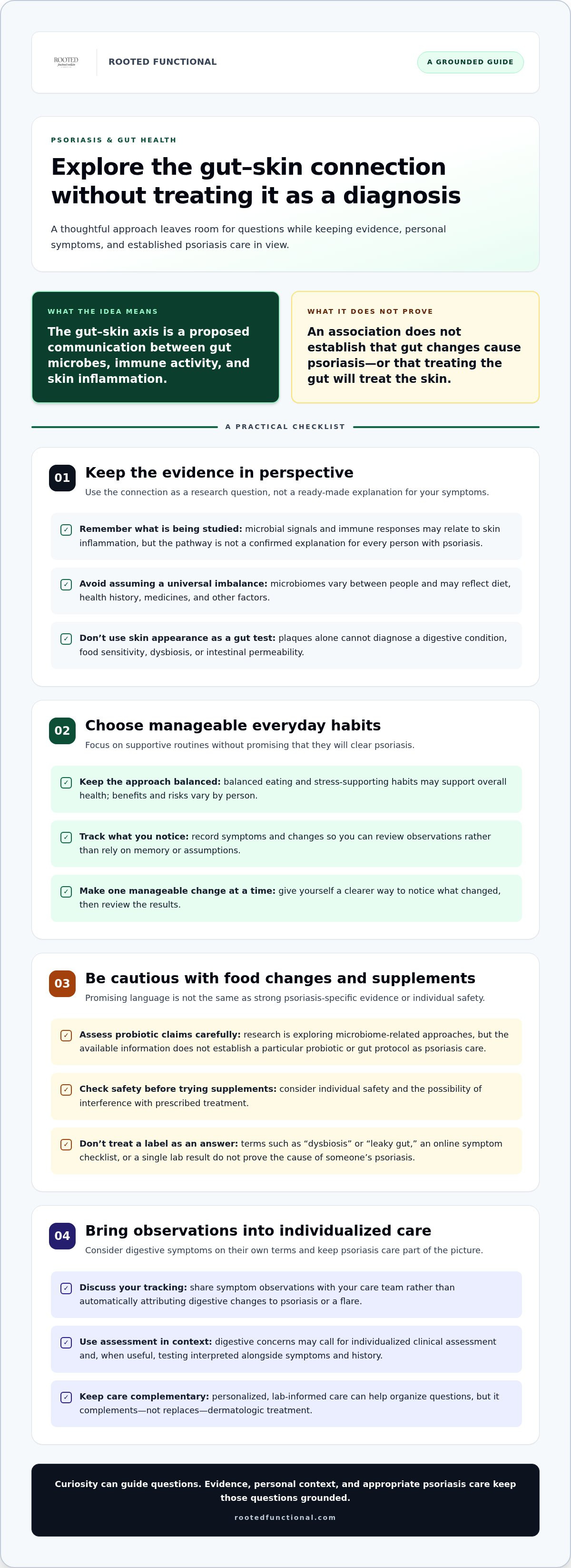
A Safe, Practical Way to Explore the Gut-Skin Connection
Curiosity about digestion shouldn’t leave you guessing or trying five changes at once. A simple process can help you explore possible patterns without turning a food diary into a diagnosis or disrupting psoriasis care. Keep the goal modest: gather useful observations, make one manageable adjustment, and review what you learn with your care team.
Track patterns without turning the diary into a diagnosis
Keep notes brief and consistent. Record the date, noticeable skin changes, digestive concerns, sleep, stress, and any major changes to your routine. You don’t need to track every bite or sensation. A short entry such as “itching increased; poor sleep; stomach discomfort after dinner” is more practical than trying to monitor everything. These notes can help you prepare focused questions, but they can’t prove what caused a flare.
Try this four-step approach:
Document symptoms. Note skin and digestive changes alongside sleep, stress, and significant routine changes.
Choose one manageable habit. Pick a realistic step, such as keeping regular meal times or adding a relaxing pause to your day.
Review what you notice. Look for patterns over time without assuming that a change in symptoms proves cause and effect.
Discuss your observations. Bring your notes and questions to your clinician, especially before making major diet changes or trying supplements.
Make changes gradually and protect established care
Changing several things at once makes it hard to tell what, if anything, mattered. Avoid beginning multiple diets or supplements together. Instead, choose one low-risk habit and keep other routines steady where possible. If you’re considering a supplement or a substantial diet change, discuss it in light of your medications, health history, and nutritional needs.
Keep following your prescribed psoriasis treatment while you evaluate lifestyle changes. Don’t stop or adjust medication based on a diary, an online claim, or a suspected food trigger. Contact your care team if psoriasis is worsening or you develop concerning new symptoms. Severe, new, or persistent digestive problems also deserve appropriate clinical evaluation.
This steady approach can help you explore the natural approach to psoriasis and gut health without treating the gut-skin hypothesis as a diagnosis. For a wider discussion of root-cause thinking in autoimmunity, see Natural Treatments for Autoimmune Diseases: Root Cause Guide. If you’d like individualized help organizing questions about symptoms and health history, book a Root Cause Consultation. Lab-informed care can explore selected health questions in context, but it doesn’t establish that the gut caused psoriasis or replace dermatologic treatment.
How Personalized Functional Medicine Can Support Your Next Steps
When psoriasis keeps recurring, it’s understandable to want a clearer picture of the factors that may be relevant to your health. Personalized functional medicine can offer a structured way to review your symptoms, digestive concerns, health history, current care, and goals. It doesn’t assume that the gut is causing psoriasis. It helps organize questions worth exploring in your individual context.
What an individualized root-cause conversation can explore
At Rooted Functional Medicine, consultations are led by Dr. Adrienne Guthrie, PhD, DNM. The conversation can begin with what you’ve noticed: changes in your skin, digestive symptoms, past health concerns, and approaches you’ve already tried. Your current psoriasis care and priorities matter too. This gives the discussion a personal starting point rather than applying the same protocol to everyone.
When appropriate, advanced functional lab work may be selected and interpreted in context. Testing is not a universal psoriasis panel, and a result cannot, on its own, prove that a particular gut issue caused skin symptoms. Findings can inform further questions and discussion, but they don’t predict a guaranteed response or replace dermatologic assessment and treatment.
If digestive discomfort is part of your concern, the related article Gut Health & Bloating: Finding the Real Root Cause offers another perspective on exploring digestive symptoms without assuming one explanation fits everyone.
When a consultation may be a useful next step
Individualized support may be useful if you have persistent concerns, overlapping symptoms, or a growing list of conflicting online recommendations and want help organizing them. Rooted Functional Medicine also offers the Autoimmune Solutions Program for individualized autoimmune support. This is not a psoriasis cure, and it isn’t a substitute for care from your dermatology team or a reason to stop prescribed treatment.
Care is available through secure telehealth nationwide. If a structured review of your history and questions feels like a helpful next step, you can book a Root Cause Consultation. The aim is thoughtful exploration, not a promise that testing or a natural approach to psoriasis and gut health will produce a particular skin outcome.
Take the Next Step With Curiosity, Not Guesswork
You don’t need to solve every possible trigger before you can move forward. Turn your concerns into clear questions: What patterns have you noticed? Which changes feel realistic? What would be safe alongside your current psoriasis care? This can help you explore the natural approach to psoriasis and gut health without treating every flare as evidence of a gut problem.
Keep your care team involved as you consider changes, and give yourself permission to move at a steady pace. If you’d value help sorting through your health history and deciding which questions may merit further exploration, a personalized root-cause consultation offers a structured place to begin. Care is led by Dr. Adrienne Guthrie, PhD, DNM, and includes personalized, lab-informed functional medicine. Secure telehealth appointments are available nationwide.
Book a personalized root-cause consultation to explore your next steps with support that takes your concerns seriously while keeping evidence, safety, and your ongoing psoriasis care in view.
Frequently Asked Questions
Is psoriasis linked to gut health?
Researchers are studying possible relationships among gut microbes, immune signaling, and psoriasis. That makes a connection worth exploring, but an observed association or plausible pathway doesn’t show that gut dysfunction caused your psoriasis. The condition involves several interacting influences, so one gut explanation won’t fit everyone. Gut-focused habits may support general health, but they aren’t established psoriasis cures or substitutes for appropriate care.
Can improving gut health clear psoriasis?
No reliable promise can be made that improving gut health will clear psoriasis. A natural approach to psoriasis and gut health may include habits that support overall well-being, but skin responses differ, and evidence for specific gut-directed treatments remains limited. Adding a food or supplement, for example, doesn’t guarantee fewer plaques. Keep prescribed care in place, and discuss substantial diet changes or supplements with a qualified clinician.
What foods should I avoid if I have psoriasis and digestive symptoms?
There’s no universally established elimination diet for psoriasis. Rather than removing foods named on an online trigger list, note whether the same food is repeatedly followed by a digestive symptom and discuss the pattern with a clinician. Persistent discomfort may have explanations unrelated to psoriasis. If a structured food change makes sense, plan it to maintain adequate nutrition and avoid cutting out broad food groups without guidance.
Are probiotics effective for psoriasis?
Probiotics aren’t one uniform treatment, so a result involving one product can’t automatically be applied to another. Effects may vary with the strain, formulation, person, and health condition. Research interest in gut microbes doesn’t establish probiotics as a psoriasis cure or a replacement for medical care. Before trying one, review the specific product with a clinician, particularly if you take medication or have an underlying health condition.
Can stress affect psoriasis and digestive symptoms?
Stress may coincide with changes in skin symptoms or digestive comfort, but the pattern differs between people and doesn’t prove one shared cause. If you suspect a connection, note stressful periods alongside changes in sleep, digestion, and skin. Consider realistic supports, such as a calming bedtime routine or brief relaxation breaks. These can support coping, but they don’t replace psoriasis treatment or evaluation of ongoing symptoms.
Should I stop psoriasis medication while trying a natural approach?
No. Don’t stop, reduce, or change prescribed psoriasis medication without guidance from the clinician managing it. Natural strategies can be discussed as additions, but supplements and major diet changes may affect safety or interact with treatment. Before making a change, write down what you’re considering, including product ingredients if relevant, and bring the list to your care discussion. That makes it easier to review risks in light of your treatment plan.
What happens if I have psoriasis and ongoing digestive symptoms?
Ongoing digestive symptoms deserve attention in their own right; psoriasis alone can’t identify their cause. Note when symptoms began, how often they occur, and any notable changes in your routine or health. Share this information during an appropriate clinical evaluation, especially if symptoms are severe, new, or persistent. Avoid assuming they mean “leaky gut.” Digestive assessment can help investigate those concerns, while psoriasis care addresses your skin condition.